Getting good at embroidery means learning stitch patterns , and an online embroidery stitch patterns course makes it easy. You don’t need a studio or a teacher in the room. You just need a clear plan. This guide walks you through six steps: from setting goals to building your pattern library. Let’s start.
Step 1: Assess Your Skill Level and Goals
Before you pick a course, figure out where you stand. Are you a total beginner who has never held a needle? Or have you done basic stitches before and want to move on to complex patterns? Write down your answer. It shapes everything.
Next, decide your end goal. Do you want to stitch for relaxation, make gifts, or sell your work? If you’re aiming to sell, you’ll need a course that covers design and finishing, not just basic stitches. If you stitch for fun, any beginner-friendly online embroidery classes for beginners will do.
Be honest about time. Most experts recommend 60, 90 minutes of practice spread over a week, not a single marathon session. If you can commit to that, you’ll see progress fast.
Now, check if your chosen platform offers a placement test. Some, like the structured courses at SOFSF Hand Embroidery, let you skip material you already know. That saves time.
Step 2: Choose the Right Online Embroidery Stitch Patterns Course
The best online embroidery stitch patterns course for you depends on your skill and goals. Compare these factors:
One platform that checks all boxes is CreativiU. It offers a library of scientifically-designed courses with clear progression from beginner to advanced. You get on-demand video, printable stitch guides, and a community forum. It’s a solid pick if you want structure without rigidity.
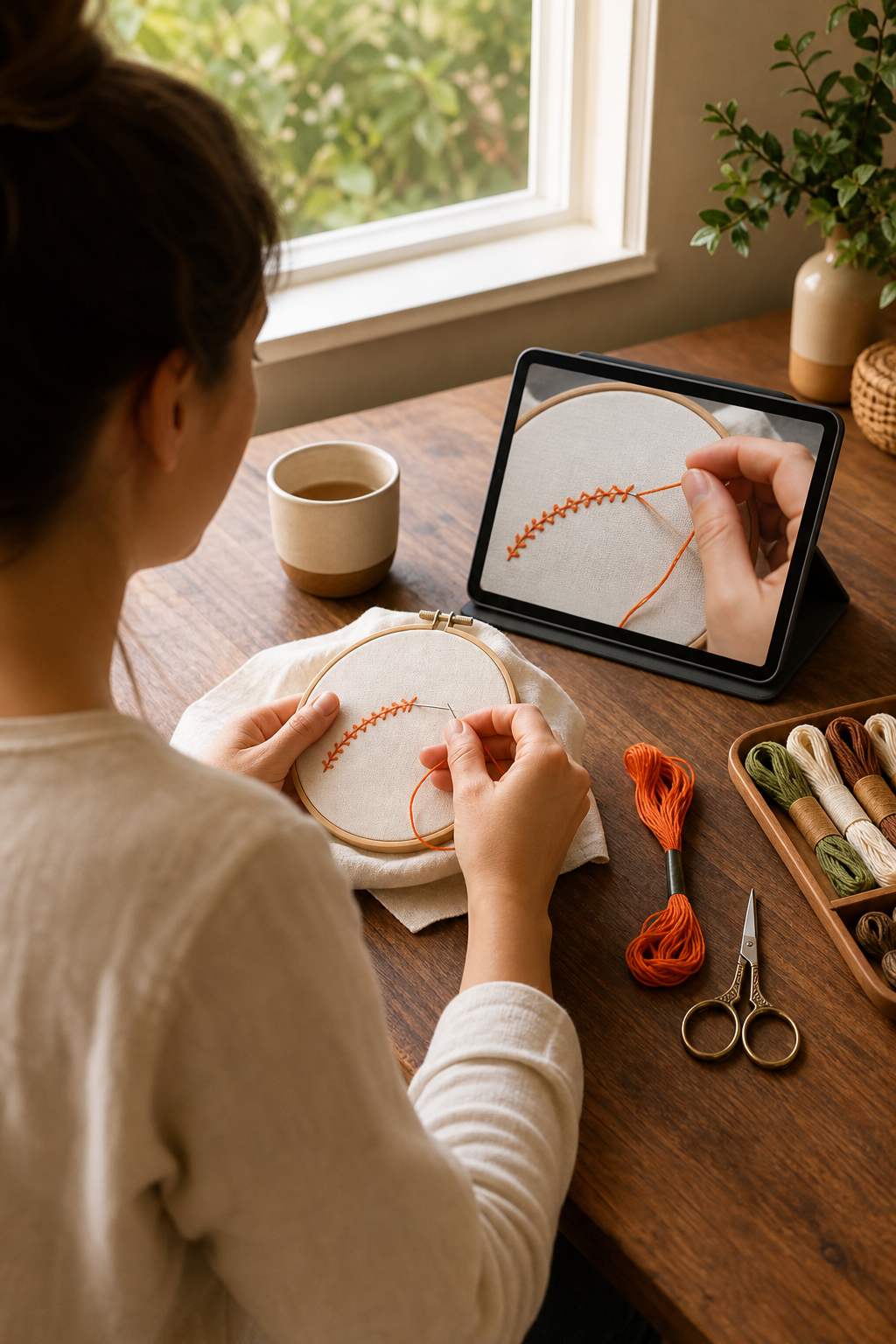
When evaluating courses, read reviews from other stitchers. Look for comments like “great for beginners” or “clear close-ups.” If a course has no reviews, that’s a red flag. Also check whether the instructor shows mistakes and how to fix them , that’s a sign of a good teacher, as noted by Nikki Franklin’s online learning approach.
Step 3: Gather Your Embroidery Supplies
Your course will probably list materials. Standard starter kit: embroidery hoop (6-8 inch), embroidery floss (basic colors, or a project-specific pack), needles (size 3-9), fabric (cotton or linen), scissors, and a water-soluble marker. If you’re following an online embroidery stitch patterns course, check the supply list before you start.
Don’t overbuy. Most beginners start with a small kit , a hoop, a few skeins, and a needle. You can add more as you go. Lay out your supplies in a dedicated workspace. Good lighting is key; many stitchers use a daylight lamp.
Here’s a quick video showing how to set up your hoop and thread a needle:
Once you have everything, prepare a small practice piece. Use scrap fabric to test your tension and stitch length before you move to the real pattern.
Step 4: Learn the Basic Stitches First
Every embroidery stitch pattern course will cover these foundation stitches. Master them before you move to complex patterns.
- Running stitch, the simplest. Push the needle in and out at even intervals. Use it for outlines and straight lines.
- Backstitch, creates a solid line. Each stitch starts at the end of the previous one. Perfect for lettering and detailed outlines.
- Satin stitch, fills shapes with parallel threads. Keep the tension even to avoid puckering. This usable guide to online embroidery classes for beginners explains satin stitch with close-up video.
- French knot, adds texture. Wrap the thread around the needle twice before pulling through. Practice on scrap to get the rhythm.
Set a timer for 15 minutes per stitch. Repeat each until you can do it without looking at the fabric. That builds muscle memory. If you get stuck, rewatch the tutorial , many platforms let you slow down playback speed.
For a full video walkthrough of basic stitches, check out this hand embroidery basics video that covers the five most common stitches in slow motion.
Step 5: Practice with Simple Stitch Patterns
Once you know the stitches, start combining them into patterns. A good online embroidery stitch patterns course will include simple projects like a flower motif or a geometric shape. 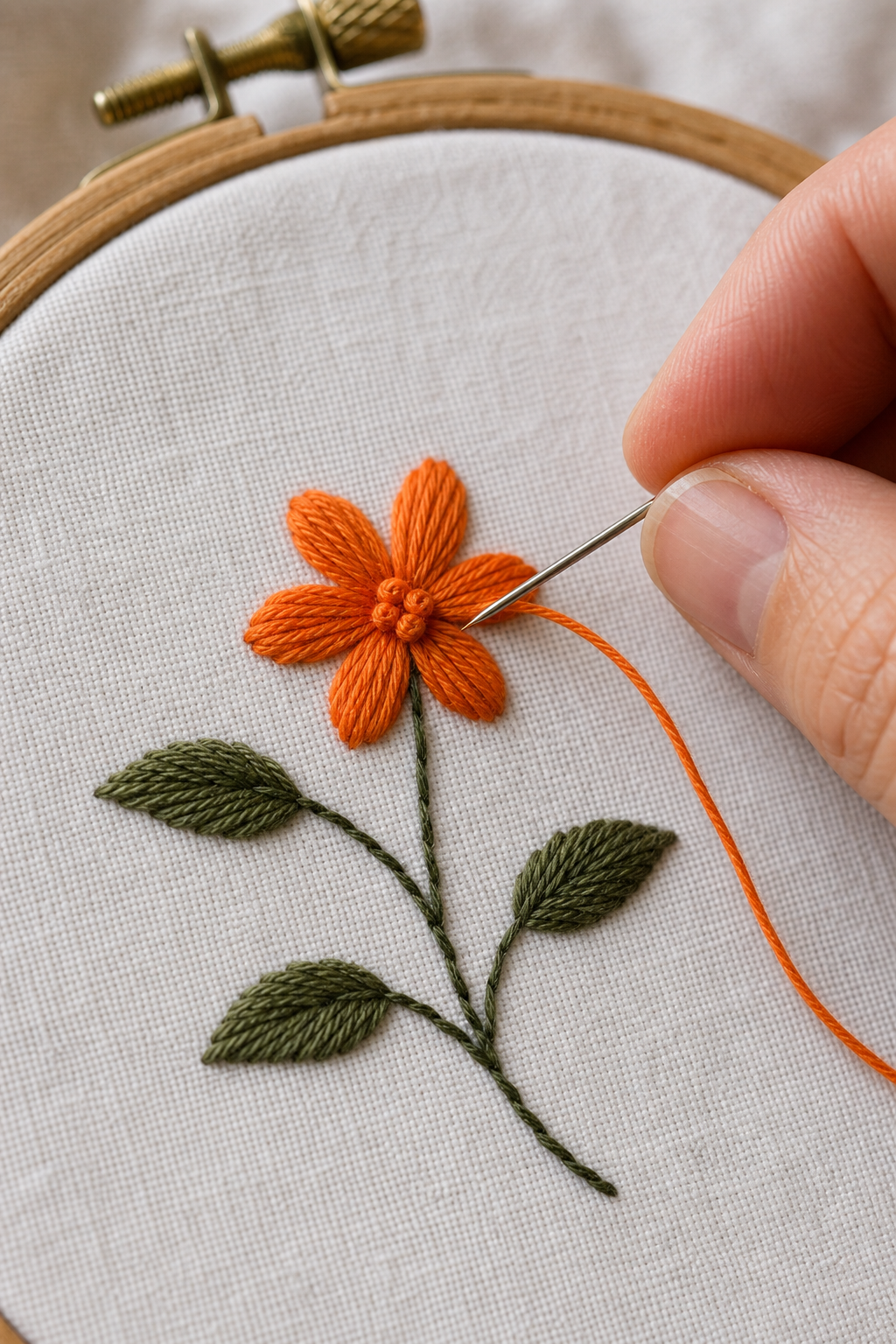
Choose a pattern that uses only the stitches you’ve learned. For example, a leaf outline can be backstitch, and the leaf fill can be satin stitch. Trace the pattern onto fabric with a water-soluble pen. Then stitch the outline first, then fill.
Don’t rush. Aim for neat, even stitches. If a section looks messy, undo it and try again. That’s part of learning. Keep a notebook to log what worked and what didn’t , for instance, “satin stitch too tight on the curve” or “French knot needs one wrap not two.” Over time, you’ll build a personal reference guide.
For pattern ideas, YouTube has free tutorials like this embroidery pattern practice video that walks through a simple flower design step by step.
Step 6: Build Your Pattern Library and Join a Community
As you improve, start collecting patterns. Many online embroidery stitch patterns courses include a library of patterns with membership. CreativiU, for example, adds new patterns each month. You can also design your own. Start by sketching a simple shape, then plan which stitches to use. The Embroiderers’ Guild of America offers tips on designing your own patterns.
Join a community to stay motivated. Platforms like CreativiU have active forums where you can share work, ask for feedback, and learn from others. Social media groups on Facebook and Instagram are also great. Regular interaction keeps you accountable , you’re less likely to skip practice when you have a group waiting to see your progress.
Learning a craft like embroidery also boosts mental wellbeing. The focus and repetition can be meditative. For broader personal development, you might explore pensée positive for mindset tips, but that’s optional alongside your stitching practice.
For pattern inspiration, vintage designs from retro pop culture can spark ideas. Check out LRIB Nation for nostalgic motifs that translate well into embroidery.
Frequently Asked Questions
What is the best online embroidery stitch patterns course for a complete beginner?
The best course for a beginner is one that starts with the absolute basics , holding the needle, threading, and the three core stitches (running, backstitch, satin). Look for a course with close-up videos and a clear progression, like those on CreativiU. Avoid courses that jump into complex projects on day one.
How long does it take to learn embroidery through an online course?
Most beginners can stitch a simple pattern after about 10-15 hours of focused practice spread over a few weeks. An online embroidery stitch patterns course that structures lessons into 30-minute modules helps you progress faster. Mastery of advanced stitches can take several months of regular practice.
Do I need to buy expensive supplies for an online embroidery course?
No. A basic kit costs around $20-$30: a hoop, a few colors of floss, a needle pack, and a small piece of cotton fabric. Many online embroidery stitch patterns courses list exactly what you need. Start simple and upgrade only when you feel limited by your tools.
Can I sell items I make from an online embroidery stitch patterns course?
Most courses allow you to sell finished products, but check the terms. Some pattern designers retain rights and require attribution or prohibit mass production. Always read the course’s licensing agreement before selling.
How do I stay motivated during an online embroidery course?
Set a small weekly goal, share your progress in a community forum, and reward yourself after finishing a project. Joining a group on CreativiU or social media helps maintain momentum. Remember, the joy is in the process, not just the finished piece.
Conclusion
Learning embroidery through an online stitch patterns course is straightforward if you follow a plan. Assess your level, pick a course that matches, gather basic supplies, master the foundation stitches, practice with simple patterns, and keep building your library and network. Your next move? Sign up for a free trial of a course that fits your goals, and start stitching today.
Leave a Reply