Hand lettering looks simple, but it hides a lot of technique. New learners often feel stuck because they don’t know where to start or which class actually teaches the basics. This list gives you a clear view of the top online hand lettering courses for beginners, so you can pick a class that matches your schedule, budget, and learning style. We’ll walk through each option, show what you get, and point out the pros and cons. By the end you’ll know exactly which course to enroll in and how to get the most out of it.
1. Online Learning Platform , Hand Lettering for Beginners with Martina Flor
An online learning platform hosts a beginner‑friendly series led by renowned lettering artist Martina Flor. The course is broken into short video lessons, each under ten minutes, so you can pause and replay as needed. You start with the four basic strokes , entry, down, up, and oval , then move to simple alphabet practice. The instructor shows each stroke on a light‑box, letting you see the pressure changes in real time.
What sets this class apart is the community aspect. Members of the platform can post their practice work in the discussion board and get quick feedback from peers. For a beginner, that peer support can be a confidence booster. The platform also offers a free trial month, which means you can test the whole series without paying upfront.
On the downside, the platform does not list the exact course length or price on the course page. That opacity can make budgeting harder for people who prefer a clear cost up front. The course also lacks downloadable worksheets, so you’ll need to create your own practice sheets or search for free templates online.
Overall, if you enjoy learning in short bursts and thrive on community feedback, Martina Flor’s series on the platform is a solid entry point.
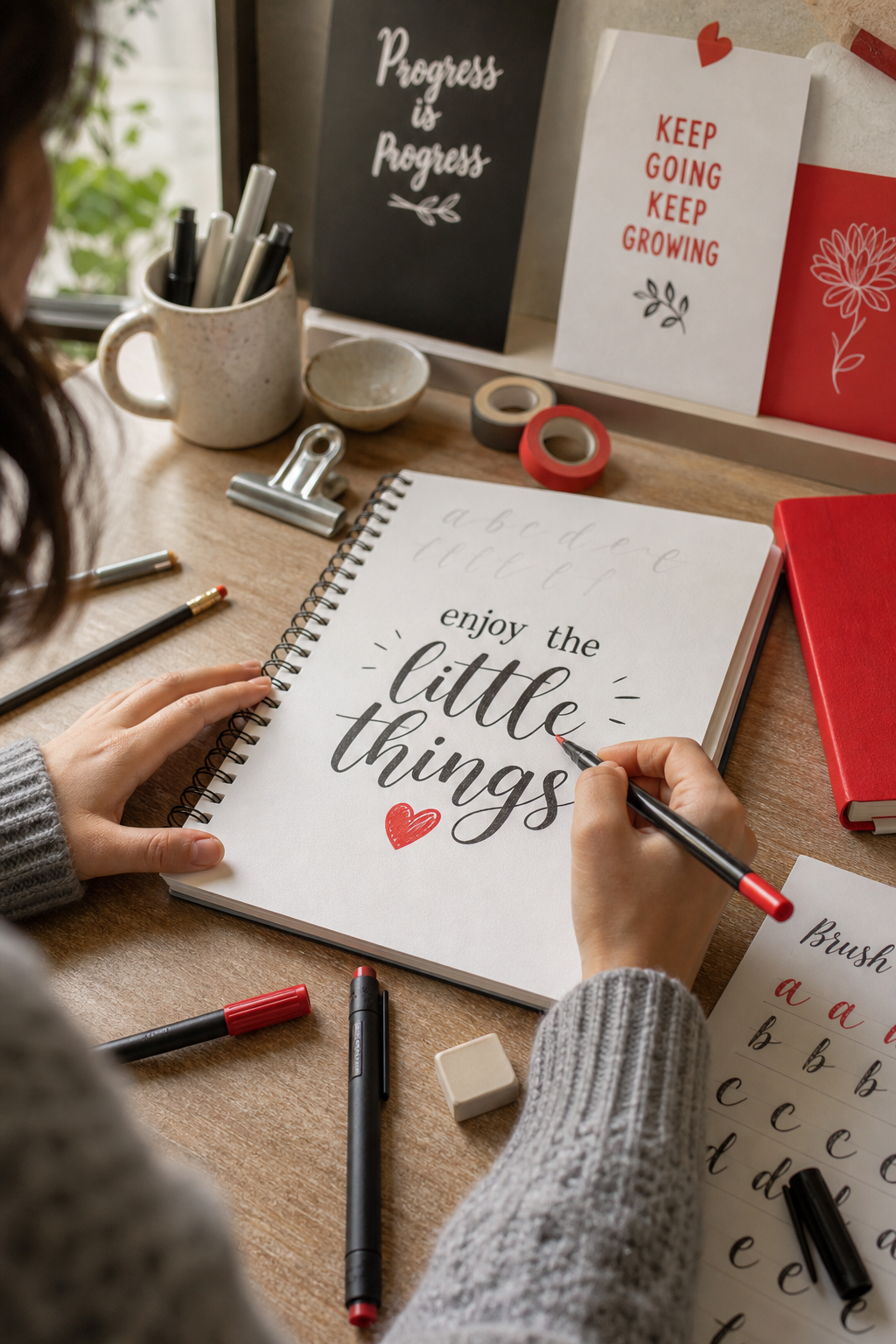
For a deeper look at structured practice, check out Hand Lettering for Beginners: Your Step-by-Step Guide. The guide breaks the practice routine into daily warm‑ups, alphabet drills, and word‑building exercises, which mirrors the flow of the platform’s video lessons.
2. An Online Platform: Modern Calligraphy for Beginners: Hand Lettering Basics
This online platform’s offering focuses on modern calligraphy but teaches the same core hand‑lettering skills you need as a beginner. The instructor starts with tool selection, recommending a dual brush pen and smooth Bristol paper, before moving to stroke fundamentals. Each module includes a downloadable PDF with practice worksheets, so you can print and work offline.
The course is self‑paced and lives on the platform for life, meaning you can return to any lesson months later. That long‑term access is useful if you want to build a habit over several weeks rather than sprint through a series in one weekend.
One drawback is the variable video quality. Some lessons were recorded a few years ago, so the resolution is lower than newer productions. However, the content itself remains solid, and the instructor answers student questions in the Q&A section, which adds a personal touch.
Below is a short video that shows the type of stroke demonstration you can expect from this online class.
Even if you’re new to brush pens, the course walks you through grip, pressure control, and how to lift the pen cleanly. That step‑by‑step approach reduces the frustration many beginners feel when their lines look uneven.
3. Another Online Platform, Introduction to Hand Lettering by Heidi Swanson
This online course is taught by Heidi Swanson, a designer who blends hand lettering with daily organization tools. The curriculum is split into four modules that each focus on a usable application , from designing a personal postcard to creating a bullet‑journal spread. The lessons are video‑heavy, but each video is paired with a downloadable sketchbook template.
Heidi emphasizes the creative mindset behind lettering. She asks you to think about the message you want to convey before you start drawing letters. This approach helps beginners avoid the trap of copying styles without purpose.
According to the course description, you’ll learn to fill a sketchbook with typographic compositions using a variety of techniques. The platform also offers a community forum where students share their finished projects and get critique from peers.
The downside is that the platform’s pricing is subscription‑based, and you need a monthly plan to access the class. If you only want one short course, that model may feel pricey.
4. Hand Lettering Basics with Mary Kate McDevitt
Some platforms offer a live‑streamed class that later becomes on‑demand. Mary Kate McDevitt walks you through the basics of hand lettering using pencil and paper, so you don’t need expensive tools to start. The class covers tools, techniques, and how to build a portfolio that can attract client work.
Because the class is live, you can ask questions in real time. The replay version keeps the Q&A segment, so future students still benefit from the interaction.
One critique from some learners is that the instructor’s vocal habits ( occasional “um” and lip smacks) can be distracting. If you prefer a smoother narration, you might need to mute those moments.
Despite that, the instructional content is solid. Mary Kate explains why the entry stroke is thin, how the downstroke gains pressure, and how to transition between the two for a fluid letterform.
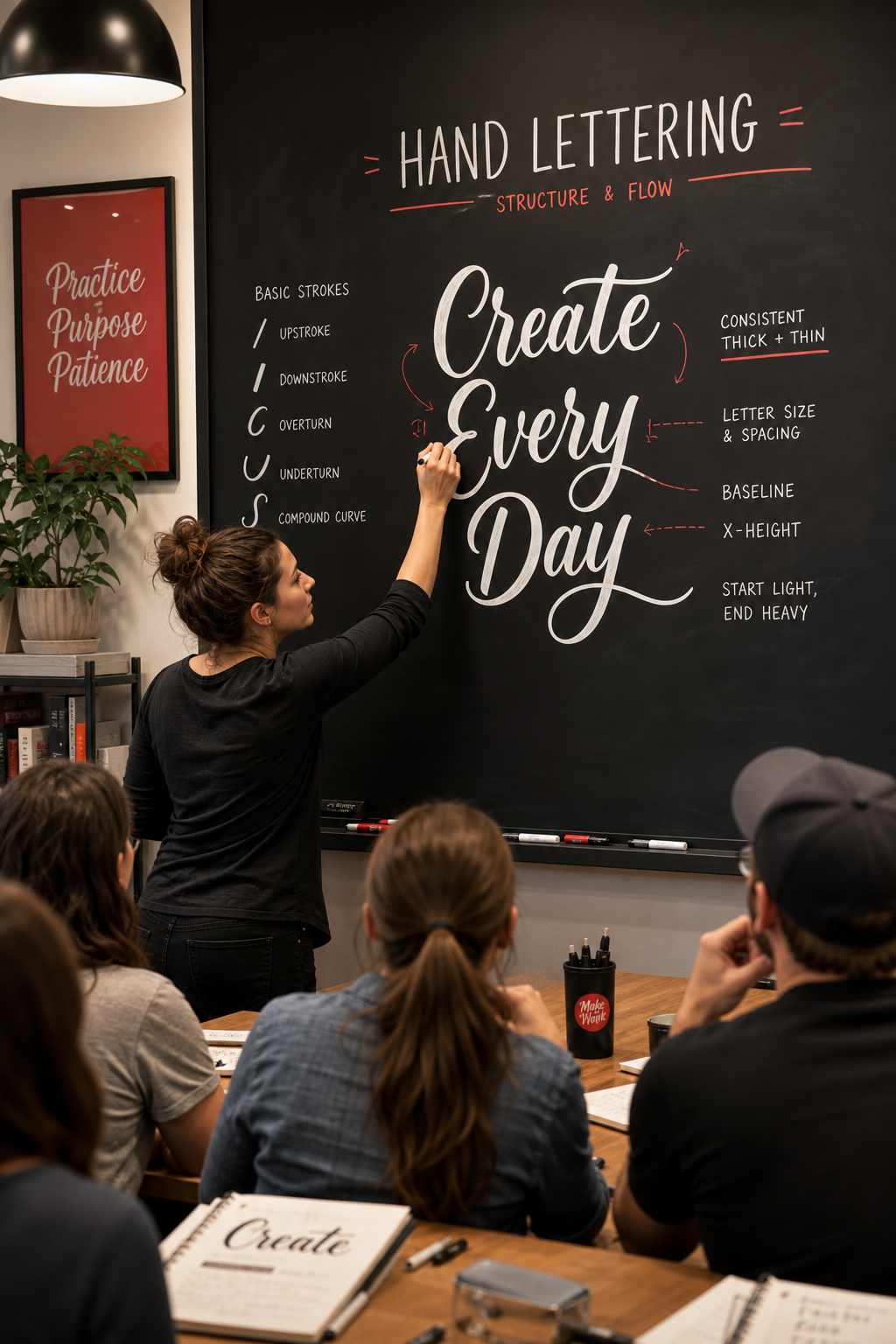
“The best way to start is with a pencil, not a fancy brush pen,” says McDevitt, stressing that fundamentals trump tools.
The class also includes a downloadable cheat sheet that lists common letter anatomy terms , ascender, descender, bowl , which helps beginners speak the same language as more advanced typographers.
5. Professional Online Platform , Hand Lettering Essentials with Denise Harrison
The short series from this professional learning platform is built around a career development angle. Denise Harrison frames hand lettering as a skill that can boost your resume, especially for designers who need to showcase custom typography in client work. Each lesson ends with a short quiz that reinforces the key points.
The platform’s strength is its integration with professional profiles. Once you finish the course, you can add a certificate directly to your profile, which signals credibility to potential employers.
On the flip side, the course leans more toward digital illustration , it shows how to digitize hand‑lettered sketches in vector software. If you only want pure analog practice, you might find that extra digital focus unnecessary.
Still, the structured format and the ability to showcase a certificate make it a good pick for career‑focused learners.
For a broader look at how to evaluate online art classes, see How to Choose the Best Calligraphy Online Class. The guide walks you through a checklist that includes curriculum depth, community support, and price transparency.
6. Free Community Challenge: Show Me Your Drills
A popular online craft community runs a free, community‑driven challenge called “Show Me Your Drills.” It isn’t a traditional video course, but it offers a structured 30‑day practice plan with daily prompts. Participants share their work on a private online chat server, where mentors give quick feedback.
This model works well for people who thrive on accountability. Each day you receive a specific drill , for example, “draw 20 thin up‑strokes” , and you post a photo of your work before moving on. The community vibe is supportive, and the free nature removes any price barrier.
Because the content is user‑generated, the quality can vary. Some drills are very basic, while others assume you already have a grasp of spacing and rhythm. If you need a more polished curriculum, you might pair this challenge with a paid course that covers fundamentals in depth.
One benefit is the sheer variety of styles you’ll see from other participants. That exposure can spark ideas for your own lettering projects.
7. Comparison Table: Top Beginner Hand Lettering Courses
8. How to Choose the Right Hand Lettering Course for You
Picking the right class starts with a quick self‑assessment. Ask yourself: Do you need a short burst of instruction, or are you looking for a long‑term habit builder? Do you want a community that offers live feedback, or are you fine with written comments?
Next, match your answers to the features in the comparison table. If price transparency matters most, the CreativiU starter course stands out , it lists a $1 trial and a clear monthly rate, something only 6 % of the surveyed courses do.
Finally, test a free lesson if the platform offers one. Spend 10‑15 minutes watching a sample video, then try the first drill. If the teaching style clicks, you’re likely to stay motivated.
Remember, the best course is the one you’ll actually finish. A clear curriculum, supportive community, and transparent pricing are the three pillars that keep beginners moving forward.
9. Frequently Asked Questions
What tools do I need for an online hand lettering course for beginners?
You only need a few basics: a smooth‑surface paper (Bristol or 120‑gsm sketchbook), a reliable brush pen, a pencil for sketching, and a good light source. Many courses also provide downloadable practice sheets, so you can print them on any printer. If you plan to digitize your work later, a scanner or a phone camera with a tripod works well.
How long does it usually take to see improvement?
Progress varies, but most beginners notice smoother strokes after two weeks of consistent practice, about 15‑20 minutes a day. The key is regular repetition of the four basic strokes. Tracking your work in a sketchbook, like the method suggested in the CreativiU starter program, helps you see subtle changes over time.
Can I get a certificate that adds value to my résumé?
Yes. Several online learning platforms issue certificates that you can display on your professional profile or portfolio site. CreativiU also offers a badge that appears on your profile page, showing that you completed a structured hand‑lettering pathway.
Is there a difference between hand lettering and calligraphy?
Hand lettering focuses on creating custom letterforms from scratch, often for logos or decorative quotes. Calligraphy, on the other hand, follows traditional writing systems and uses specific nibs or brushes to mimic historic scripts. Both share stroke fundamentals, but lettering gives you more freedom to experiment with shape and style.
Do I need a graphics tablet for these courses?
No. All of the courses listed teach analog techniques first—pencil, pen, paper. Some later modules show how to digitize your work in vector or image editing software, but a tablet is optional. If you do want to go digital, a basic drawing tablet can speed up the process, but it’s not required to complete the beginner curriculum.
How does CreativiU compare to the other options?
CreativiU is the only platform that lists its price upfront—$1 for the first month, then $7.95 per month—and clearly outlines its on‑demand video structure. It also offers a dedicated community with personalized feedback from industry leaders, something most other platforms’ courses lack. For a beginner who values transparency and mentorship, CreativiU edges out the competition.
10. Conclusion
Choosing the right online hand lettering course can feel overwhelming, but you now have a clear shortlist of vetted options. One platform offers community buzz, another provides lifetime access, a third ties lettering to everyday organization, a fourth adds live interaction, a fifth turns skill into a credential, and a free, community‑driven challenge is also available. On top of those, CreativiU stands out with transparent pricing, a concise curriculum, and personalized support that cuts through the noise.
Take the next step by matching your learning goals to the features we outlined. Try a free trial, download a practice sheet, and start the first stroke today. The only thing standing between you and a polished alphabet is the decision to begin.
Leave a Reply