Want to make art but not sure where to start? Most people think they need pricey tools or a studio. That’s not true. In this guide you’ll learn how to pick a platform, gather supplies, master basics, plan projects, and stay on track with an online art course for beginners.
Here’s a quick look at what the data says.
| Name | Price | Best For | Source |
|---|---|---|---|
| CreativiU (Our Pick) | — | Best overall | CreativiU |
| Beginner to Master Art Academy | — | Best certification | dezigningart.com |
| How to Draw and Sketch Pt 1 | $38.98 | Best value | dezigningart.com |
| How to Paint, From Beginner to Master: Acrylic Painting | — | Best format variety | painters-academy.com |
We pulled this info by searching for “online art course for beginners” on Google, then scraping 11 listings from 6 sites on April 19, 2026. The sample had 11 items.
Choosing the Right Platform
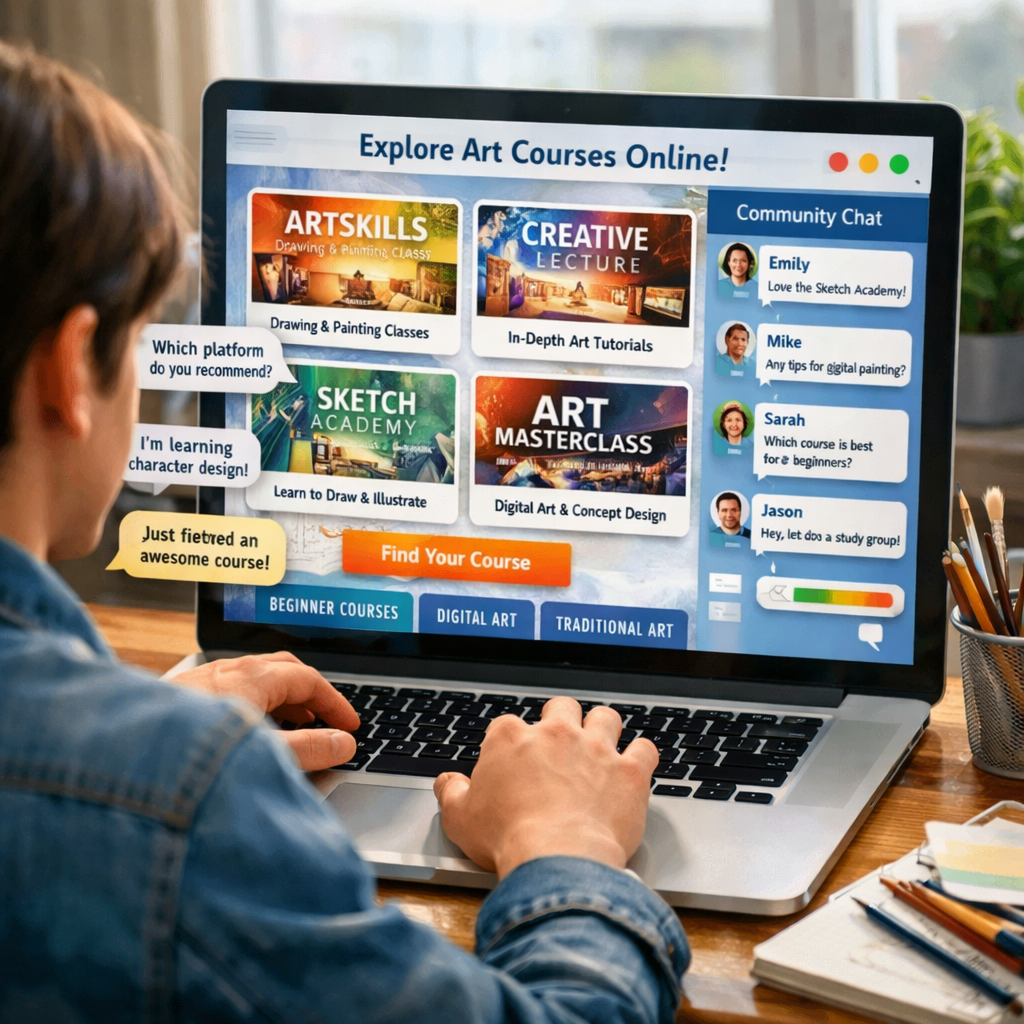
First step is to pick where you’ll learn. Not all sites work the same. Some give you a clear path. Some let you watch any video you want. Look for three things.
1. Course layout. A good platform breaks lessons into short videos , 10 to 15 minutes each. That lets you fit a lesson into a coffee break. 2. Community. Free courses often have a private Discord or forum where thousands of learners share tips. The research shows the two free courses that give a certificate also give a community. 3. Access model. A subscription or lifetime access means you can go back later. The paid Udemy course only gives a one‑time purchase.
When you compare, our pick , CreativiU , stands out. It offers an on‑demand library, a strong peer forum, and flexible access. That mix beats the paid Udemy option that lacks community.
Platforms like Coursera also list art courses from the Museum of Modern Art and CalArts. Those courses give you a certificate but often cost money and may not have a vibrant community.
CreativeBloq lists several online classes that focus on step‑by‑step demos. Those are good if you love video lessons, but they may not let you ask questions in real time.
Ask yourself: Do I want a clear curriculum, a place to ask questions, and the ability to revisit lessons? If yes, CreativiU is the safest bet.
Essential Supplies & Setup
Now that you have a platform, you need tools. You don’t need a full studio. A few basics will do.
From the New Masters Academy video, the teachers list pencils, pens, erasers, and a sketchbook as the core set. Add a set of graphite pencils (HB to 6B) and a decent eraser. You can find these at any art store for under $20.
Next, think about your workspace. A clean table, good light, and a comfortable chair go a long way. If you share a room, set up a small easel or a drawing board that folds flat.
Don’t forget a camera , even your phone works , to snap your work for feedback. The Milan Art Institute article says a camera helps you share progress in the community.
Here’s a quick checklist you can print:
- Pencil set (HB‑6B)
- Sharpener
- Paper block (A4, 70 gsm)
- Eraser (soft and kneaded)
- Desk lamp
- Phone or camera for photos
Once you have the basics, you can add color tools later , water‑colour, acrylic, or digital brushes , as your skill grows.
Watch the short video below for a visual walk‑through of the essential kit.
For more detail on the exact items, check the lesson page on New Masters Academy.
Essential Materials Lesson
When you’re ready, you can explore the 15 online painting classes that spark creativity.15 Online Painting Classes for Beginners That Spark Creativitygives a solid list of free and low‑cost options.
Fundamental Drawing Techniques
With tools in hand, it’s time to learn the basics. All good online art courses start with line work, shape, and value.
Here’s a simple progression you can follow.
| Skill | What to practice | Why it matters |
|---|---|---|
| Line control | Draw straight, curved, and diagonal lines. | Helps you outline forms accurately. |
| Shape building | Combine basic shapes to make objects. | Teaches you to break complex things down. |
| Value shading | Use hatching to create light and dark. | Gives depth to flat sketches. |
| Proportion | Measure parts of a subject with a pencil. | Stops the drawing from looking off‑scale. |
| Perspective | Draw simple boxes that recede. | Creates a sense of space. |
Practice each skill for at least a week. Sketch everyday objects , a cup, a book, a plant. Keep the drawings small, 5 × 7 cm, so you can finish fast.
Our pick, CreativiU, gives you short video drills for each of these steps. The drills are under 10 minutes, so you can fit them in a break.
If you want extra help, the SEO guide on how to improve your site in 2026 can teach you how to show your art online.How to Improve SEO in 2026: Step‑by‑Step Guideexplains keyword use and portfolio pages.
Beginner‑Friendly Project Ideas
Now that you know the basics, try a small project. Projects keep you motivated and give you something to share.
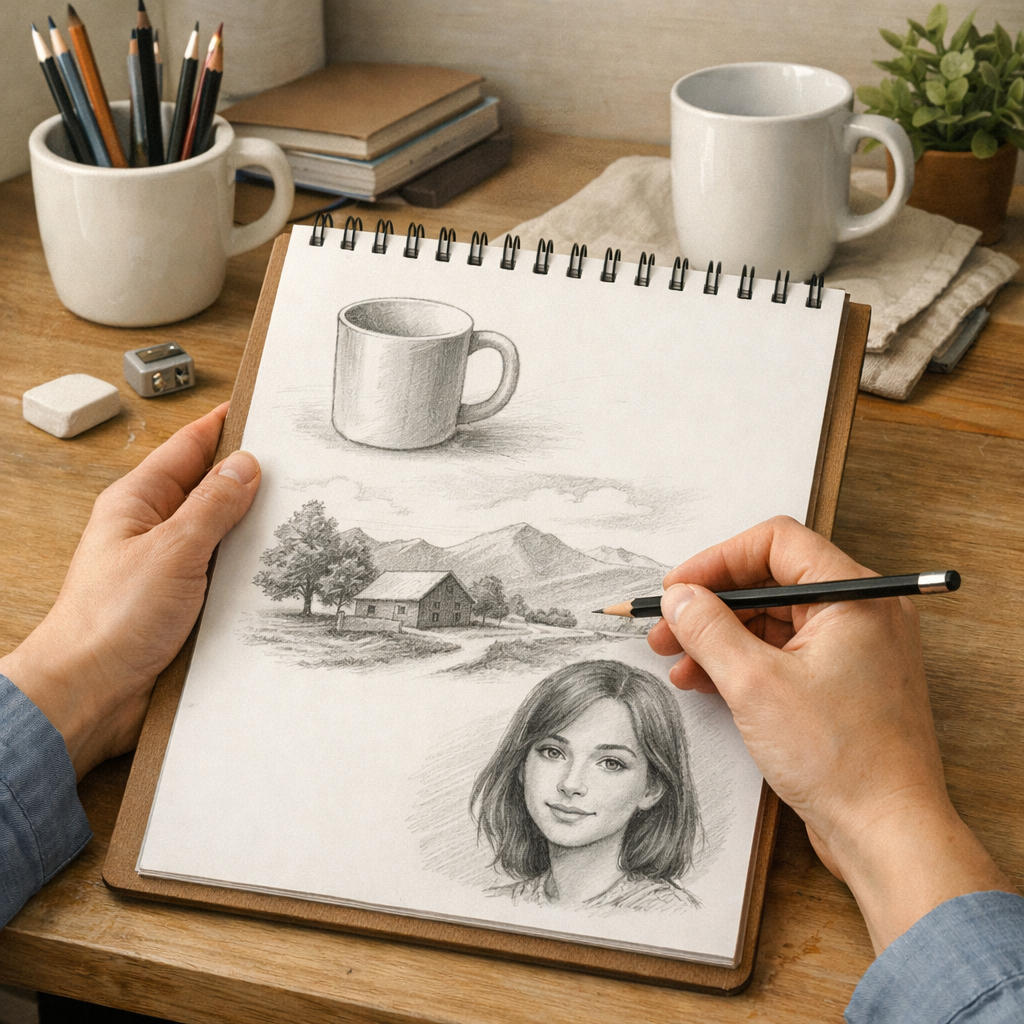
Idea 1: Sketch a favorite mug in three angles. Use line control for the outline, then add light and dark values.
Idea 2: Draw a simple landscape using shape building. Start with a rectangle for the sky, a triangle for a mountain, and a line for a horizon.
Idea 3: Create a quick portrait using proportion rules. Measure the eye distance and nose placement.
Each project should take no more than 30 minutes. Finish, snap a photo, and post it in your course’s community forum for feedback.
If you want to expand into other visual media, drone photography can be a fun next step. It lets you capture aerial scenes that you can later turn into sketches.Wirkungsvolle Drohnen‑Fotografie für Ihre Immobilieshows how to start with a basic drone.
When you finish a project, write down what you learned. Did the line feel steady? Did the shading look right? This reflection helps you see progress.
Staying Motivated & Tracking Progress
Learning art can feel slow at times. Here are five tips that keep you moving.
Set a tiny goal
Instead of “draw every day”, aim for a 10‑minute sketch after dinner. Tiny goals are easy to keep.
Use a study calendar
Mark the days you practice. Seeing a streak grow feels rewarding.
Share your work
Post a photo in the CreativiU community or on a public forum. Feedback fuels improvement.
Reward yourself
When you finish a week of practice, treat yourself , a new sketchbook or a coffee.
Fund your supplies
If money is tight, consider a small group fund. Happy Pot lets creators pool money for art supplies.Happy Potis a simple way to raise cash with friends.
Tracking your work also helps you spot patterns. Keep a simple log: date, time, what you practiced, and a short note on how it felt.
When you look back after a month, you’ll see real growth , the lines will be steadier, the shading smoother, and the confidence higher.
Conclusion
Starting an online art course for beginners doesn’t have to be scary. Pick a platform that gives you clear lessons, a supportive community, and flexible access , CreativiU fits the bill. Gather a few basic supplies, set up a tidy space, and follow the step‑by‑step skill ladder. Try small projects, share them, and use a simple tracking system to stay on track. With these tools you’ll move from doodles to real art in weeks, not months.
If you’re ready to start, head over to CreativiU and claim your free trial. Your first sketch is waiting.
FAQ
What is the best way to choose an online art course for beginners?
Look for short video lessons, a clear curriculum, and an active community. A platform that offers a free trial lets you test the teaching style. Check if the course has downloadable practice sheets , they keep you organized. Finally, make sure the price matches your budget and that you can access the material forever or for a long period.
How many supplies do I need to start drawing?
You only need a few pencils, a good eraser, a sketchbook, and a sharpener. Adding a ruler and a light source can help with perspective. All of these items cost less than $25 at a local store or online. As you improve, you can add colored pencils or charcoal, but the basics are enough to begin.
How often should I practice with an online art course for beginners?
Aim for at least three short sessions each week. Ten to fifteen minutes per session is enough to build muscle memory. Consistency beats long, occasional marathons. Use a calendar or an app to set reminders, and stick to the schedule even on busy days.
Can I get a certificate from a free online art course?
Yes, some free courses, like Beginner to Master Art Academy, include a certificate at no cost. However, the only paid course in the data set, How to Draw and Sketch Pt 1, does not offer a certificate. If a certificate matters for your portfolio, choose a free option that lists it in the description.
Do I need a powerful computer for online art classes?
No, most drawing lessons run in a web browser or on a tablet. A basic laptop or a modern phone can stream videos and let you upload photos of your work. If you move to digital painting later, a modest graphics tablet will be enough for beginners.
How can I stay motivated when progress feels slow?
Set tiny goals, share your work in a community, and keep a visual log of before‑and‑after sketches. Reward yourself after each milestone , a new pen or a short break. Seeing a streak on your calendar or a comment from a peer can push you forward when you feel stuck.
What should I do if I run out of money for supplies?
Look for community fund‑raising tools. Happy Pot lets you create a small pot and ask friends or family to chip in for art supplies. You can also use recycled materials , cardboard, old magazines, or household items , to practice techniques without spending.
How can I show my art online once I finish a course?
Create a simple portfolio website or use a free platform like Instagram. Use the SEO guide to add relevant keywords, like “online art course for beginners” and your art style. Tag your posts with the course name and share the link to the community forum where you learned. This helps you get seen and may attract future opportunities.
Leave a Reply