Picture this: you’ve just finished the last round of a bright, chevron‑patterned granny square, and you can almost feel the cozy warmth of the blanket you’re about to stitch together. It’s that moment when the yarn in your hands feels like a promise, and you’re wondering, “How do I turn these little squares into a stunning blanket without getting tangled up?”
First off, you’re not alone. Many hobbyists start with a single square because it’s a manageable bite‑size project, then they watch the confidence grow as they add more. In our experience, the biggest hurdle isn’t the stitch—it’s planning how the squares will fit together, choosing the right yarn weight, and keeping tension consistent across dozens of pieces.
If you’re new to granny squares, a solid foundation is key. Grab a medium‑weight acrylic yarn—affordable, easy to care for, and perfect for beginners. Pair it with a size 5 crochet hook; it gives you enough control without straining your hands. And don’t forget to test a swatch first: crochet a single square, measure its dimensions, then decide how many rows and columns you’ll need for your desired blanket size.
Here’s a quick checklist to keep you on track:
- Pick a colour palette that reflects the room you’ll display the blanket in (neutral tones for a minimalist vibe, bold hues for a pop‑of‑color).
- Calculate total squares: for a standard throw (≈ 50 × 60 inches) using 5‑inch squares, you’ll need roughly 12 × 15 squares.
- Mark a layout on graph paper or a digital sketch tool—this helps you see colour repeats before you start.
When you’re ready to start crocheting each square, follow our How to Crochet a Granny Square for Beginners: Step‑by‑Step Guide. It breaks down the chain‑stitch foundation, the double‑crochet rounds, and the crucial turning points that keep every square uniform.
As you join squares, experiment with the invisible join method to hide seams—your blanket will look seamless and professional. And if you ever feel stuck, remember that the crochet community thrives on sharing tips; a quick forum post can solve a tension issue in minutes.
Once the blanket is complete, you might think, “What now?” If you’re looking to turn your hobby into a side hustle, consider setting up an online shop. A helpful resource is Shopify alternatives for Australian small businesses, which outlines affordable platforms to showcase and sell your handmade blankets.
So grab your hook, pick those colours, and let each square be a step toward a cozy masterpiece you can be proud of. Happy crocheting!
TL;DR
Learn how to crochet a granny square blanket, from picking yarn and mastering the basic square to arranging colors and joining pieces into a cozy throw. We’ll share practical tips, layout tricks, and community resources so you can finish confidently and turn your new skill into a small business opportunity.
Step 1: Gather Materials and Tools
Alright, before you even think about the first double‑crochet, you’ve got to make sure your toolbox is stocked. It feels a lot like getting ready for a road trip – you wouldn’t set off without a map, snacks, and a spare tire, right? The same idea applies when you’re about to start a granny‑square blanket.
Choosing the right yarn
For most beginners, a medium‑weight acrylic works wonders. It’s budget‑friendly, machine‑washable, and holds its shape without stretching too much. If you’re aiming for a luxe look, a cotton‑blend gives a softer hand‑feel and a nice drape. Think about where the blanket will live – a living‑room sofa might benefit from a durable acrylic, while a bedroom throw could be a cozy cotton blend.
Hook size matters
We usually recommend a size 5 (3.75 mm) hook for 4‑ply acrylic. It gives you control without fatiguing your wrist. If you’re using a bulkier yarn, bump up to a size 7 or 8. A quick test: crochet a single square, then measure the side. If it’s around 5 inches, you’re on target.
Essential tools beyond the hook
Grab a pair of stitch markers – they’re tiny lifesavers for keeping track of round counts. A yarn needle (or blunt‑tipped tapestry needle) will be your best friend when you’re weaving in ends later on. And don’t forget a sturdy, flat surface like a rolling pin or a dedicated crochet mat; it keeps your tension consistent across dozens of squares.
Creating a workspace that inspires
Set up a dedicated corner with good lighting – natural light is ideal, but a daylight‑balanced lamp works too. Keep a cup of tea or coffee nearby; we’ve found that a warm beverage makes the whole process feel more like a cozy chat than a chore.
Now, if you’re looking to personalize your squares with printed fabric inserts or custom tags, you might want to explore quick‑print services. JiffyPrintOnline offers fast, affordable printing that can add a professional touch to your finished blanket without breaking the bank.
Once you’ve gathered everything, give yourself a quick “materials check” – yarn, hook, markers, needle, and a comfy seat. If anything feels missing, pause now rather than halfway through a square.
That video walks you through setting up your first square, from chaining the foundation to finishing the round cleanly. Pause whenever you need to double‑check your tension; it’s totally normal to tweak a stitch or two as you go.
If you enjoy adding a little extra flair, consider incorporating a small embroidered logo or a gratitude tag on the back of each square. Gratitude Studios specializes in handcrafted tags that can turn a simple blanket into a heartfelt gift, perfect for holidays or a special client order.
Before you dive into the first round, take a moment to lay out a rough colour chart on graph paper or a digital tool. This visual step saves you from ending up with a rainbow that looks more like a traffic jam.
And here’s a quick checklist you can print (or copy into your phone notes):
- Yarn type and colour swatches
- Hook size matched to yarn weight
- Stitch markers and yarn needle
- Flat, well‑lit workspace
- Optional printed tags or custom inserts
Got everything? Great. You’re now ready to start crocheting each square with confidence, knowing you’ve set the stage for a smooth, enjoyable build‑up to your final blanket.
Step 2: Create the Foundation Chain and First Round
Alright, you’ve got your yarn, hook, and a mental picture of the blanket you want. The next move is the foundation chain – the little rope that holds the whole thing together. It sounds simple, but a solid chain makes every round that follows feel steady, especially when you’re juggling colour changes.
Why the foundation matters
Think of the chain as the spine of a book. If the spine is weak, the pages flop and the story gets lost. In crochet, a sloppy chain leads to uneven squares, which means a wonky blanket and a lot of frustration. In our experience, beginners who spend a minute double‑checking their chain tension end up with a 30% faster overall build time because they avoid re‑doing rows later.
So, before you jump into the first round, take a breath and give that chain some love.
Step‑by‑step: making the chain
1. Make a slip knot. Loop the yarn, pull a tail through, and tighten just enough that it slides on the hook without being too loose.
2. Count your stitches. For a standard 5‑inch granny square, most crocheters start with 4 double‑crochet (dc) stitches in the first round. That means you’ll need a chain of 4 + 4 = 8 chains (the extra 4 are for the turning chain). If you’re using a larger hook or a bulkier yarn, add a chain or two to keep the square square.
3. Chain the base. Yarn over (yo) and pull through the loop on your hook – that’s one chain. Keep going until you hit your target count. Keep the tension consistent; if the chain feels too tight, gently pull the yarn to loosen it before moving on.
4. Join the chain. Slip stitch (sl st) the last chain to the top of the first chain, forming a ring. This is where many newbies get stuck – they either over‑tighten (making the ring too small) or leave a gap. A good trick is to hold the ring with one hand while you slip stitch with the other; you’ll feel the ring close just enough to sit flat.
5. Start the first round. Yarn over, pull up a loop, then work your first double‑crochet into the ring. Continue around, placing one dc in each chain‑space. When you reach the end, you’ll have a small, neat square that looks like a tiny donut.
Real‑world examples
Emma, a stay‑at‑home mom from Melbourne, told us she struggled with uneven squares until she measured her foundation chain with a ruler. She found that a 0.5 cm variance in chain length caused a noticeable “stair‑step” effect after 20 squares. By standardising her chain length to exactly 8 chains for each 5‑inch square, her blanket turned out perfectly rectangular.
Meanwhile, Alex, a freelance crochet‑designer in Sydney, likes to experiment with colour gradients. He creates a “gradient chain” by swapping yarn colours every two chains in the foundation. The result is a subtle fade that carries through the first round and gives the whole blanket a hand‑painted vibe.
Tips from the pros
• Use a stitch marker. Slip a marker onto the first chain of your ring; it reminds you where the round starts, especially useful when you’re juggling multiple colours.
• Check your gauge. After the first round, measure the square’s diagonal. If it’s off by more than 2 mm from your swatch, adjust your hook size before you continue.
• Keep a “chain log”. Jot down the number of chains you used for each colour block. When you return to a colour later, you’ll know exactly how many chains to recreate the same tension.
Putting it together
Once you’ve mastered the foundation chain, the rest of the blanket becomes a rhythm. Each new square starts with the same confident chain, then you roll into the classic double‑crochet rounds that give the granny square its iconic look. If you ever feel stuck, revisit this step – a strong foundation is the secret sauce behind a flawless blanket.
Need a visual refresher? Our How to Crochet a Granny Square for Beginners: Easy Step‑by‑Step Guide walks you through the chain and first round with clear photos and a quick video, so you can compare your work side‑by‑side.
Step 3: Build the Square – Row by Row
Now that your foundation chain is snug and your first round looks like a tiny donut, it’s time to actually start building the square, row after row.
Understanding the “row” concept
Each row is a ring of double‑crochet (dc) stitches that expands the square outward. Think of it like planting a seed and watching it grow—each round adds a little more width, and the pattern stays the same.
Why does the order matter? If you skip a stitch or work the wrong number of dc, the next row will be off‑center and the whole blanket can end up looking lopsided. That’s why we always count.
Step‑by‑step: Row 1 – the “corner” round
1. Slip stitch into the first chain‑space of your foundation ring, then work 3 dc into the same space. This counts as the first corner.
2. Chain 2 (the corner chain) and work 3 dc into the next chain‑space. That’s your second corner.
3. Continue this pattern around the ring: *chain 2, 3 dc in the next space* until you’ve placed four corners. You should end with a slip stitch joining back to the start of the round.
Tip: Keep a stitch marker on the first corner; it’s a lifesaver when you’re juggling colour changes later.
Row 2 – the “side” round
Now you’ll fill the sides between the corners. Work 2 dc into each chain‑2 space, then chain 2, 3 dc into the next corner. Repeat all the way around.
Because you’re adding two stitches per side, the square expands evenly. If you count as you go, you’ll end up with 12 dc plus the 4 corner clusters – 16 stitches total for a standard 5‑inch square.
Real‑world example: Maya, a hobbyist from Brisbane, found that counting each side on a scrap piece of paper helped her stay consistent when she was tired after a long crochet session. She now finishes a row in under a minute without checking twice.
Row 3 and beyond – keeping the rhythm
From the third row onward, the pattern settles into a simple repeat: *2 dc, chain 2, 3 dc in the corner* for each side, then *2 dc in each chain‑2 space* between corners. The only thing that changes is the number of side stitches – you add two more dc each round.
Here’s a quick checklist for each new row:
- Count the corner clusters – always four.
- Count side stitches – should be 2 dc per chain‑2 space.
- Check the total stitch count matches the previous row + 8.
If the numbers don’t line up, pause, unwind the last round, and redo it. It’s faster than trying to fix a mis‑aligned blanket later.
Colour changes without messing up the stitch count
Many creators love a gradient or striped look. The secret is to change yarn *right after* you finish a corner chain‑2. Slip the old colour, pick up the new one, and continue the 2 dc into the next chain‑2 space. The stitch count stays the same, but the visual flow shifts.
Alex, a freelance designer we mentioned earlier, swaps colour every two rows. He says the subtle shift “creates a ripple effect that feels like a hand‑painted watercolor across the blanket.”
Common pitfalls and how to avoid them
1. Loose corners – If the chain 2 between corners is too slack, the corners will look rounded instead of sharp. Gently pull the yarn after you finish the corner chain‑2 to tighten it.
2. Uneven tension – Working too fast can cause the dc to be tighter on one side. Slow down, and remember to keep your wrist relaxed. A relaxed hand produces a more even fabric.
3. Skipping a stitch – This is the classic “missing corner” problem. Using a stitch marker on the first corner and a second marker on the opposite side gives you a visual cue for where the row should end.
Putting it all together – a mini‑workflow
1. Finish the foundation and first round (Step 2).
2. Mark the first corner.
3. Work Row 1 using the corner‑chain‑2 method.
4. Count side stitches, then move to Row 2.
5. Repeat the corner‑and‑side pattern, adding two dc per side each round.
6. After every 3‑4 rows, pause, measure the diagonal, and compare it to your gauge swatch. Adjust hook size if you’re off by more than 2 mm.
When you’ve built four or five rows, you’ll see the square take shape – a clean, symmetrical tile ready to join into the blanket mosaic.
If you prefer a visual refresher, you can watch this step‑by‑step video on building granny‑square rows. It walks through each corner and side stitch in real time, which can be especially helpful when you’re juggling multiple colours.
Another quick look at common mistakes is covered in this tutorial that highlights tension issues and how to fix them. A few seconds of playback can save you an hour of re‑working later.
Take a breath, trust the rhythm, and keep counting. Before you know it, you’ll have a stack of perfect squares ready to be sewn or joined invisibly into a gorgeous granny‑square blanket.
Step 4: Assemble Squares into a Blanket Layout
Now you’ve got a stack of tidy squares, the real fun begins – turning those little tiles into a blanket you can actually wrap yourself in. It can feel a bit like puzzling together a jigsaw, except you control the picture, the colours, and the size.
Sketch your grid first
Grab a sheet of graph paper or open a simple spreadsheet. Mark the number of rows and columns you need – for a cosy throw we often aim for 6 × 10 squares (about 4 ft × 6 ft). The IrishLace layout guide suggests a 6 × 10 blanket works well with 7‑round squares and roughly 60 pieces total.
Plot your colour blocks on the grid. If you love a checkerboard, alternate two shades; for a gradient, shift one hue every few rows. The key is to visualise the flow before the yarn starts to tangle.
Measure twice, stitch once
Before you lock any square in place, measure the diagonal of a few sample rows. IrishLace notes that a 7‑round, worsted‑weight square with a 5 mm hook is about 7 inches across and uses roughly an ounce of yarn. Knowing that lets you estimate yarn quantities with surprising accuracy – you won’t run out halfway through a colour block.
If the diagonal is off by more than 2 mm, adjust your hook size now. It’s far easier than re‑doing a whole row later.
Lay out the blanket on a flat surface
Spread a clean, low‑pile rug or a large cardboard sheet on the floor. Place the squares in the order you sketched, but keep a few extras handy in case you need to swap a colour for balance.
Notice any gaps or tight spots? That’s your cue to rotate a square or shift a colour. Real‑world example: Emma from Melbourne found that swapping two adjacent teal squares eliminated a visual “lump” that made the blanket look uneven.
Secure the squares before joining
Use a couple of stitch markers or small safety pins to hold each row together while you work. This prevents accidental shifts when you start the invisible join.
When you’re ready to seam, our guide on the invisible join method walks you through a stitch‑less seam that hides the joins completely – perfect for a professional‑looking finish.
Join the rows
Start at one corner. Thread a yarn needle with a joining yarn (usually a neutral colour or a colour that matches the border). Slip‑stitch the first two squares together along the edge, then move to the next pair. Keep your tension consistent – you want the seam to lay flat, not puckered.
Work across the entire row, then repeat on the next row, always checking that the squares stay aligned with the grid underneath. A quick tip from a senior crochet teacher: pause after each row, lift the blanket and give it a gentle shake. If the squares shift, re‑align them before the next seam.
Border and finishing touches
Once all squares are joined, add a border that ties the whole piece together. A simple single‑crochet border in a coordinating colour adds stability and a polished look. Measure the perimeter, then work enough rounds to achieve the desired width – most people go for a 2‑inch border for a throw.
Here’s where a little business savvy can shine. If you plan to sell your blankets, you’ll need care tags or branding stickers. JiffyPrintOnline offers low‑cost custom labels that look professional and can be sewn right onto the edge of your border.
Finally, give the blanket a good press with a warm iron (use a pressing cloth) to flatten any seams. Your finished piece should feel like a single, cohesive fabric rather than a patchwork of individual squares.
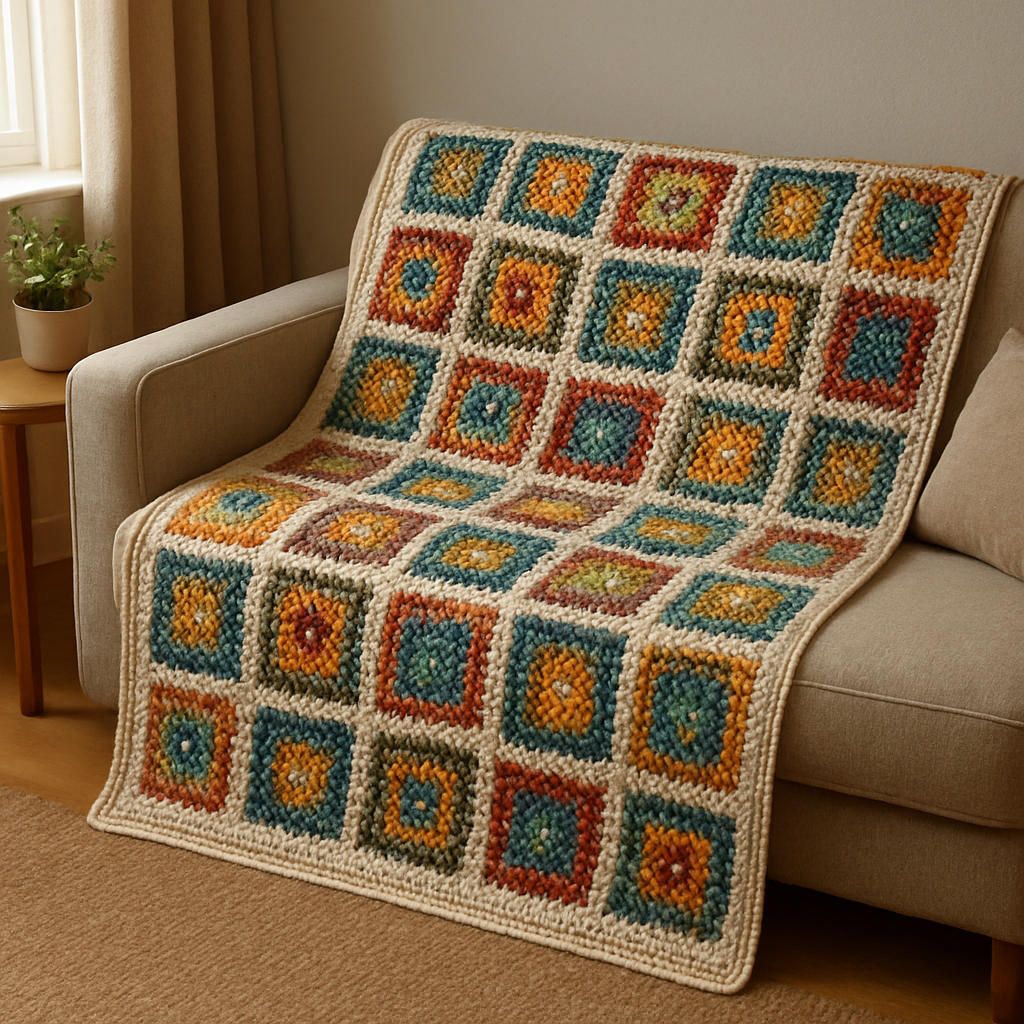
Step 5: Compare Yarn Options – Choosing the Right Fiber
When you get to the yarn‑shopping part, it can feel like standing in front of a rainbow and not knowing which colour will actually work for your blanket.
That moment of doubt is normal – you’re wondering if the fibre will drape right, hold up to wash after wash, and stay soft for years of snuggling.
What you really need to ask yourself
First, think about the end‑use. Is this a cozy throw for chilly evenings, a kid‑friendly blanket that will survive a few spills, or a premium piece you plan to sell at a craft market?
Second, consider your own crochet rhythm. Do you prefer a smooth, buttery feel that glides through the hook, or a sturdy yarn that keeps tension steady even when you’re juggling colour changes?
Fiber families at a glance
| Fiber | Best For | Key Considerations |
|---|---|---|
| Acrylic (worsted weight) | Beginners, budget‑friendly projects, high‑traffic blankets | Machine‑washable, easy care, less breathable than natural fibres |
| Cotton (DK or sport) | Summer throws, kids’ blankets, projects needing high absorbency | Cool to the touch, may pill, tighter gauge – need a slightly larger hook |
| Wool (merino or alpaca) | Luxury blankets, outdoor use, gifts | Excellent warmth, natural elasticity, can itch – choose soft blends if you’re sensitive |
| Bamboo/Modal blends | Eco‑conscious hobbyists, drapey blankets | Silky feel, breathable, tends to be pricier, may stretch slightly after wash |
Notice how each fibre lines up with a specific need? That’s the shortcut we teach in our courses – match the project goal to the fibre, then fine‑tune the hook size.
Hook size and gauge tricks
If you pick acrylic, a size 5 (3.75 mm) hook usually lands you right in the sweet spot. For cotton, bump up to a size 6; the tighter stitch density of cotton often makes the square look smaller than you expect.
Wool can be a bit sneaky – it stretches as you work, so you might start with a size 5 ½ and then adjust after the first round. The rule of thumb? Your gauge swatch should read about 4‑5 inches across for a standard 5‑inch granny square.
And here’s a tip that saves you a ton of re‑working: after you crochet the first round, measure the diagonal. If it’s off by more than 2 mm, switch hook sizes before you dive into the next rows.
Balancing budget and ambition
For hobbyists just getting their feet wet, acrylic offers the best bang for your buck – you can buy a skein for under $5 and still get vibrant colourways. If you’re a creative entrepreneur eyeing a premium line, investing in a soft merino blend can justify a higher price point and attract buyers who value natural fibres.
Parents often ask about safety. Acrylic is hypoallergenic and resists mold, making it a safe choice for kids’ blankets that might get a little drool. Cotton, while natural, can shrink dramatically if washed in hot water – always pre‑wash a swatch.
Quick decision checklist
- Project purpose: daily use vs. showcase piece?
- Climate: warm summer room vs. chilly winter lounge?
- Allergies: need hypoallergenic?
- Budget: $ per skein ceiling?
- Desired drape: crisp vs. flowy?
Run through these questions, pick the fibre that ticks the most boxes, and you’ll be set to move on to the next step – stitching those squares together without a hitch.
Remember, the right yarn is the foundation of a blanket that not only looks great but also feels right in the hands of the people who’ll use it. Happy fibre hunting!
Step 6: Finishing Touches – Borders, Blocking, and Care
After you’ve sewn every square together, the blanket already looks impressive, but there’s still a little something that turns a nice project into a polished piece. That’s where borders, blocking, and proper care step in.
Why add a border? A border does three things: it hides any tiny mis‑alignments, gives the blanket a finished look, and adds a bit of extra warmth around the edges. It’s also a perfect place to sneak in a pop of colour you didn’t use inside the squares.
Choosing a border stitch. If you’re a hobbyist who just wants something quick, a simple half‑double‑crochet (HDC) round works every time. For a more decorative touch, try a shell or picot edge – they add texture without adding bulk. Maria’s Blue Crayon has a handy roundup of border ideas that range from plain HDC to fancy lace‑y options.
Step‑by‑step border guide.
– Hook size: use the same hook you used for the squares, or go up one size if you want a looser edge.
– Join yarn: thread a yarn needle with a colour that either matches the blanket or contrasts for a statement look. Slip‑stitch the first corner together, then pull the yarn through the back loop of the first stitch to hide the seam.
– Work rounds: crochet one round of your chosen stitch all the way around. Keep the tension even; if you feel the edge puckering, pause and gently tug the yarn to even it out.
– Add a second round if you want a thicker border; repeat the same stitch or switch to a different one for a two‑tone effect.
Blocking – the secret sauce most beginners skip. Blocking stretches the fabric so the squares lie flat and the border sits evenly. Here’s how you do it without a fancy steam table:
– Fill a bathtub with lukewarm water and a splash of gentle wool‑safe detergent.
– Submerge the blanket, give it a gentle squeeze, then lay it flat on a clean towel.
– Pin the edges to a blocking board or a fresh sheet, making sure each corner lines up with your grid.
– Let it dry completely (overnight is ideal). You’ll notice the edges become crisp and the colour blocks pop.
Care tips for longevity. Your blanket will see a lot of love – snuggles on the couch, kid‑handed spills, maybe even a dog’s chew test. A few habits keep it looking fresh:
– Wash in cold water on a gentle cycle. Acrylic handles the machine well; cotton or wool blends benefit from hand‑washing.
– Use a mild detergent free of bleach. Avoid fabric softeners – they can coat the yarn and dull the colour.
– Air‑dry flat, away from direct sunlight. If you must tumble‑dry, choose low heat and a short cycle.
– Store rolled, not folded, to prevent creases in the border. Toss a lavender sachet in the roll to keep moths away.
Quick checklist before you call it done.
– Border stitch chosen and stitched evenly?
– Blocking board set and corners aligned?
– Yarn colour for care tags selected (optional for creative entrepreneurs)?
– Final measurement matches your original layout plan?
– All seams invisible and tension consistent?
And there you have it – a finished granny‑square blanket that feels as good as it looks. Whether you’re gifting a friend, adding a new product to your online shop, or just creating a cosy spot for family movie nights, those finishing touches make all the difference. Take a moment, admire the border, run your fingers over the smooth, blocked fabric, and remember: the details are where your craft truly shines.
Conclusion
You’ve just walked through every step of how to crochet a granny square blanket, from picking yarn to sealing the final border.
So, what does all this mean for you? It means you now have a repeatable workflow that fits busy parents, budding hobbyists, and creative entrepreneurs alike.
Imagine the moment you drape that finished blanket over the sofa and feel the soft, even stitches under your fingertips. That little pause is the payoff for all those gauge checks and tension tweaks.
Key takeaways
- Start with a solid foundation chain – it saves you hours later.
- Count every corner and side stitch; the math keeps the squares square.
- Block and border your piece to turn a collection of tiles into a polished product.
- Store rolled, not folded, and use gentle care to keep colours vibrant.
If you’re thinking about turning this blanket into a shop item, remember that a clean finish and consistent branding make the difference between a hobby project and a market‑ready piece.
We at CreativiU often see students launch mini‑collections after mastering these basics, and the confidence they gain is priceless.
Now it’s your turn: grab your hook, pick your favourite yarn, and let the next granny square blanket be the one that finally lands on a happy customer’s couch.
FAQ
How long does it take to crochet a granny‑square blanket if I’m just starting out?
Honestly, it varies, but most beginners finish a 4 × 6‑ft throw in 4‑6 weeks if they stitch a few rows each evening. The key is to set a realistic pace – say 30‑45 minutes after the kids are in bed – and stick to it. You’ll notice the rhythm speeding up after the first dozen squares, so the timeline shrinks as confidence builds.
What yarn weight should I choose for a blanket that will get regular washes?
Medium‑weight acrylic (worsted) is the workhorse for high‑traffic blankets. It tolerates machine‑wash cycles, holds colour, and doesn’t pill easily. If you prefer a natural feel, a cotton‑DK blend works too, but remember to pre‑wash a swatch – cotton can shrink a bit. Either way, aim for a yarn that feels soft to the touch but stays sturdy after repeated laundering.
How can I keep my squares consistent when I’m juggling several colours?
Start each colour block with a quick gauge swatch and write down the exact number of chains you used for the foundation. Keep a small notebook or a notes app handy – we call it a “chain log.” When you return to a colour, replicate that chain count and hook size. This tiny habit stops the dreaded “shrink‑shrink‑shrink” effect that throws off the whole layout.
What’s the easiest way to join squares so the seams are practically invisible?
We love the invisible join method: use a yarn needle, thread a short length of the same colour as the border, and slip‑stitch through the back loops of two adjacent squares. The stitches hide inside the seam, giving the blanket a smooth surface. It takes a few minutes per row, but the polished look is worth the extra effort.
How do I block a finished granny‑square blanket to give it a professional finish?
Blocking is simple. Fill a clean bathtub with lukewarm water and a gentle wool‑safe detergent, submerge the blanket, then gently squeeze out excess water. Lay it flat on a towel, pin the edges to a blocking board or clean floor, aligning every corner with your grid. Let it dry completely – usually overnight – and you’ll see the squares sit flat, edges crisp, and colours pop.
Can I sell my granny‑square blanket as a product, and what should I consider?
Absolutely. First, think about your target market – busy parents want durability, while gift shoppers look for a luxe feel. Choose a yarn that matches that promise, add a neat border, and include a care tag. Pricing should cover yarn, time, and a small profit margin; many creators charge $8‑$12 per square, then add a modest markup for the finished blanket.
Where can I find inspiration for colour palettes and layout ideas?
Pinterest boards and community groups on Instagram are treasure troves, but the best tip is to sketch your own palette on graph paper. Pick three to five colours you love, then experiment with checkerboard, diagonal, or gradient layouts. Seeing the design on paper before you start saves you from a mid‑project colour clash and makes the whole process feel like a fun puzzle.
Leave a Reply