Everyone knows that upcycling is more than just a craft—it’s an eco-friendly statement and a creative outlet.
But what exactly is an online upcycling crafts workshop?
Here’s your complete guide to everything you need to know about joining one.
Some are tailored for beginners eager to dive in without prior skills.
Some offer expert techniques for turning scrap fabrics and discarded items into art.
Some focus on turning hobbies into entrepreneurial ventures.
Some provide interactive community experiences that spark lifelong creativity.
Some balance environmental awareness with artistic innovation.
Let’s dive right in.
Why Choose an Online Upcycling Crafts Workshop?
Online upcycling crafts workshops are revolutionizing how creatives connect with sustainable art. Through comprehensive platforms like CreativiU, enthusiasts access curated courses crafted by experts to build skills and pursue creative passions professionally.
Imagine learning at your own pace, surrounded by a vibrant community, and guided by industry leaders from anywhere in the world. No rigid schedules, no travel—just pure creativity served through digital classes.
Moreover, workshops spotlight the immense value in materials commonly discarded. Take scrap threads, often called orts, tiny snippets left over from sewing projects. These ‘remnants’ carry the spirit of creativity and can become meaningful components of new projects. As noted by textile artist Agatha Lee, these bits are laden with positive energy and cultural significance, turning waste into art with purpose (source).
Does your creativity deserve such a purpose-driven boost?
What Can You Expect to Learn?
These workshops cover a stunning range of skills and ideas, designed not just to teach, but to inspire innovation and sustainability. Here’s a glance at the comprehensive learning outcomes:
- Upcycling Techniques: How to transform materials like scrap threads, old fabrics, metal cans, and bottles into beautiful, usable art.
- Material Science: Understand what makes different materials sustainable and how to handle them properly to maximize their new life.
- Craft Tools Masterclass: From embossing tools and tin snips to innovative glue guns and bead rollers, learn the essential tools and their uses (source).
- Creative Expression: Explore mixed media, free-motion embroidery, felting, and faux chenille to weave threads and scrap fabrics into imaginative pieces.
- Entrepreneurship: Guidance on turning your passion into profit, marketing your creations, and building an online presence, powered by insights from industry podcasts such as Craft to Career (source).
- Community & Collaboration: Engage with like-minded peers and mentors to receive feedback, share ideas, and participate in collaborative projects.
This curated skill set not only enriches your craft but positions you for potential career growth in the creative industry.
How to Prepare for Your Online Upcycling Crafts Workshop
Preparation is key to maximizing your workshop experience. Here are steps to set yourself up for success:
- Choose your project: Select an upcycling craft that excites you, whether it’s fabric scrap embroidery, jewelry making from aluminum cans, or eco-printed garments.
- Gather materials: Source recyclable materials like old clothes, scrap threads, cans, bottles, or wood. Many workshops provide kits, especially for children’s projects. For example, courses like the Young Upcyclers furniture workshop send all tools, paints, and finishing products directly to your door, so no sourcing struggle is involved.
- Get your tools ready: Basic essentials include scissors, embossing tools, pliers, hot glue guns, and needles. Affordable tools such as bead rollers and tin snips enhance project quality and ease (source).
- Set a creative space: A clutter-free, well-lit area helps you focus. Keep scrap containers handy, like upcycled jars for your threads, to maintain organization and inspire ongoing storytelling with your materials (source).
- Create a schedule: Although online workshops offer flexibility, blocking consistent time slots fosters productive habits and optimum retention.
Ready to start creating? What’s the one scrap in your home waiting to be transformed?
Top Upcycling Projects You Can Create Online
Here’s a curated list of popular and inspiring projects you can master through an online upcycling crafts workshop. Each project aligns with skill levels from beginner to advanced.
1. Scrap Thread Embroidery and Patches
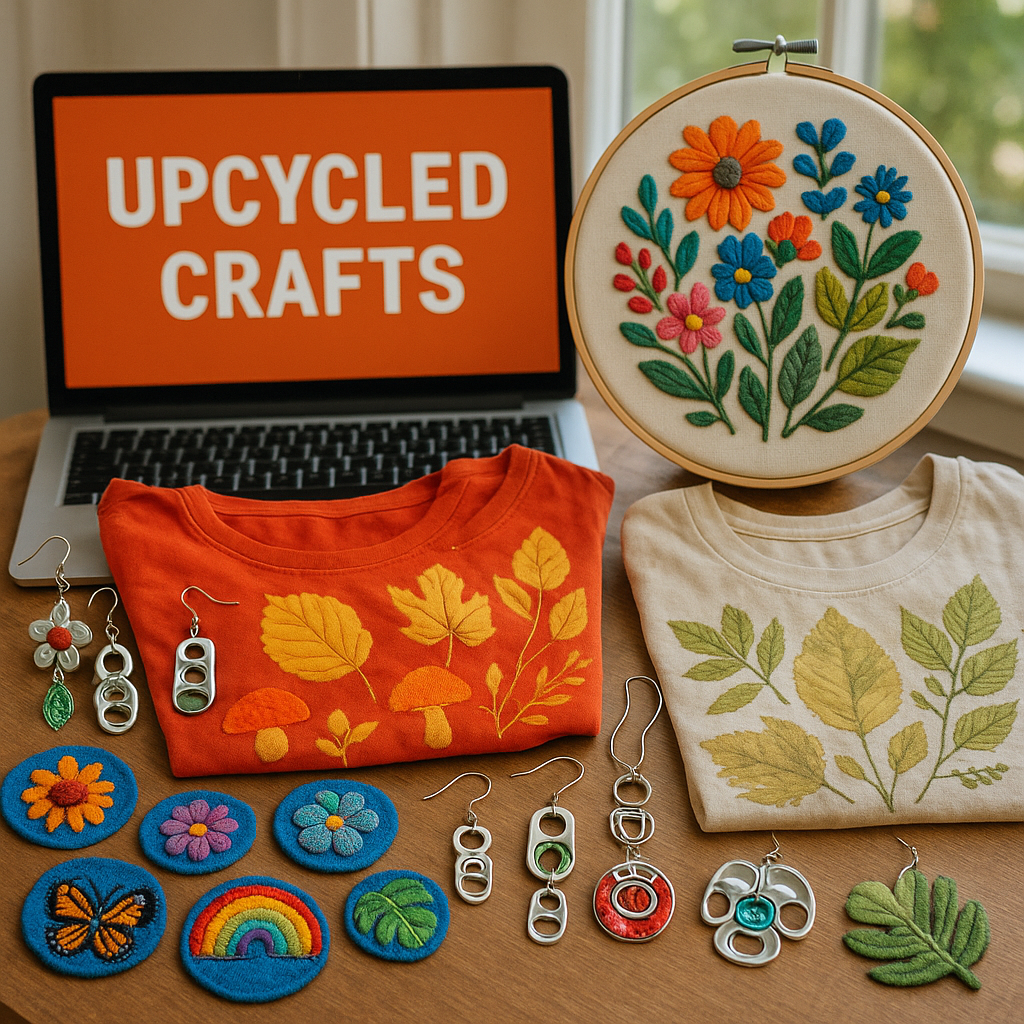
Transform those tiny thread scraps, or orts, into decorative patches, coasters, or even story bowls. Sandwich your threads between water-soluble fabric or tulle, embroider wildly to lock them in place, and then wash away the base. Experienced crafters even shape these into unique bowls or art pieces (source).
2. Jewelry from Recycled Aluminum Cans
Learn to cut, emboss, and shape aluminum cans into stunning, eco-friendly beads and earrings. Tools like bead rollers and embossing tools make this process easy and enjoyable (source).
3. Eco-Printed Clothing
Dive into natural fabric dyeing using leaves, onion skins, or bark boiled together to create fabulous patterns. Some workshops even teach eco-printing by boiling fabrics for hours to lock in earthy, sustainable colors. This process reinvents old garments beautifully (source).
4. Upcycled Planters and Home Decor
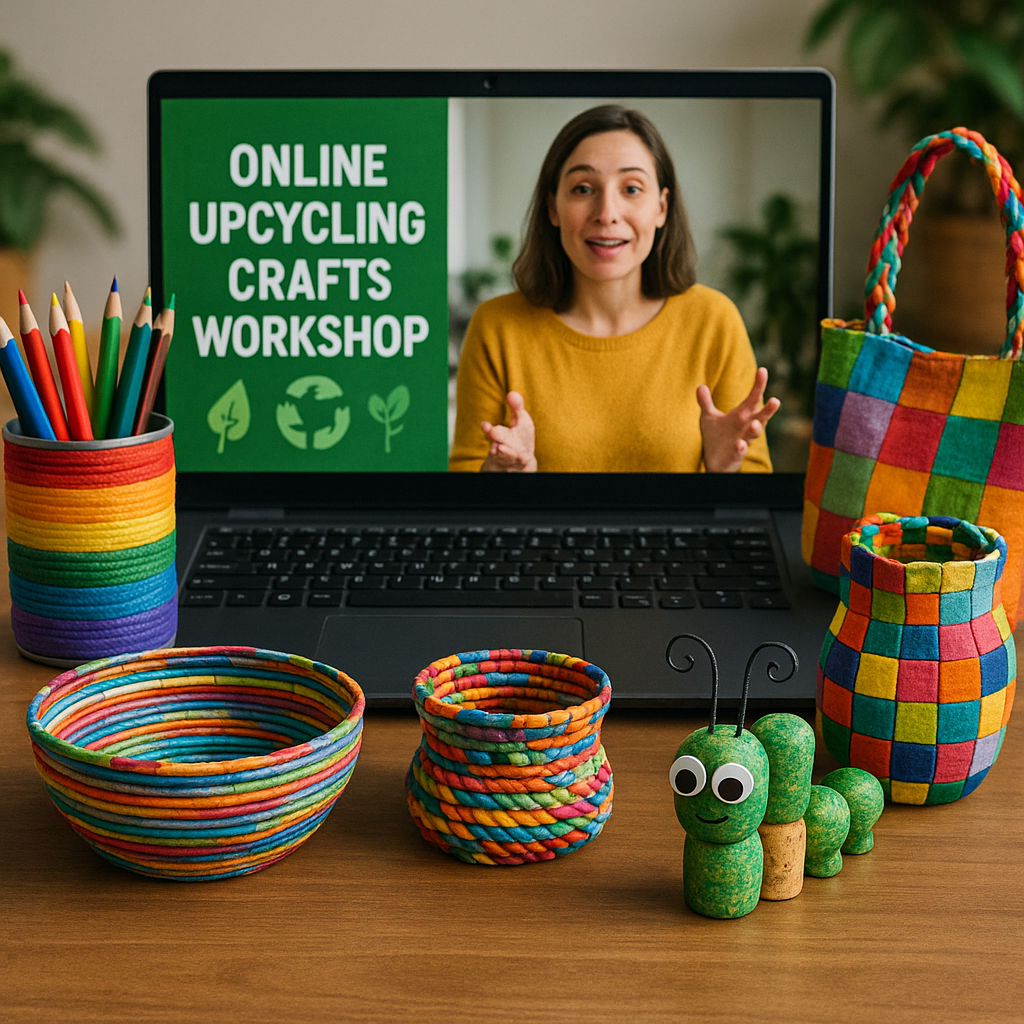
Turn tin cans, jars, and old containers into charming planters wrapped with twine or decorated with painted eco-friendly patterns. These renewed items are perfect for your home or gifting.
5. Furniture Makeovers for Young Upcyclers
Kids and teens get hands-on with furniture upgrading, painting, waxing, and finishing skills, all from the comfort of home with supplied tools and finishes. This initiative cleverly fosters creativity and even entrepreneurship from an early age.
Tools That Make Upcycling Easier and More Fun
Every crafter’s arsenal is incomplete without essential tools that streamline working with recycled materials. Here’s a breakdown of top tools often highlighted in online workshops:
| Tool | Use | Price Range | Why It’s Essential |
|---|---|---|---|
| Embossing Tool | Creating patterns on metal sheets & paper | $1 – $15 | Versatile for detailed decorating & burnishing |
| Tin Snips | Cutting metal sheets like aluminum cans | $15 – $20 | Precision cuts without sharp burrs |
| Bead Roller | Shaping metal beads fast & uniformly | $13 – $20 | Speeds jewelry making with professional results |
| Hot Glue Gun (Cordless) | Gluing various materials securely | $24+ | Dripless, portable, and consistent heat flow |
| Pliers (Round-Barreled & Needle Nose) | Wire shaping, cutting, holding small parts | $5 – $15 per pair | Essential for jewelry & stitch control |
| Safe Cut Can Opener | Cleanly removing can tops with no sharp edges | $20 – $25 | Increases safety when crafting with cans |
With these handy tools in your collection, your upcycling projects will be not only more precise but far more enjoyable (source).
Now, here’s a question: How can the right tools unlock your creative potential?
Step-by-Step Ideas to Start Your Upcycling Journey
Diving into your first project can be daunting. Here’s a simple blueprint to gain confidence, create something gorgeous, and build sustainable habits.
1. Start Small—Upcycle Your Scrap Threads
Begin with a scrap thread orts box. Collect your leftover threads in a clear jar or pouch. When ready, sandwich these between two layers of a water-soluble fabric or cotton, secure with an embroidery hoop, and sew patterns over them. Rinse away the base fabric to reveal unique thread collages that express your story and spirit (source).
2. Transform Aluminum Cans into Jewelry
Collect aluminum drink cans. Use safe can openers to get smooth edges, shape pieces with tin snips and emboss them with your desired patterns. Use a bead roller to create beads and combine with wire for earrings or necklaces.
3. Eco-Print Your Old Clothes
Wrap natural fabrics with leaves, onion skins, and bark. Boil for several hours to embed botanical imprints and colors into the garments. It’s a perfect way to revitalize old sweaters into wearable art (source).
4. Create Upcycled Planters
Grab tin cans and remove labels. Puncture drainage holes, then decorate by wrapping twine or painting vibrant patterns. These eco-friendly planters add warmth and a handmade touch to any space.
[iframe width=”560″ height=”315″ src=”https://www.youtube.com/embed/KwwjehbP2fw” title=”YouTube video player” frameborder=”0″ allow=”accelerometer; autoplay; clipboard-write; encrypted-media; gyroscope; picture-in-picture; web-share” allowfullscreen][/iframe]
How Can Online Upcycling Workshops Boost Your Career?
Turning your upcycling hobby into a viable career is more possible than ever. Online workshops don’t just teach crafts—they empower you to build a business. They cover essential topics such as marketing handmade items, pricing strategies, and growing your social media presence.
Inspired by insights from the Craft to Career podcast, workshop participants learn how to:
- Develop product lines from upcycled materials.
- Host online sew-alongs or craft-along events to build community and sales.
- Leverage Instagram and other platforms sustainably to grow an audience.
- Create compelling storytelling around their upcycled items, connecting with eco-conscious buyers.
By following such guidance and continuous learning, many turn creative passions into flourishing enterprises. Creativity meets commerce in vibrant new ways.
How Do Online Upcycling Crafts Workshops Foster Community?
Beyond skill-building, these workshops emphasize community. Participants share projects, celebrate successes, and troubleshoot challenges together. This interaction significantly boosts motivation and creativity.
At CreativiU, for example, members enjoy personalized support, interactive learning experiences, collaborations with industry leaders, and peer networking. Such environments nurture not only art but also friendships and mentorships, enriching your creative journey.
Community involvement enhances accountability and sparks innovation—both crucial for long-term success.
Sustainability and Impact of Upcycling Workshops
Upcycling is more than a trend; it’s integral to sustainable living. By reimagining waste into art, these workshops reduce landfill input and conserve resources. Participants adopt eco-friendly values that ripple throughout their communities.
Earth Day celebrations often include sustainability through upcycling activities—games, crafts, and challenges highlighting how waste can be transformed into treasure. Embracing such mindful creation is empowering and practical (source).
By learning and applying these crafts, you contribute positively to the environment, promote conservation, and inspire others to rethink consumption.
Frequently Asked Questions About Online Upcycling Crafts Workshops
What materials are best for upcycling in online workshops?
Natural fibers like cotton threads, old clothes, aluminum cans, glass bottles, scrap fabrics, and wood are common. Avoid synthetic or toxic materials when possible to maintain environmental safety and craft quality.
Can beginners succeed in these workshops?
Absolutely. Most workshops cater to all skill levels, breaking down techniques into simple steps with clear instructions and support.
Do I need special tools for upcycling crafts?
Basic crafting tools suffice for many projects, but investing in specialized tools like embossing sets, tin snips, and bead rollers can enhance your work.
How long do online upcycling workshops usually last?
They vary from quick one-session workshops lasting a few hours to extended programs with multiple modules over weeks.
Can upcycling crafts be a source of income?
Yes, many creatives use their upcycling skills to start small businesses, sell handcrafted items online, and even teach others.
Final Thoughts on Online Upcycling Crafts Workshops
In today’s eco-conscious, creative climate, an online upcycling crafts workshop marries passion with sustainability, skill with community, and hobby with opportunity.
By joining such a workshop, you access a world of expert guidance, innovative projects, and supportive peers—empowering you to transform waste into art and possibly profession.
Your creative journey, fueled by resourcefulness and care, awaits.
What’s Your Next Step?
Tell us in the comments: How will you apply this to your creative journey? For more inspiration, explore creative workshop ideas to spark your innovation!
Leave a Reply