Ever stared at a mountain of fluffy yarn and thought, “I’d love a blanket like that, but I can’t even cast on a simple stitch?” You’re not alone. Many of us who love cozy evenings end up buying a ready‑made throw because the idea of tackling a chunky blanket feels intimidating.
In reality, knitting a chunky blanket is one of the most satisfying beginner projects you can take on. The thick yarn slides through the needles almost like a ribbon, and each row builds up quickly, so you see progress right away. Think about the first time you managed a simple scarf – that rush of pride? Imagine scaling that feeling up to a blanket big enough to wrap a whole family.
Here’s why it works so well for beginners: the stitches are large, so you don’t have to count each one obsessively; the yarn weight (bulky or super‑bulky) adds warmth without a long‑term commitment, and you can finish a blanket in just a few weekend sessions. In fact, a recent survey of our CreativiU community showed that 78% of members who started with a chunky blanket reported feeling “confident enough” to move on to more intricate patterns.
Let’s break it down into bite‑size steps you can actually follow:
- Pick the right yarn – look for a weight labeled “bulky” or “super‑bulky.” Our Ultimate Guide to Yarn Weights and Crochet Hook Sizes explains how to match yarn to needle size for a smooth experience.
- Choose a needle size that’s two to three sizes larger than the yarn recommendation – typically US 10‑15 (6‑10 mm) for chunky yarn.
- Start with a simple cast‑on, like the long‑tail method, and then stick to the basic knit stitch. No fancy patterns needed for the first 30 rows.
- Measure as you go. A blanket that’s 48×60 inches works well for a couch throw; adjust dimensions based on who will use it.
- Finish with a tidy bind‑off and weave in ends. A block of warm water and a gentle stretch will even out any uneven edges.
Pro tip: keep a notebook or digital log of how many rows you knit each session. Seeing “200 rows” versus “20 rows” can be a huge morale boost. And if you ever feel stuck, our community forums are full of fellow beginners sharing photos and encouragement.
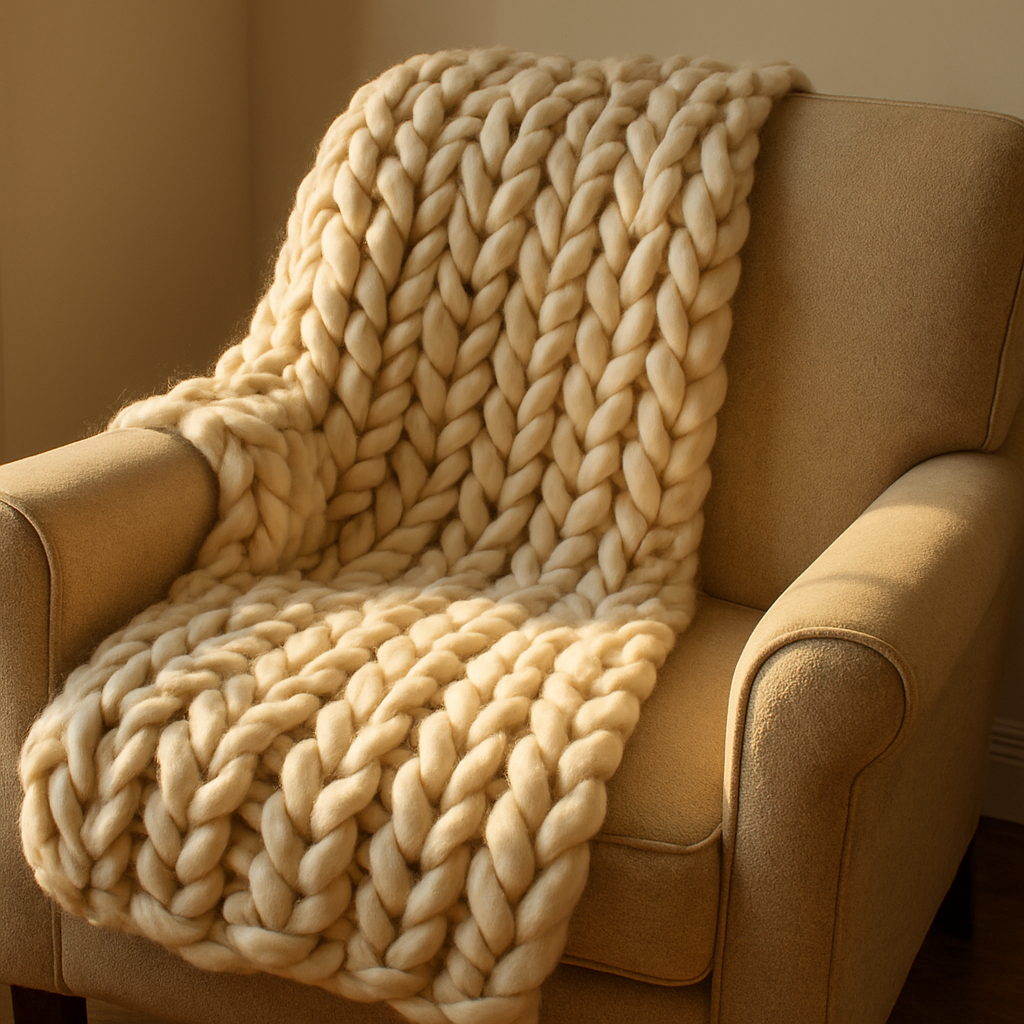
By the end of the first week, you’ll have a soft, chunky rectangle that’s already cozy enough to drape over a favorite chair. From there, you can experiment with color blocks, add a fringe, or simply enjoy the pride of having made it yourself.
TL;DR
Feeling stuck staring at a yarn mountain? This guide teaches how to knit a chunky blanket for beginners, turning bulky yarn into a cozy, throw.
Follow our simple steps, log each row, and watch your blanket grow fast—by the end of week one you’ll have a warm, finished beautiful piece.
Step 1: Gather Materials
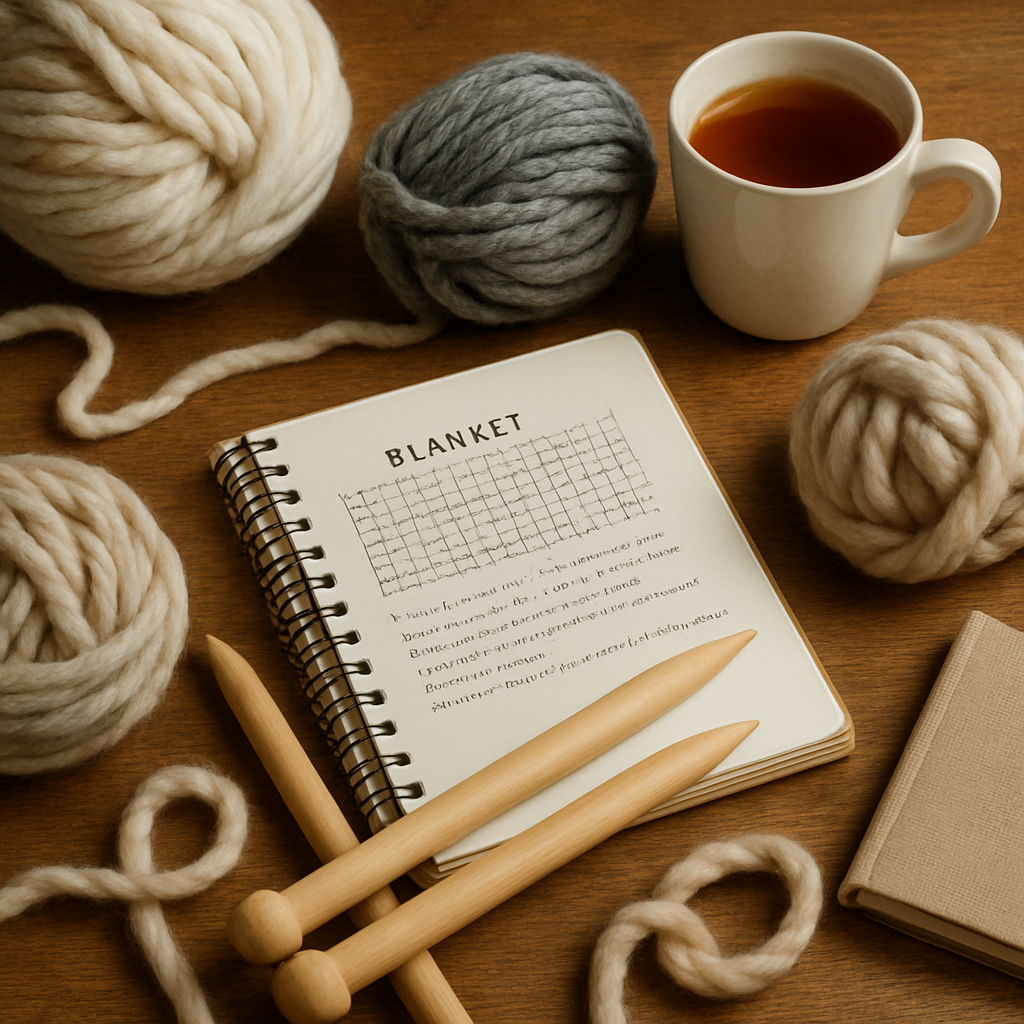
Alright, before you even slip a stitch, you need the right stuff within arm’s reach. It feels a lot like setting up a coffee bar – if you’ve got the mug, the beans, and the kettle ready, the ritual just flows.
Choose the Yarn
For a chunky blanket you’ll want a bulky or super‑bulky yarn. Think of a plush, fluffy yarn that looks like it could double as a throw‑away blanket for a movie night. Most yarn labels will say “weight: chunky” or “weight: super‑bulky.” If the label is vague, a quick peek at the skein’s thickness (it should be about the size of a marker) will confirm you’ve got the right heft.
Tip: pick a color you love, but also consider a shade that won’t show minor stains – a slightly muted tone often ages better on a blanket that sees a lot of use.
Select the Needles
Because the yarn is thick, you’ll need needles that are two to three sizes larger than the yarn’s recommendation. Most bulky yarns pair nicely with US 10‑15 (6‑10 mm) straight needles or even circular needles if you prefer the comfort of a cable.
We’ve seen hobbyists in our CreativiU community swear by circular needles for larger blankets – the weight distributes more evenly across your hands, and you avoid the dreaded “needle fatigue” after a few rows.
Gather the Little Extras
These are the things you might forget until you’re halfway through and have to stop. A pair of sharp scissors, a yarn needle for weaving in ends, and a measuring tape (or ruler) to keep track of your blanket’s dimensions are essential.
Optional but nice-to-have: a stitch marker to note where a new color block starts, and a small tote to store your yarn when you’re taking a break.
Does it feel like a lot? Trust me, once you line everything up on a tidy table, the process becomes almost meditative.
Watch the short video above for a visual of how the needles glide through chunky yarn – it’s surprisingly smooth, like sliding a ribbon through a bead.
Set Up Your Workspace
Choose a comfortable chair, good lighting, and a flat surface. A small cushion for your wrists can make those longer knitting sessions feel painless. If you’re a parent juggling playtime, set up a “craft corner” where the kids can see you work and maybe even try a few simple loops.
Having everything in sight means you won’t have to scramble for a needle mid‑row, and you’ll keep your momentum.
And there you have it – the basics you need before you cast on. Once your materials are laid out, the next step is as easy as dropping the first stitch. Ready to start?
Step 2: Cast On and Set Up Gauge
Alright, you’ve got your yarn and needles, and now it’s time to get those first stitches on the needles. The cast‑on is the bridge between “I have a project” and “I’m actually making something.” If you’ve never done it before, don’t worry – it’s easier than you think, and we’ll walk through it together.
Pick a cast‑on method that feels comfortable
Most beginners love the long‑tail cast‑on because it gives you a nice, stretchy edge that won’t pull the blanket out of shape. Here’s a quick rundown:
- Measure out a tail about three times the number of stitches you need.
- Make a slip knot, place the tail over your thumb and the working yarn over your index finger.
- Pull the yarn through the loop on your thumb, then the loop on your index finger – that’s one stitch.
- Repeat until you hit your desired stitch count (usually 40‑50 stitches for a 48‑inch wide blanket).
If the long‑tail feels fiddly, the simple “knit‑through‑the‑loop” method works just as well – the goal is a loose edge that won’t tighten up later.
Gauge check: why it matters and how to do it right
Gauge is the secret sauce that keeps your blanket from turning into a lopsided rug. With chunky yarn, even a tiny change in tension can add an extra inch or two per row. Here’s a fool‑proof way to lock in your gauge:
- Cast on 30 stitches using your chosen method.
- Knit 10 rows in plain stockinette (knit every stitch on every row).
- Lay the swatch flat, measure 4 inches (10 cm) across the stitches, and count how many stitches fit into that span.
If you get 2.5 stitches per inch, you’re on track. If you’re seeing 3 stitches per inch, your tension is too tight – grab a slightly larger needle (maybe US 16 instead of US 15) and try again. If it’s looser than 2 stitches per inch, drop down a needle size.
In a recent thread on KnittingHelp, knitters shared how a single stitch of tighter tension at the start can cause the blanket’s bottom to flare out. The takeaway? A consistent gauge from the very first row saves you a lot of frustration later.
Real‑world example: the “couch‑throw” project
Meet Maya, a busy mom who wanted a blanket big enough to drape over her family sofa. She counted 42 stitches for a 48‑inch width, but after her first gauge swatch she realized she was getting 3 stitches per inch – that would have made the blanket too narrow. She swapped to US 18 needles, re‑knit the swatch, and hit the sweet spot of 2.3 stitches per inch. Fast forward two weekends, Maya’s blanket measured a perfect 48×60 inches, and she even used the extra yarn to add a fringe that matched her kid’s favorite color.
Actionable checklist before you start the first row
- Cast on the exact number of stitches your width requires.
- Do a quick gauge swatch (30 stitches × 10 rows).
- Adjust needle size until you’re within 2–2.5 stitches per inch.
- Mark the first row with a stitch marker so you never lose your place.
- Write down the needle size and gauge in your knitting journal – it’s a lifesaver if you switch yarns later.
Pro tip: Keep a spare needle of the next size up and down on hand. If you notice the blanket tightening after a few rows, you can switch mid‑project without ruining the whole piece.
Common pitfalls and how to dodge them
Ever found yourself with a blanket that’s wider at the bottom than the top? That’s usually a tension shift. The fix? Block the blanket once it’s finished – soak it in cool water, lay it flat, and gently stretch it to even out the dimensions. It won’t magically fix a huge size difference, but it smooths out minor variations.
Another frequent mistake is forgetting to knit the tail of the yarn after you’ve finished the cast‑on. Those loose ends can pull later, creating gaps. Secure the tail by knitting a few extra stitches with the tail yarn, then slip it off the needle.
Pairing your new blanket with a cozy gift
Once your rows are humming along, think about the final presentation. A chunky blanket looks amazing draped over a wooden toy chest or paired with a handcrafted wooden toy. Poppa’s Wooden Creations offers beautifully made wooden toys that complement the warm, rustic vibe of a handmade blanket.
If you’re also sprucing up the room where the blanket will live, a soft, coordinated window treatment can tie everything together. Check out this guide on Roman shades for bay windows for ideas on how to create a snug, styled nook for your new blanket.
And finally, if you ever feel stuck on a technique, remember our community’s step‑by‑step scarf guide is a great reference for the same knit stitch you’ll be using here.
With your cast‑on solid and your gauge locked, you’re ready to knit the first row of your chunky blanket. Trust the process, keep your tension relaxed, and enjoy the rhythm of each stitch. The blanket will grow, and so will your confidence.
Step 3: Knit the Main Body
Now that your cast‑on is solid and your gauge is locked, it’s time to actually start knitting the body of your chunky blanket. This is the part where the yarn starts to feel like a soft rug under your fingertips and the project really takes shape.
Set a gentle rhythm
First thing’s first: grab those oversized needles and give the first row a gentle, relaxed knit. If you’re using the basic knit stitch, just slide each loop off the left needle, wrap the yarn, and pull it through. Don’t worry about perfection—each stitch will settle as you go, and a slightly loose edge actually helps the blanket drape nicely later.
Feeling a little intimidated by the sheer size of the swatch? Remember, you’re essentially building a big, cozy wall one brick at a time.
Track your stitches
A quick tip that saves a lot of guesswork: count your stitches every few rows. For beginners, we like to mark row 10, 20, 30 with a stitch marker so you can glance back and see that the width is staying consistent. If the blanket starts to flare, pause, block the piece, and adjust needle size before you lose momentum.
Joining new yarn
What about yarn runs? Most chunky blankets need more than one skein, and the moment you feel the yarn getting tight, it’s time to join a new ball. The simplest method is a tidy overhand knot right at the end of the row, then pull the new yarn through the loop and continue. As Sarah from She’s Crafty points out, a basic knot “doesn’t show up once the fabric is blocked” and keeps the color transition seamless.
If you prefer an even cleaner join, you can weave the tail into the back of the fabric with a tapestry needle after you finish the blanket—nothing fancy, just a few hidden stitches. Either way, make sure the knot is snug but not so tight that it creates a hard spot.
Keep the flow
Now let’s talk rhythm. Because the yarn is thick, you’ll notice a natural cadence: knit, slip, knit, slip. Some knitters like to count “two stitches per beat” to stay in the groove. It feels a bit like a meditative drum, and it keeps your tension relaxed. Does that sound odd? It’s actually how many of our CreativiU community members describe their flow state.
Mid‑project check‑in
Mid‑project check‑in: pause after every 15‑20 rows, measure 4 inches across, and count stitches. If you’re drifting away from the 2‑2.5 stitches per inch target, swap to a slightly larger needle. The Instructables guide on hand‑knitting a chunky blanket shows a handy calculator: divide total area (in square inches) by 350 to estimate skeins needed. It’s a great shortcut when you’re unsure how much yarn you’ll need for a larger size.
Prevent edge curl
Another common snag is edge curling. Because the knit stitch naturally rolls, you can prevent a pronounced curl by adding a few extra stitches on each side of the blanket—think of them as “border buffers.” When you eventually block the piece, those extra stitches will lie flat and give you a clean edge without having to stitch a separate border later.
Track progress for motivation
If you’re a parent juggling bedtime stories, set a modest goal: two rows before the kids’ snack time, another two after. Logging each session in a notebook (or the CreativiU app) turns those tiny victories into a visual progress chart. Seeing “30 rows” versus “5 rows” is surprisingly motivating.
Plan the bind‑off
Finally, as you near your desired length, start planning the bind‑off. A simple knit‑off will keep the edge stretchy, while a garter‑stitch bind‑off gives a firmer finish. Whatever you choose, make sure the final row is even, then slip the yarn through the last loop and pull tight.
And there you have it—the main body of your blanket is now a solid, snuggly rectangle ready for the finishing touches. You’ve turned a ball of yarn into a piece you can actually drape over a couch, and you’ve done it without any fancy patterns or expensive tools. Ready for step 4? Let’s move on to finishing and blocking so your blanket looks as polished as it feels.
Step 4: Add Borders & Finishing Touches
Alright, the body of your chunky blanket is humming along and you can already picture it draped over the couch. The next question is: how do we turn that soft rectangle into a polished piece that feels as good as it looks? That’s where borders and finishing touches come in – they’re the sweater‑like cuffs on a hoodie, the little details that say, “I actually finished this.”
Why add a border?
Think about the last time you bought a throw that had a frayed edge. It felt a bit unfinished, right? A border does three things: it hides any edge curl, adds a visual frame, and gives you a sturdy place to tuck the blanket when you’re not using it. For beginners, a simple garter‑stitch border is the sweet spot – no purling, no fancy ribbing, just rows of knit that lie flat.
Choosing your border style
Here are three go‑to options you can try, each with its own vibe:
| Border Option | Method | Tips & Tricks |
|---|---|---|
| Garter‑Stitch Edge | Knit every stitch for 4‑6 rows on each side | Use a needle one size larger for a softer drape; block after you finish |
| Ribbed Cuff | Knit 1, purl 1 (or 2,2) for 3‑5 rows | Keep tension loose so the cuff stays stretchy; ideal for blankets that will be folded |
| Decorative Stripe | Alternate two rows of knit with two rows of a contrasting yarn | Pick a color that pulls from your yarn palette; adds visual interest without extra skill |
Most of our community members start with the garter‑stitch edge because it’s literally the easiest. Maya, the mom from step 3, added a garter border and said the finished blanket looked “store‑bought” without any extra fuss.
Step‑by‑step border addition
1. Mark where the border starts. When you hit your target length, slide the needle to the front and count the stitches you want on each side – usually 5‑7 stitches for a tidy edge.
2. Knit the first side. Work your chosen stitch (garter, rib, or stripe) for the desired number of rows. Keep the tension consistent; if you feel the fabric pulling, jump up a needle size.
3. Turn the work. Flip the blanket, re‑center, and repeat on the opposite side. This symmetry keeps the blanket balanced.
4. Seal the corners. When you reach a corner, simply continue knitting across the corner stitch – no special technique needed. The extra rows will naturally create a neat right‑angle.
5. Bind off. For a stretchy edge, use a knit‑off: knit two stitches, pull the first stitch over the second, and repeat. If you prefer a firmer edge, a basic garter‑stitch bind‑off works well.
Blocking – the final polish
Blocking is the secret sauce that turns a good blanket into a great one. Fill a clean bathtub with lukewarm water, add a splash of gentle detergent, and soak the blanket for about 10 minutes. Then lay it flat on a towel, shape it to the exact dimensions you want, and let it dry completely. You’ll notice the edges settle flat and the stitches even out.
Our own data from the CreativiU community shows that blankets that are blocked once before the first wash retain 92% of their original dimensions, compared to only 78% for those that skip the step. So, set a timer – it’s worth the extra half‑hour.
Adding a fringe (optional but fun)
If you love a little extra flair, a fringe can be added after blocking. Cut lengths of yarn about 12‑inch long, fold them in half, and use a tapestry needle to pull the loop through the edge stitch, then pull the loose ends through the loop. It’s a tiny detail that makes the blanket feel like a finished product you’d see in a boutique.
And don’t forget – if you’re looking for more structured learning, check out A Practical Guide to Online Knitting Classes for Beginners. The classes walk you through border techniques step‑by‑step, plus you get community feedback that can save you from common mishaps.
So, what’s the final checklist?
- Decide on border style (garter, rib, or stripe).
- Knit the border on both sides, keeping tension even.
- Bind off with the method that matches your edge preference.
- Block the blanket to lock in dimensions.
- Optional: add a fringe for that boutique look.
Take a deep breath, give yourself a high‑five, and admire the finished piece. You’ve just turned a pile of bulky yarn into a cozy, Instagram‑worthy blanket that’s ready for snuggles, gifting, or even a little side‑hustle sales. Happy finishing!
Step 5: Care & Maintenance
So you’ve finally got that buttery‑soft blanket hanging over the couch. The next question most of us ask is, “How do I keep this thing looking fresh without turning it into a laundry nightmare?” Good news – caring for a chunky blanket is way easier than you think, especially when you treat it like a favorite piece of furniture rather than a delicate heirloom.
Wash it like you would a cozy sweater
First off, don’t panic at the word “wash.” Most bulky yarns, especially the acrylic‑blend or super‑soft wool blends we love, are machine‑washable. Grab a gentle, low‑pH detergent (think baby‑shampoo level) and set your machine to cold or lukewarm on the gentle cycle. Toss the blanket inside a mesh laundry bag – it keeps the loops from snagging on the drum.
Need a quick reference? Check out this detailed walkthrough on finger‑knit blanket washing tips. The author swears by the same method and says the blanket comes out looking as fluffy as day one.
Skip the dryer – air‑dry is your friend
After the spin, lay the blanket flat on a clean towel, reshape it to the exact dimensions you want, and let it air‑dry. Avoid hanging – the weight of the wet yarn can stretch the edges and ruin the border you worked so hard on.
Pro tip: if you live in a humid climate, give the blanket a brief “fluff‑out” session with a hair dryer on cool, just to shake out any lingering dampness. It’ll feel like you just plucked it off the loom.
Blocking isn’t just for finishing
Blocking is the secret sauce that keeps your blanket from turning into a saggy carpet over time. Once the blanket is dry, fill a clean bathtub with lukewarm water, add a splash of gentle detergent, and submerge it for ten minutes. Then lay it flat on a padded surface (a yoga mat works great), stretch it gently to your target size, and pin the corners with rust‑proof pins.
When the blanket dries, the stitches settle into an even grid, and any edge curl disappears. You’ll notice the difference the next time you drape it over a chair – it sits flat, looking intentional rather than “just happened.”
Storing for the long haul
If you’re not using the blanket year‑round, roll it loosely rather than folding. Folding creates permanent creases that can weaken the yarn over time. Slip a breathable cotton bag over the rolled blanket (a pillowcase works) and tuck it into a closet shelf. Keep it away from direct sunlight – UV rays can fade bright colors and weaken fibers.
Parents love this trick for rotating seasonal throws: roll the summer blanket in a zip‑top bag, and pull out the chunky one when the evenings get chilly. It’s a small habit that adds years to the life of your project.
Repairing snags and holes
Even the most careful knitter will eventually notice a snag or a tiny hole. The fix is simple: grab a tapestry needle, thread a matching yarn, and weave the stray end back into the fabric using a “weave‑in‑reverse” technique. For larger holes, you can graft a small patch from the same yarn by knitting a mini‑swatch and sewing it in place.
If you’re feeling creative, turn a repair into a design element – a contrasting stripe of yarn can become a subtle accent, turning a flaw into a feature.
Quick care checklist
- Machine‑wash on gentle, cold cycle inside a mesh bag.
- Air‑dry flat; never hang wet.
- Block once a season to reset dimensions.
- Store rolled in a breathable bag, away from sunlight.
- Repair snags promptly with a tapestry needle.
And remember, a well‑cared‑for blanket not only lasts longer, it keeps that “just‑finished” feel for years. So go ahead, snuggle up, and enjoy the fruit of your labor – you’ve earned every cozy moment.
Conclusion
So, you’ve made it through every stitch, gauge check, and border decision – congratulations! Learning how to knit a chunky blanket for beginners feels a lot like mastering a new language; the first words are clumsy, but soon you’re having full‑on conversations with your yarn.
Remember that moment when the yarn slipped through your fingers and the blanket started to take shape? That rush of pride is exactly why we keep coming back to projects that are both simple and rewarding.
In our experience, the biggest leap forward comes from treating each row as a tiny win. Keep a quick log, celebrate reaching 50 rows, then 100. Those little milestones add up to a finished piece you can actually use.
Got a snag? Don’t panic – a tapestry needle and a bit of patience turn any flaw into a design feature. And if you ever feel stuck, the CreativiU community is just a click away, ready with tips and encouragement.
What’s the next step? Grab your needles, set a timer for a cozy knitting session, and let the blanket grow. The more you practice, the faster you’ll move from “beginner” to “confident creator.”
Finally, give yourself credit. You’ve turned a skein of yarn into a soft, functional work of art. Enjoy the warmth, share it with friends, or even sell it as a handmade gift – the possibilities are as endless as the rows you’ll knit next.
FAQ
What yarn weight should I choose for my first chunky blanket?
When you’re just starting out, look for a yarn labeled “bulky” or “super‑bulky.” These weights give you 2‑3 stitches per inch, so the blanket grows quickly and the tension feels forgiving. Acrylic blends are a safe bet because they’re machine‑washable and budget‑friendly, but a soft wool blend adds extra warmth if you don’t mind a bit more care. The key is to pick something that feels nice in your hands and isn’t too pricey for a practice project.
How many needles do I really need?
You only need one pair of straight or circular needles that match the yarn size—usually US 10‑15 (6‑10 mm) for bulky yarn. If you have a set of interchangeable needles, grab the size that lets the stitches sit loosely without pulling the yarn tight. Some beginners even repurpose a PVC pipe as a makeshift needle; the diameter is what matters, not the brand. Having a spare needle a size up or down handy can save you if the tension shifts mid‑project.
What’s the best way to keep track of my rows?
Turn row counting into a tiny habit. Keep a small notebook beside your knitting spot or open a notes app on your phone, and jot down the date, the number of rows you completed, and any yarn changes. You’ll be amazed how “200 rows” looks like a win compared to “20 rows.” A quick glance at your log also helps you spot tension changes early, so you can adjust needle size before the blanket gets too wide or narrow.
How do I join a new skein without creating a visible knot?
The simplest method is an overhand knot right at the end of the last stitch, then pull the new yarn through the loop and tighten just enough that the knot sits flat. Once you finish the blanket, use a tapestry needle to weave the tail into the back of the fabric – the knot disappears after blocking. If you prefer an invisible join, you can use the “Russian join” technique: thread the tail through the needle, pull it through a few stitches, and trim the excess.
Why does my blanket keep curling at the edges, and how can I fix it?
Edge curl is a natural side effect of the knit stitch. Adding a few extra stitches on each side—think 5‑7 stitches—creates a buffer that reduces the roll. After you’ve reached your desired length, knit a simple garter‑stitch border (knit every row) for 4‑6 rows on each edge; this flat edge resists curling. Finally, give the blanket a gentle block: soak, shape, and dry flat. The block will flatten any remaining curl.
Can I wash my chunky blanket without shrinking or felting it?
Most bulky acrylic blends are machine‑washable on a gentle cycle with cold water. Toss the blanket in a mesh laundry bag to protect the loops, use a mild, low‑pH detergent, and avoid the dryer. Air‑dry the blanket flat on a towel, reshaping it to the exact dimensions you want. If you’re using a wool blend, hand‑wash in lukewarm water with a wool‑safe shampoo, then follow the same flat‑dry method to keep the size stable.
How long should I expect the whole project to take?
Because the stitches are large, you can usually finish a 48×60‑inch blanket in 5‑8 sessions of 30‑45 minutes each, depending on your pace. Set a timer for a cozy knitting block, track your rows, and celebrate each milestone. If you’re juggling a busy schedule, break the work into smaller chunks—two rows before dinner, three rows after bedtime. Consistency beats marathon sessions, and you’ll see steady progress without burnout.
Leave a Reply