So you’ve been fusing glass for a while. You’ve made a few plates, maybe some coasters. Now you want to push it further. You want to create pieces that feel like art, landscapes, flowers, layered scenes with depth. But how do you get there without a local instructor? The answer is an advanced glass fusing workshop online. These courses bring expert techniques right to your living room. No travel. No expensive studio rental. Just you, your kiln, and a screen full of knowledge. In this guide, I’ll walk you through the five steps to succeed. You’ll learn how to pick the right class, set up your workspace, master firing schedules, explore advanced tricks like dropouts and gold leaf, and finally turn your skills into income. Let’s dig in.
Step 1: Choosing the Right Advanced Online Workshop
Not all online workshops are created equal. Some are just a video of someone making a piece. Others offer structured lessons, firing schedules, and community support. For advanced glass fusing, you need more than a demo. You need a course that explainswhythings work.
Look for depth
The best workshops cover multiple techniques. They show you how to combine frit, sheet glass, and vitrograph. They teach you to use a photo as inspiration. They don’t just show the pretty end result, they show the mistakes, too. One popular glass fusing advanced workshop online from Curious Mondo, for example, includes a bonus video on extending the life of your kiln wash. That’s the kind of extra detail that separates a good course from a great one.
Check the instructor’s background
Who is teaching? Do they have a real studio? Have they taught before? Look for instructors who are active in the glass community. Artists like Kat Huddleston or Jody McCraney run popular online sessions. Their courses are part of a larger library, which means they’ve refined their teaching over time.
Platform matters
Some platforms offer live sessions with Q&A. Others are self-paced. For advanced work, a mix is ideal. You want the flexibility to rewatch a tricky firing schedule, but also the chance to ask questions. The Top 6 Stained Glass Classes Online guide on CreativiU lists platforms that blend both, which can be a starting point for your search.
Bottom line: A good advanced glass fusing advanced workshop online gives you depth, a real instructor, and a platform that supports your learning style.
Step 2: Setting Up Your Advanced Glass Fusing Studio
You can’t take an advanced class without the right gear. The research I found shows a core set of equipment appears in most workshop lists: a kiln with a programmable controller, a glass cutter, a Morton System for measuring, kiln wash, kiln paper, Elmer’s glue, and a metallic Sharpie. But only about 59% of these items include a recommended specification. That means you have to do some homework.
Your kiln is the heart
For advanced work, you need a kiln that can reach at least 1500°F. A programmable controller is non-negotiable. You’ll be doing complex schedules with multiple ramps. Manual control won’t cut it. Make sure the kiln interior is large enough for pieces up to 12 inches, many advanced projects are bigger than coasters.
Safety first
Only 32% of the equipment items in my research mention safety. That’s scary. Place your kiln on a heat-resistant surface. Keep flammable items away. Use a HEPA-filtered handheld vacuum when handling glass powders. Wear safety glasses and a mask when cutting. Don’t skip these, they’re simple but vital.
| Equipment | Specification Needed | Safety Note |
|---|---|---|
| Kiln | Programmable controller, 1500°F min | Place on heat-resistant pad |
| Glass cutter | Pistol grip for comfort | Gloves and eye protection |
| Kiln wash | Brush-on or spray | Ventilate while applying |
| Kiln paper | Use for tack fuses | Dispose properly |
| Morton System | For consistent scoring | — |
Bottom line: Set up your studio with the right kiln, safety gear, and a full list of supplies, spending time on setup saves you from ruined projects later.
Step 3: Learning Kiln Firing Schedules for Complex Projects
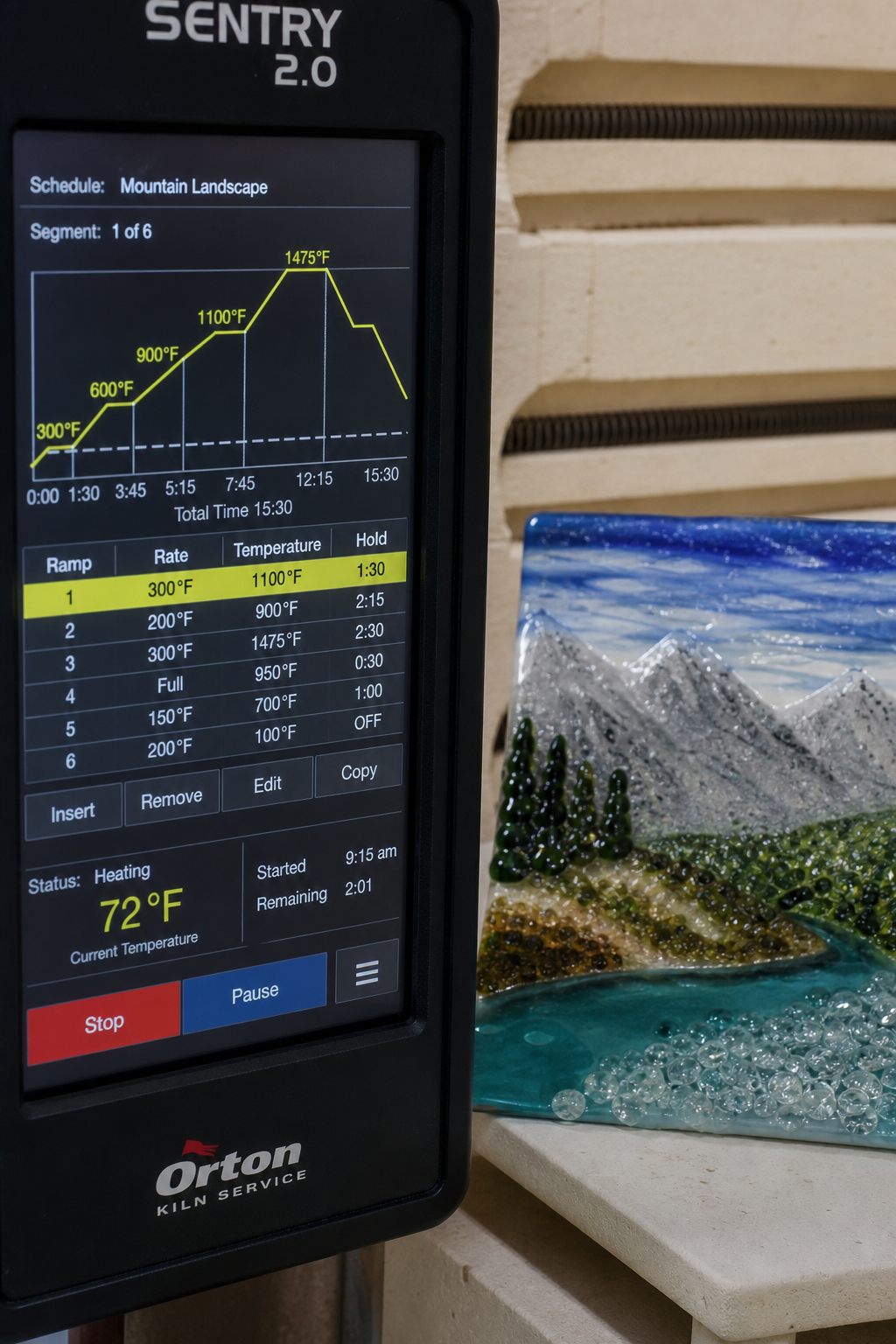
Firing schedules are the secret language of glass fusing. They control how the glass heats, soaks, and cools. Advanced projects often require multiple firings. You might do a high-temperature full fuse for the base, a lower tack fuse for details, and a slump for shape. Each step demands a different schedule.
One common issue is devitrification, a cloudy film that forms when the glass stays too long at a certain temperature. To avoid it, you need to program your kiln correctly. According to a troubleshooting guide from Hollander Fusing Center, the solution is to adjust the ramp rate and hold times. For example, a quick ramp to 1300°F and a short soak can reduce devit.
Start with the manufacturer’s schedule
Every glass brand has a recommended schedule. Use it as a baseline. Then tweak based on your kiln’s personality. Some kilns run hot, others cool. Keep a log of each firing, write down the schedule, the glass used, and the outcome. Over time, you’ll build your own library of schedules.
Test before committing
Before you fire a big project, make a small test piece. Use the same glass combination and schedule. This is how you learn without wasting expensive materials. In an advanced online workshop, instructors often share their own test results.
Bottom line: Learning kiln firing schedules for a glass fusing advanced workshop online requires practice, a logbook, and the willingness to test small samples before the final piece.
Step 4: Exploring Advanced Techniques: Dropouts, Enamels, and Gold Leaf
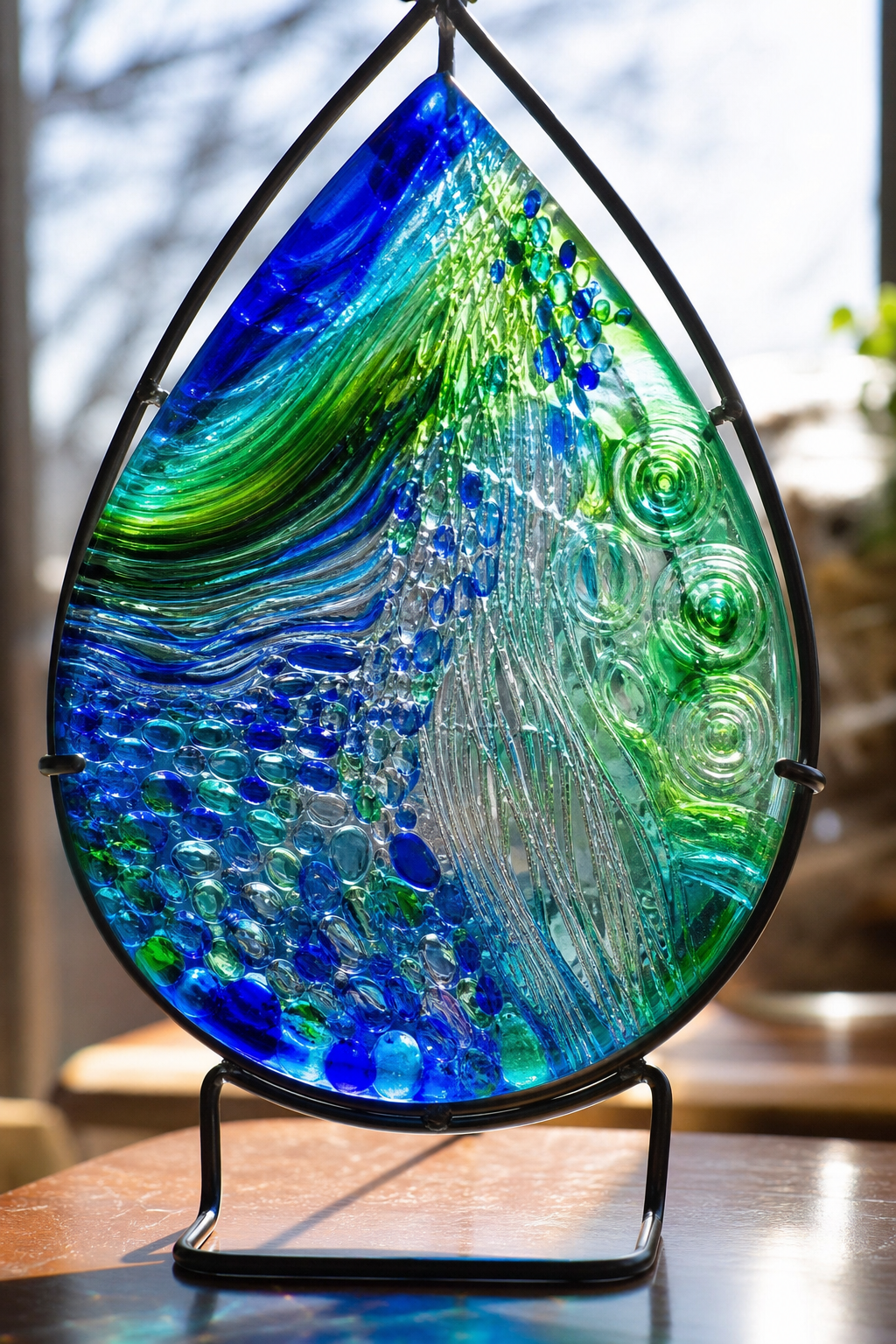
Once you’re comfortable with basic fusing, it’s time to experiment with techniques that make your work stand out. Dropouts create three-dimensional forms by allowing the glass to slump through a mold or drop into a cavity. Enamels add painted details. Gold leaf gives a luxurious finish.
Dropouts , crazy curves
A dropout piece starts flat. You put it on a kiln shelf with a hole or a drop ring. As the glass softens, it drops through. The result is a bowl-like shape. “Crazy dropouts” tilt the shelf so the glass drops at an angle, creating a more dynamic form. This technique was popularized by artists like Peter Kain and is featured in many advanced workshops.
Check out this video demonstration of dropout techniques to see the process in action. It’s a great complement to the written step-by-step you’ll get in an online class.
Enamels and gold leaf
Enamel is a glass-based paint that you fire onto the surface. It adds fine lines and details. Gold leaf is applied after a firing and then fired again to bond. Together, they let you create calligraphy-like accents. Artist Alice Benvie Gebhart uses this technique in her landscapes, she adds black enamel lines and gold accents to give depth. The result is stunning.
Bottom line: Advanced techniques like dropouts, enamels, and gold leaf add dimension and sophistication to your work, and a glass fusing advanced workshop online is the perfect place to learn them.
Step 5: Turning Your Skills into Art and Income
Now you can create advanced pieces. But how do you go from hobby to income? Many online workshops include a module on selling. They cover pricing, photography, and selling platforms. Some artists earn thousands per month with fused glass.
Find your niche
Seasonal items sell well. Holiday-themed pieces, like the ones in Curious Mondo’s “Glass Fusing for the Holidays” course, are popular. You can create a series of ornaments, dishes, or wall hangings for Valentine’s Day, Christmas, or Halloween. Build a collection that customers can pick from year after year.
Brand yourself
You need a consistent visual identity. That includes a logo, packaging, and an online presence. Consider working with a branding agency to polish your look. For example, Trait Simple specializes in visual identity and strategy for creative businesses. A strong brand helps you charge premium prices.
Sell through your own website
Setting up an e-commerce site is easier than ever. Use platforms like Shopify or Squarespace. If you want a custom site that truly stands out, consider hiring a web developer. Lakeway Web Development builds custom e-commerce solutions that can handle high-resolution images and even augmented reality previews of your glass art. That tech can wow buyers.
Bottom line: Turning your advanced glass fusing skills into income requires a niche focus, strong branding, and a professional online store, each step learned from a glass fusing advanced workshop online can be applied.
Frequently Asked Questions
What is a glass fusing advanced workshop online?
It’s a structured video course that teaches experienced fusers how to create complex pieces like landscapes, layered scenes, and freeform sculptures. Unlike beginner classes, these workshops dive into multiple firings, kiln schedule optimization, and specialty materials. They often include downloadable firing schedules and patterns. Some offer live Q&As or community forums. The price can vary; one popular platform lists an advanced video tutorial for $349.
What equipment do I need for an advanced online workshop?
You’ll need a kiln with a programmable controller that reaches at least 1500°F, a glass cutter (preferably a pistol grip), kiln wash, kiln paper, a Morton System for scoring, and safety gear like glasses and a HEPA vacuum. Many courses provide a detailed supply list. Only about 59% of items in typical lists include specifications, so check the course for specific recommendations.
How do I choose between live and self-paced online workshops?
Live workshops offer real-time feedback and the chance to ask questions. Self-paced ones let you rewatch tricky parts and fit learning into your schedule. For advanced techniques, a blend is best: live sessions for Q&A plus recorded content for reference. Look at the course description to see if it includes both. Also check if there’s a community forum where students share progress.
Can I really learn advanced glass fusing online?
Absolutely. Online workshops provide high-definition video, close-ups of techniques, and often include patterns and firing schedules. Many artists have transitioned from attending in-person studios to learning entirely online. The key is to practice between lessons and to have the right equipment at home. Forums and instructor access help when you get stuck.
How long does it take to complete an advanced glass fusing workshop online?
Most courses are designed to be completed over a few weeks. You might have 6-8 modules, each requiring a firing cycle. Some are self-paced, so you can take months if you need. The total active learning time is around 4-6 hours of video, but projects can take several days because of kiln cooling. Plan for at least one project per module.
How much do advanced glass fusing online workshops cost?
Prices vary widely. One advanced tutorial from a well-known platform is $349. Others are included in subscription services like CreativiU, which offers a $1 trial then $7.95/month. The cost reflects the depth of content, number of projects, and instructor expertise. Compare what’s included, firing schedules, supply lists, patterns, and community support can justify a higher price.
What are the most common mistakes in advanced fusing and how do I avoid them?
Devitrification (cloudy glass) is common, avoid it by using proper schedules and cleaning glass thoroughly. Bubbles between layers can be minimized by slow ramp rates and longer soaks. Another mistake is using incompatible glass, always check that your glass is the same COE (coefficient of expansion). Advanced workshops teach these troubleshooting steps, and some include separate videos on mistakes and fixes.
Can I sell the pieces I make in an advanced workshop?
Yes, unless the workshop specifically prohibits it (rare). Many students start selling after completing a course. Use the techniques you learn to create unique pieces, then set up an online store. Also consider displaying your work in home staging setups, real estate professionals often use art to enhance properties. That’s where staged homes need distinctive decorative pieces. Check out how home staging professionals integrate art to add value.
Conclusion
You made it through the five steps. Choosing the right workshop, setting up your studio, learning kiln schedules, learning advanced techniques, and turning your art into income, it’s a journey. But every bit of progress counts. The research shows that only a handful of online glass fusing workshops are available, and the one priced at $349 indicates the value of quality instruction. Platforms like CreativiU are stepping in to fill that gap with affordable, complete courses. For a similar learning experience in ceramics, discover our comprehensive guide to online pottery classes for beginners.
Start today. Enroll in a glass fusing advanced workshop online. Set up your kiln with a programmable controller. Practice a dropout schedule. Photograph your first layered landscape. Then share it with a community. The advanced fusers you admire started exactly where you are now. Your next piece could be the one that gets you a commission. So go ahead, light that kiln. The glass is ready, and so are you.
Leave a Reply