Everyone knows acrylic painting offers vibrant colors and quick drying times favored by artists worldwide.
But what exactly makes a great acrylic painting course free and how can you find one that suits your needs?
This guide compiles a comprehensive list of free acrylic painting courses, techniques, and resources tailored for artists at every skill level.
Some are interactive video tutorials that break down complex concepts into simple steps.
Some are collections of expert tips on materials, brushwork, and color theory.
Some offer unique challenges to help you practice and build confidence.
Some provide deep dives into blending, layering, and glazing techniques.
Let’s dive right in.
Why Choose Acrylic Painting?
Acrylic paints have been a favorite among artists since their development in the mid 20th century. They’re versatile, affordable, and forgiving for beginners while offering depth for advanced painters. Unlike oils, acrylics dry quickly, allowing you to layer paint and adjust your work in a single session. Plus, they adhere well to multiple surfaces, from canvas and wood to paper and fabric, making them perfect for various creative projects.
Because acrylics clean up easily with water and don’t require solvents, they’re safer and more convenient for home use and classrooms. This accessibility opens doors to people of all skill levels to explore their creativity without bulky or expensive equipment. Whether you want to dabble in all kinds of artistic styles or master detailed work, acrylics provide a flexible medium to express yourself.
Best Free Online Acrylic Painting Courses
Starting your acrylic painting journey can be daunting. The good news? There are plenty of free, high-quality resources to guide you every step of the way. From beginner-friendly tutorials to more advanced lessons that cover expert techniques, these courses are accessible anytime, anywhere.
One great resource is the free tutorial videos on Blue Beach House Art, where artists demonstrate detailed steps to paint skies, waterfalls, and tropical birds with acrylics. These videos cover unique challenges like using only a fan brush, mastering smooth color transitions, and mixing your own dark blacks for richer tones (Blue Beach House Art tutorials).
Another excellent platform, YouTube, hosts numerous playlists with step-by-step acrylic painting lessons for free, including crash courses that cover fundamentals in under 15 minutes (YouTube Acrylic Playlists). These often come with advice on color theory, brush selection, and layering strategies to improve your skill efficiently.
Don’t just watch — practice along with the videos to build muscle memory and confidence. Pausing and rewinding as needed helps absorb technical details like glazing and wet-on-wet blending.
Essential Acrylic Painting Techniques for Beginners
Mastering the basics paves the way for advanced creativity. A foundational understanding includes:
- Wash: A translucent layer to set the initial tone or background. Achieved by diluting paint with water and brushing it lightly on watercolor or acrylic-ready paper. This method creates a soft base to build upon.
- Wet Paint on Dry Paint: Layering opaque colors over a dry base to add texture or sharp edges. It is key to waiting for layers to dry to avoid unwanted muddiness and enables crisp shapes.
- Wet Paint on Wet Paint: Blending technique where two wet colors merge smoothly on the canvas. This method is great for gradients and soft edges.
- Glazing: Applying a thin, transparent paint layer over an opaque layer that alters tone or adds depth. It’s like wearing colored sunglasses over your painting to tint or highlight elements.
- Texture Creation: Using tapping, stippling, or crosshatching brush strokes adds dimension and interest to your artwork.
One expert shared these techniques clearly in a beginner-friendly basic acrylic painting video tutorial. Watching it closely will help beginners visualize and replicate the effects in their own art.
Materials and Tools Guide for Acrylic Painting
Getting the right supplies doesn’t have to be overwhelming or expensive.
A simple palette with primary colors (cadmium yellow light, cadmium red, ultramarine blue), plus titanium white and Mars black, can produce a broad range of hues with mixing. This minimal palette helps you practice and understand color relationships effectively.
Brushes are essential, and synthetic brushes are recommended for acrylic paints due to their water-based cleaning needs and durability. Key brush shapes to have include flats, rounds, and filberts. Each offers different strokes and texture potentials.
Surfaces vary from pre-gessoed canvases and panels to paper and even wood or MDF boards. Gesso prepares the surface for the acrylic paint by making it more adhesive and preventing absorbency. While many canvases come pre-gessoed, it’s handy to have gesso if you want to paint on unconventional materials.
Palettes like the Masterson stay-wet system extend the life of your mixed colors, keeping them workable for longer periods — ideal for detailed work that requires mixing precise hues and returning to them later.
How to Mix Colors Effectively
Color mixing is part science and part art. The strongest paintings often come from thoughtful mixtures rather than tube colors straight from the jar.
Start with primary colors and use your palette organization to guide approaches. Lay out yellow, red, and blue in corners and arrange the secondary colors in between for visual reference. Adding white lightens colors, while mixing complementary colors like red and green can mute tones and create subtle grays and browns.
Try making small swatch charts or sample mixes before starting your painting. This experimentation helps you predict color outcomes and replicate mixes in later sessions, ultimately helping you develop your unique palette.
Remember, some colors are stronger or weaker pigments. For example, phthalo green is vivid but can dominate mixes, so use sparingly. Making your own blacks by mixing reds and greens often results in richer tones than using black paint alone.
Step-by-Step Acrylic Painting Process
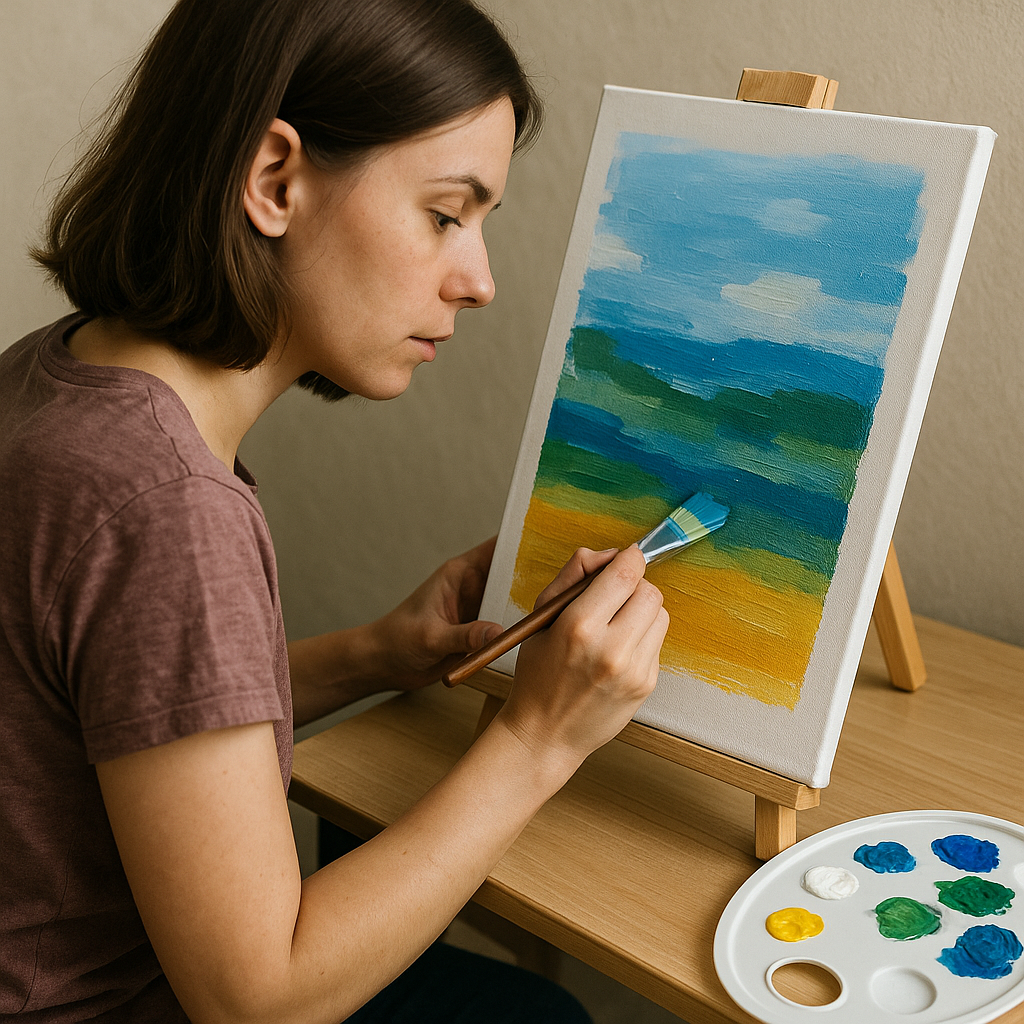
Following a structured workflow improves artistic results and reduces frustration. Here’s a five-step method many artists use:
- Design Your Painting: Decide on your subject, mood, style, and composition. Sketch thumbnails or gather reference materials to clarify your vision.
- Draw Your Design: Transfer your sketch lightly on the canvas or painting surface using a pencil or charcoal.
- Block In Colors and Values: Begin adding the main color areas and shapes. Focus on large shapes before details.
- Refine Values and Details: Adjust lighting, shading, and shapes. Add texture and define edges.
- Finish Your Painting: Add final highlights, adjust contrasts, and sign your work.
Remember, patience is key. Acrylics dry quickly, so layering in stages yields crisp, bold effects. Don’t hesitate to pause and evaluate your work from different angles and lighting.
Common Mistakes to Avoid
Starting out, it’s easy to get discouraged by mistakes. But every artist journeys through setbacks! Here are pitfalls to watch for:
- Overwatering Paint: Excess water dilutes acrylics too much, weakening pigment and causing longer drying times with potential cracking.
- Not Letting Layers Dry: Applying wet paint on wet without proper technique can cause muddied colors and loss of detail.
- Using Wrong Brushes: Natural hair brushes aren’t ideal as they absorb water and warp when washed frequently with water.
- Ignoring Color Mixing: Relying solely on tube colors reduces depth and harmony in paintings.
- Skipping Surface Preparation: Painting on unprimed surfaces prevents proper adhesion leading to peeling or uneven textures.
By knowing these traps, you can practice smarter and save time. As one acrylic artist puts it: “Progress comes from layering both paint and knowledge.”
Where to Find Inspiration and Community Support
Learning acrylic painting free doesn’t mean learning alone. Community engagement accelerates growth and maintains motivation.
Join online groups, forums, and social media dedicated to acrylic painting. Many platforms share regular challenges, critiques, and tips to push your skills. For instance, CreativiU hosts interactive learning experiences and peer collaboration that can make your painting journey more enriching and enjoyable.
Creative inspiration often strikes via diverse sources — nature, photographs, even puzzles. Speaking of puzzles, check out brainclue.com for brain teasers that sharpen creativity and problem-solving. Surprising as it may seem, puzzles and painting share cognitive pathways for innovation!
FAQ About Acrylic Painting Course Free
What is the best way to start learning acrylic painting for free?
Start with structured video tutorials like those on Blue Beach House Art or beginner playlists on YouTube. Then, practice essential techniques such as washes and blending, progressively adding complexity.
How many colors do I really need?
A limited palette with a few primaries (yellow, red, blue), plus black and white, covers most color needs and teaches you effective mixing.
Can acrylic painting be done on surfaces besides canvas?
Absolutely. Acrylics adhere well to paper, wood, MDF, and fabric. Ensure surfaces are clean and primed (using gesso if needed) to promote good adhesion.
Why do acrylic paints dry so fast?
They are water-based and designed to dry quickly for easier layering and corrections. This property makes them ideal for beginners who want fast results and iterative processes.
Do I need expensive artist-grade paints to learn?
Not necessarily. Student-grade paints are sufficient for practice, but investing in artist-grade white and yellow can improve opacity and color vibrance. This advice aligns with expert recommendations highlighted in professional tutorial playlists.
What’s Your Next Step?
Tell us in the comments: How will you apply this to your acrylic painting journey? For inspiration and community support, explore our guide on mastering creative problem solving to unlock more artistic growth!
Whether you’re just beginning or looking to refine your techniques, free acrylic painting courses and resources provide accessible entry points. The key to mastery is consistent practice paired with quality learning materials. With strategic guidance and the right mindset, your artistic skills can flourish remarkably.
Explore different techniques, experiment boldly, and don’t fear mistakes—they’re part of your creative evolution. Harness free online lessons, immerse yourself in community feedback, and keep pushing boundaries. Your next great masterpiece is waiting for you to pick up that brush and start painting.
(Verified with sources as of 2025-09-14)
Leave a Reply