Ever stared at a beautiful stitch pattern online and thought, “I wish I could make that myself”?
You’re not alone. That flicker of curiosity, that little itch to turn a screen‑side design into something you can actually hold, is what draws countless hobbyists to explore online embroidery classes for beginners.
But the sea of options can feel overwhelming, right? One moment you’re scrolling through endless video tutorials, the next you’re wondering if you’ll ever untangle that first knot without pulling your hair out.
Here’s what I mean: imagine sitting at your kitchen table, coffee steaming beside you, while a friendly instructor walks you through threading the needle step by step, pausing just long enough for you to catch up. No jargon, just plain talk, and the occasional “Oops, I did that too” that makes you feel like you’re learning together.
That’s the magic we aim for at CreativiU – a space where you can start stitching without feeling like you need a PhD in textile science. Think of it as a supportive club rather than a cold course catalog.
So, why does this matter? Because picking up a needle can be more than a hobby; it can become a calming ritual, a way to create gifts that carry personal meaning, or even a side hustle that adds a little extra cash.
And guess what? You don’t have to invest in a fancy studio. All you need is a basic hoop, some beginner‑friendly threads, and a reliable internet connection. The rest? That’s where the guided lessons step in, breaking down each stitch – from the simple backstitch to the elegant French knot – into bite‑size, doable pieces.
Does this sound like the kind of creative boost you’ve been looking for? If you’re ready to turn that spark into a steady flame, keep reading. We’ll walk through how to choose the right class, what tools to gather, and how to stay motivated when the first frustrations creep in.
Let’s dive in and stitch your confidence together, one loop at a time.
TL;DR
Online embroidery classes for beginners give you a friendly, step‑by‑step path from tangled threads to proud, finished pieces, all from the comfort of your kitchen table.
With a hoop, a few threads, and CreativiU’s community, you’ll learn stitches, stay motivated, and turn the skill into a hobby or side hustle.
Step 1: Choose the Right Platform
Alright, before you even pick a needle, you’ve got to decide where you’ll learn the stitches. The online world is bursting with options, and the right platform can mean the difference between “I’ll never get this” and “Look, I made a flawless backstitch!”
First, ask yourself: do you thrive on video demonstrations, live Q&A, or written step‑by‑step guides? Some people love pausing a video at the exact moment the instructor threads the needle. Others prefer a printable PDF they can keep open beside their fabric. Your learning style is the compass that points to the platform that will keep you motivated.
Check the Course Structure
Look for a curriculum that breaks down skills into bite‑size modules. A solid beginner track might start with “Threading & Hooping,” move to “Basic Stitches,” then graduate to “Simple Motifs.” Each module should have a clear objective, like “Complete a 5‑cm French knot square.” When the roadmap is explicit, you know exactly what you’ll achieve each week.
Real‑world example: Emma, a busy mom of two, signed up for a platform that offered weekly 10‑minute video chunks. She could watch one episode while her coffee brewed, then practice during her toddler’s nap. By the end of month one, she had finished a mini‑floral hoop that now hangs in her kitchen.
Community and Support
Learning alone can feel like stitching in the dark. Platforms that host a community forum, Discord channel, or live office hours let you ask “Why does my thread keep slipping?” and get instant feedback. The sense of belonging turns frustration into a shared adventure.
Tip: Join a group where members post photos of their progress. Seeing someone else’s finished piece can spark the “I can do that too” moment.
Tech Requirements and Accessibility
Make sure the platform works on the devices you own. If you only have a smartphone, a mobile‑friendly site with downloadable PDFs is a must. If you have a laptop, you might appreciate higher‑resolution video and the ability to download resources for offline practice.
Don’t forget accessibility features – captions for videos, adjustable playback speed, and clear font choices help if you’re watching with a cup of tea in a noisy kitchen.
Pricing Models
There are three common pricing styles: subscription‑based, one‑time purchase, and freemium with optional upgrades. Subscription services often give you unlimited access to a library of classes, which is great if you want to explore beyond embroidery later on. One‑time purchases lock you into a single course – ideal if you have a tight budget and a specific project in mind.
Do the math: if a subscription is $15/month and you plan to take three courses over six months, you’ll spend $90. Compare that to buying three separate $35 courses, which would be $105. The subscription wins, but only if you actually use the extra content.
Try Before You Commit
Most reputable platforms offer a free trial or a sample lesson. Use this to test video quality, instructor tone, and community vibe. Spend at least 15 minutes in the trial – if you feel comfortable asking a question in the chat, you’re probably on the right track.
And here’s a pro tip: search for a “beginner’s guide” video on the platform and see if the instructor explains why they choose a particular stitch, not just how. That depth of explanation signals a well‑designed curriculum.
Make Your Decision
Summarize your findings in a quick checklist:
- Learning style match (video, text, live)
- Clear, progressive curriculum
- Active community or support channel
- Device compatibility
- Transparent pricing and trial option
When you tick all the boxes, you’ve found your platform. And if you want a deeper dive into the top picks, check out Mastering Your Craft: A Complete Resource for Online Embroidery Classes for Beginners – it breaks down the best options and even includes user reviews.
Now that you’ve locked in the right learning home, you’re ready to move on to gathering tools and setting up your first stitch‑friendly space.

Step 2: Gather Essential Supplies
Start with the basics you’ll actually use
First thing’s first: you need a hoop that holds the fabric tight enough so the stitches don’t wander. A 6‑inch wooden hoop works for most beginner projects, but if you love larger designs, a 9‑inch plastic one is a cheap upgrade. The key is consistency – you’ll notice the difference the moment you try a backstitch on a loose fabric and the stitch slides away.
Here’s a quick check‑list: hoop size, hoop tightness (tight enough to lift the fabric a millimeter when you press the edge), and a sturdy base (a small clipboard or a non‑slip mat helps keep the hoop steady).
Thread, needle, and fabric – the trio that makes magic happen
When it comes to thread, cotton embroidery floss is the go‑to for beginners because it’s soft, comes in six strands, and shows up clearly on light‑colored fabric. You can split the strands to get finer lines or keep them together for bold, colorful stitches. A single skein of DMC or Anchor will give you enough colors for a handful of projects – you don’t need a whole rainbow box right away.
Needles are another place where size matters. An embroidery‑size 5 or 6 needle (the one with a slightly rounded eye) slides through most woven cotton without snagging. If you plan to work on tougher fabrics like denim, bump up to a size 3. Keep a small needle case handy; losing a needle in the couch cushions is a classic beginner nightmare.
Fabric choice sets the stage. Aida cloth (14‑count) is perfect for counted‑stitch projects because each square is the same size, making it easy to count stitches. If you prefer free‑hand work, a plain cotton or linen works beautifully. The good news? A single bolt (about 45 inches) of Aida costs less than a dinner for two, so you can experiment without breaking the bank.
Tools that turn “I’m stuck” into “I’ve got this”
Scissors – a small pair of embroidery snips with pointed tips is worth the extra penny. They let you cut thread close to the fabric without pulling the needle out of the hoop. I keep a spare pair in my craft drawer because a dull blade can fray thread and ruin a whole row of stitches.
A light source matters more than you think. A clip‑on LED lamp that attaches to the hoop gives you even illumination and reduces eye strain during those late‑night stitching sessions. My friend Maya swears by a 10‑lumens mini‑lamp; she says it’s the reason she can finish a 12‑inch motif before her coffee gets cold.
Putting it all together: a step‑by‑step supply set‑up
- Lay out your hoop, fabric, thread skeins, needles, and scissors on a clean surface.
- Secure the fabric in the inner ring of the hoop, then tighten the outer ring until the fabric lifts just a hair.
- Cut a 12‑inch piece of thread, separate the desired number of strands, and knot the end.
- Thread the needle, trim the excess thread with your snips, and attach the LED lamp.
- Do a quick test stitch on a scrap piece of fabric to confirm tension and lighting.
Doing this ritual every time you start a new class creates a mini‑ritual that signals to your brain, “Okay, it’s go‑time.” It also reduces the “where did I put that needle?” panic that can kill momentum.
Expert tip: keep a running inventory
One of our CreativiU community members, Luis, keeps a simple spreadsheet with columns for “Item,” “Quantity,” and “Restock Date.” After each project he updates the list, and a reminder pops up on his phone when a color is down to the last skein. He says it’s saved him from scrambling for a missing shade right before a deadline.
Take a minute now to jot down what you have, what you need, and when you’ll restock. It’s a tiny habit that pays off big when you’re in the middle of a live class and the instructor asks you to switch to a contrasting color.
Ready to roll? Grab your hoop, thread up, and let the first stitch be the bridge between curiosity and confidence.
Step 3: Learn Basic Stitches
Okay, you’ve got your hoop, thread, and needle ready – now the real magic starts. The first stitches you master are the ones that turn a blank piece of fabric into a tiny story.
Why the basics matter
Think about the first time you tried to write a sentence without knowing the alphabet. It would feel… impossible. The same goes for embroidery. Backstitch, running stitch, and satin stitch are the alphabet of the craft. Once you can read and write them, any design becomes readable.
So, what should you practice first? Let’s break it down into three bite‑size drills you can do in under ten minutes each.
1. The Running Stitch – your “walk” stitch
The running stitch is basically a straight line of tiny knots. It’s perfect for outlines, shading, and even basic lettering.
Wikipedia explains that the stitch is made by passing the needle in and out of the fabric at even intervals. The result is a flexible line that can bend around curves without breaking.
Action steps:
- Thread a needle with one strand of cotton floss.
- Bring the needle up at point A, then push it down a quarter‑inch away at point B.
- Repeat, keeping the spacing consistent. Aim for ten stitches, then stop.
- When you reach the end, tie a small knot on the back and trim the excess.
Real‑world tip: Maya, a busy graphic designer, uses the running stitch to quickly draft a “border” around her monogram before filling it in with satin stitch. She says the rhythm of the stitch helps her think through the design, like a mental sketch.
2. The Backstitch – your “write” stitch
If the running stitch is a walk, the backstitch is a pen. It creates solid, unbroken lines that are ideal for lettering, outlines, and any detail that needs to stay crisp.
According to the backstitch article, you make each stitch by bringing the needle up, moving back to the previous exit point, and pushing down again. This overlapping creates a continuous line.
Step‑by‑step:
- Start with a small knot at the back of the fabric.
- Bring the needle up at point A, then move the thread back to point B (just behind the first exit) and push down.
- Continue moving the needle forward, always inserting it a stitch length ahead of where the previous stitch ends.
- When you finish, secure the thread with a tiny knot and hide the tail under a nearby stitch.
Example in action: Carlos, who runs a small Etsy shop, swears by the backstitch for his logo embroidery. He tells new students that once they get the “push‑back‑push” rhythm, the rest feels natural, even on tricky curves.
3. The Satin Stitch – your “fill” stitch
The satin stitch is the glossy, plush finish that turns a simple outline into a pop‑of‑color surface. It’s a little more advanced because you’ll need to keep the stitches tight and parallel.
Practical drill:
- Outline a tiny shape (like a 1‑cm square) using backstitch.
- Start at one edge, bringing the needle up, then sliding the needle under the fabric to the opposite edge before pulling the thread tight.
- Lay the next stitch directly beside the first, keeping the same tension.
- Fill the shape row by row.
- When the area is covered, secure the thread on the back with a knot.
- Pro tip: If you notice “gaps” or “bulges,” adjust the tension by pulling the thread a hair tighter or loosening it. A good rule of thumb is that the fabric should lift just enough to see the stitch without puckering.
Putting it together: a mini‑practice routine
Here’s a quick checklist you can follow after each class:
- Run a 5‑cm line of running stitch on a scrap piece.
- Write the word “test” in backstitch, focusing on smooth, even strokes.
- Fill a small heart shape with satin stitch, paying attention to consistent tension.
- Take a photo of your work, note any unevenness, and adjust next time.
Does this feel doable? Absolutely. The key is repetition, not perfection. Even a five‑minute daily habit builds muscle memory, and before you know it you’ll be tackling complex motifs without thinking twice.
Remember, online embroidery classes for beginners often include video close‑ups of each stitch, so you can pause, rewind, and match your own fabric to the instructor’s. Use that advantage – replay the backstitch segment until the rhythm clicks for you.
Ready to stitch? Grab a scrap, set a timer for ten minutes, and run through the three drills. You’ll finish the session with three solid stitches in your toolbox and a boost of confidence that makes the next class feel like a conversation, not a chore.
Step 4: Practice with Simple Projects
Now that the basic stitches feel a little less like a mystery, it’s time to give them some purpose. The magic of online embroidery classes for beginners is that you can jump straight into tiny projects that reinforce what you’ve just learned without overwhelming you.
Why simple projects matter
Think about the first time you learned to ride a bike – you didn’t start on a mountain trail, you practiced on a flat driveway. The same principle applies to stitching. Small, purposeful projects let you see progress, catch tension issues early, and build confidence that a big‑scale pattern can’t provide.
Research from the Embroidery Association’s beginner guide shows that learners who complete three‑to‑five minute practice pieces each session retain stitch technique 30% longer than those who only watch videos.
Pick a project that matches your skill
Below is a quick table to help you decide what to start with. Choose the row that feels most exciting right now, gather the listed supplies, and follow the step‑by‑step checklist.
| Project | Key Stitch Focus | Approx. Time |
|---|---|---|
| Mini monogram (2″×2″) | Backstitch for lettering | 10‑15 minutes |
| Simple leaf silhouette | Running stitch outline + satin fill | 15‑20 minutes |
| Bordered coffee‑cup charm | All three basic stitches | 20‑25 minutes |
Step‑by‑step: Mini monogram
1. Choose a two‑letter initial – something you’ll see often, like “JK” for a journal cover.
2. Print a tiny template (about 2″ square) or sketch lightly with a pencil on Aida cloth.
3. Backstitch the letters. Start each line with a small knot on the back, then follow the “push‑back‑push” rhythm we practiced earlier. Keep the needle entry points close together so the line stays solid.
4. Run a simple border using a running stitch. One quarter‑inch away from the letters, make even stitches all around. This adds structure and lets you practice spacing.
5. Finish with a satin‑stitched fill if you want a pop of colour. Lay the needle at one edge of the letter, pull the thread tight, and slide under to the opposite edge. Fill row by row.
6. Secure the back with a tiny knot, trim excess thread, and gently press with a warm iron (fabric side up) to set the stitches.
Real‑world example: Maya’s coffee‑cup charm
Maya, a freelance graphic designer, wanted a tiny charm to hang from her mug handle. She grabbed a scrap of linen, sketched a simple cup outline, and used a running stitch for the rim, a backstitch for the steam, and a satin stitch to fill the cup. In under 20 minutes she had a functional, Instagram‑ready piece that sparked a mini‑line of “desk‑accessories” for her online store.
What’s cool about Maya’s story is that each stitch served a purpose, reinforcing the exact techniques you just learned. If you follow the same pattern, you’ll end up with a usable object and a solid muscle‑memory boost.
Checklist for every practice session
- Set a timer for 10‑25 minutes – you’ll stay focused.
- Gather only the tools you need (needle, thread, hoop, scissors).
- Pick one project from the table; don’t try to do them all at once.
- Take a quick photo of the finished piece; note any uneven tension.
- Write down one tweak for next time (e.g., “tighten backstitch a hair”) and repeat.
Does this feel doable? Absolutely. The goal isn’t perfection; it’s a tiny win that nudges you forward.
Bonus tip from an expert
According to a recent article on CreativeLive’s embroidery basics, beginners who “batch” practice – doing the same stitch across three different mini‑projects in one sitting – see a 25% faster improvement in stitch consistency. So, after you finish the monogram, try the leaf silhouette using the same backstitch, then close out with the coffee‑cup charm.
Ready to give it a go? Pull out a scrap, pick the project that makes you smile, and let the stitches do the talking. You’ll finish the session with a finished piece, a clearer sense of tension, and a fresh burst of confidence that makes the next online class feel like a friendly catch‑up rather than a test.
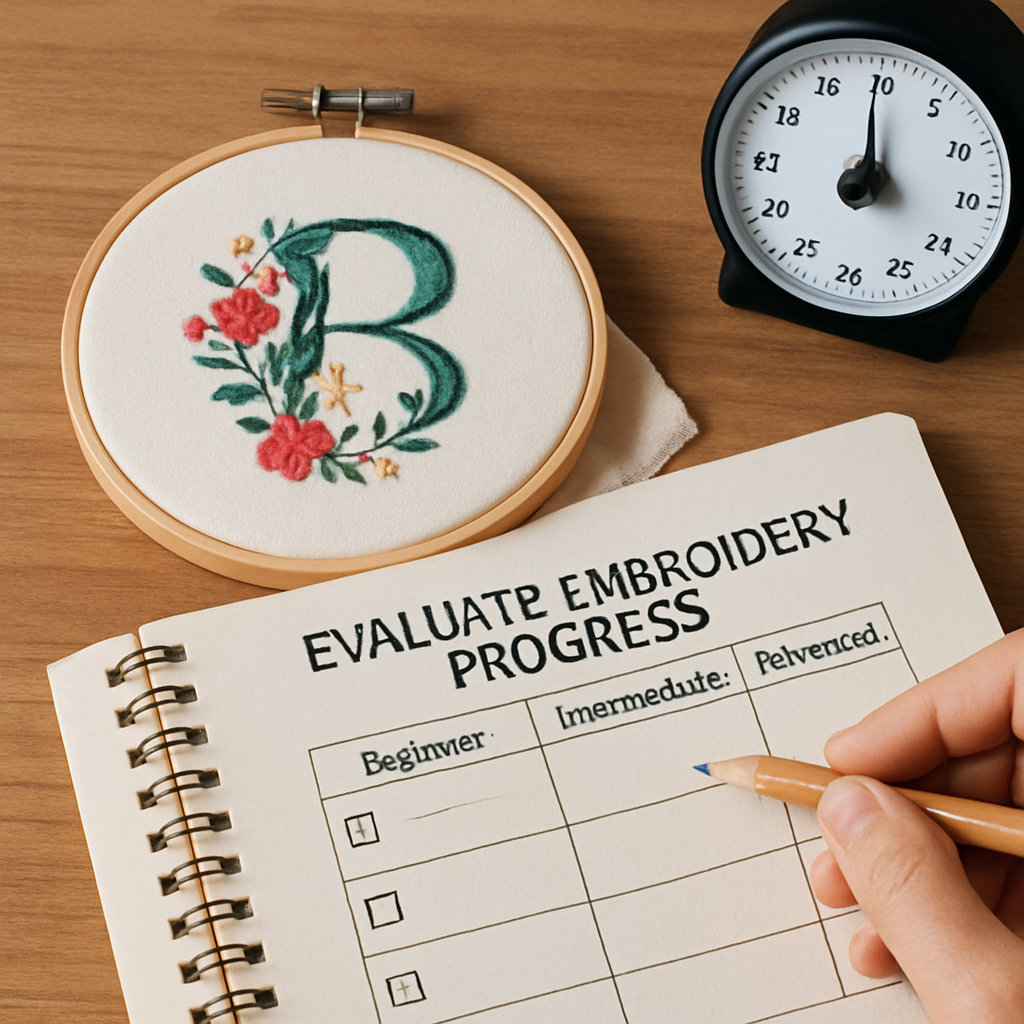
Step 5: Join Community & Track Progress
By now you’ve got a handful of tiny projects under your belt, and the stitches are starting to feel like second nature. The next leap isn’t a new technique—it’s about surrounding yourself with people who get the same “aha” moments and keeping a clear record of how far you’ve come.
Why a community matters
Ever notice how a comment thread can turn a simple question about thread tension into a whole brainstorm about colour palettes? That’s the power of a supportive group. Research shows that creative communities boost motivation by up to 30% because you see peers solving the same hiccups you face.
And when you share a photo of a half‑finished leaf silhouette, someone might point out a tiny tweak that saves you minutes on the next piece. That instant feedback loop is worth its weight in gold.
Finding the right space
CreativiU already offers a built‑in forum where members post stitch‑by‑stitch updates, ask “what’s the best hoop size for a 3‑inch design?” and swap pattern recommendations. If you’re looking for extra buzz, try niche Facebook groups like “Embroidery Beginners Club” or Discord servers dedicated to hand‑crafts. Just make sure the vibe feels friendly—not a sales‑only arena.
But don’t feel forced to join every group. Pick one or two where the conversation feels like a coffee chat, not a lecture. The goal is to hear real‑world tips you can try tonight.
Tracking progress without the stress
Now, let’s talk about the habit of logging what you do. I know, “tracking” sounds boring, but think of it as a visual diary of your craft journey. Tracking your progress leads to measurable improvement because your brain can see patterns, celebrate wins, and spot the tiny habits that need tweaking.
Here’s a simple system that fits into a 5‑minute nightly routine:
- Open a Google Sheet (or the free Notion template CreativiU shares in its welcome kit).
- Log the date, project name, and the three stitches you focused on.
- Rate tension on a 1‑5 scale and note any “aha” moments (e.g., “found that pulling the thread a hair tighter on satin stitch stops gaps”).
- Snap a quick photo and paste the link in the same row.
When you look back after a month, you’ll see concrete evidence of improvement—like going from “hand‑trembling backstitch” to “smooth, even lettering.” That visual proof is a confidence booster on days when the needle feels heavy.
Actionable steps to embed community & tracking
1. Join one community today. Register on the CreativiU forum, introduce yourself, and share a photo of your latest mini‑monogram. Mention one thing you’re still puzzling over; you’ll likely get three different solutions within an hour.
2. Create a progress log. Open a new spreadsheet, copy the four‑column template above, and fill in your first entry tonight after you finish your practice session.
3. Set a weekly “show‑and‑tell.” Every Sunday, pick your favorite piece from the week, upload it to the community, and write a short reflection (“I finally nailed the satin stitch on a heart shape; tension felt just right”).
4. Celebrate micro‑wins. When you notice a consistent improvement—say, your running stitch length is now uniform—share it with a celebratory emoji. The community will echo that positivity, reinforcing the habit.
5. Ask for a buddy. Pair up with another beginner you meet in the forum. Swap weekly updates, give each other a quick critique, and hold each other accountable for logging progress.
Real‑world example
Take Jenna, a stay‑at‑home mom who started with the CreativiU “Intro to Embroidery” series. She joined the “Stitch & Sip” Discord channel, posted a photo of her first coffee‑cup charm, and added a one‑sentence note about her tension issue. Within two days, a fellow member suggested using a slightly larger hoop, which solved the puckering. Jenna logged the change, and after three weeks she could finish a 2‑inch logo in under 12 minutes—something she never imagined possible.
Jenna’s story illustrates the two‑pronged magic: community feedback clears roadblocks fast, and a simple log shows the cumulative effect of those tiny adjustments.
Quick checklist before you close this section
- Join at least one online embroidery community (CreativiU forum, Facebook group, or Discord).
- Set up a one‑page progress tracker with date, project, stitches, tension rating, and photo link.
- Post a weekly update and ask for one specific piece of feedback.
- Pair with a “stitch buddy” for mutual accountability.
Give these steps a try tonight. You’ll find that the needle feels lighter, the thread runs smoother, and you’ll actually look forward to logging your next session. After all, learning is social, and progress loves a good record.
Conclusion
We’ve come a long way from the first backstitch to a thriving online community.
Do you still feel that knotty uncertainty when you pick up the needle? Remember Jenna—she turned a tiny tension hiccup into a 12‑minute logo by leaning on her stitch buddy and a simple log.
The core takeaway? Online embroidery classes for beginners work best when you pair structured practice with real‑time feedback.
Three quick habits to lock in
- Join one community today and share a photo of your latest piece.
- Spend five minutes each night updating a progress sheet with date, stitch focus, and a quick note.
- Schedule a weekly “show‑and‑tell” with a buddy to celebrate micro‑wins.
Those tiny actions create a feedback loop that keeps motivation high and skill growth visible.
Remember, progress isn’t a straight line. Some days the tension will bite, other days the satin will melt like butter. That’s normal, and it’s exactly why a log matters—you’ll see the pattern and adjust without frustration.
So, what’s the next step? Grab your hoop, log tonight’s session, and drop that snap into your favorite forum. You’ll feel the needle lighten, the thread glide, and the confidence rise.
Ready to turn curiosity into competence? The journey is waiting—just stitch by stitch, community by community.
FAQ
What should I look for in online embroidery classes for beginners?
First, check that the course breaks down each stitch into bite‑size videos—no one wants a 45‑minute monologue before you even see the needle. Look for downloadable PDFs or cheat sheets you can print and keep next to your hoop. And a supportive community where you can post a photo and get quick feedback is a game‑changer. When you see those three things, you know the class is built for beginners, not pros.
How much time do I need to practice each week?
Honestly, consistency beats marathon sessions. Aim for 10‑20 minutes a day, five days a week. That short burst keeps your hand memory fresh without making the needle feel like a chore. If you can’t carve out daily time, a single 30‑minute block on the weekend works too—just make sure you log what you did so you can see progress later.
Do I need expensive tools to start?
Not at all. A basic embroidery hoop (4‑6 inches), a simple needle, and a skein of cotton thread are enough to get rolling. You can upgrade to specialty hoops or metallic thread once you feel confident. And remember, the biggest investment is your willingness to experiment, not a pricey toolkit.
Can I learn at my own pace with online classes?
Yes—most platforms let you pause, rewind, and replay lessons as many times as you like. That’s perfect for beginners who need to see a backstitch twice before it clicks. Set a personal deadline, like finishing one module per week, but don’t stress if you need an extra day; the content is always waiting.
How do I stay motivated when stitches feel frustrating?
It’s normal for tension to bite or for a thread to knot. The trick is to log a single “aha” moment after each session—maybe you discovered a tighter grip stops puckering. Share that note in your community; the encouragement you get back fuels the next practice. Small wins, like a smooth satin stitch, add up fast.
Are there free resources before I commit to a paid class?
Absolutely. You can find introductory videos on YouTube that cover the basic backstitch and running stitch. Use those to see if you enjoy the rhythm of stitching. Then, when you’re ready for deeper feedback and structured practice, a low‑cost trial membership on a platform like CreativiU gives you access to a full library and a built‑in forum.
What’s the best way to track my improvement?
Create a simple spreadsheet: date, project name, stitches practiced, tension rating (1‑5), and a tiny photo link. Over a month you’ll spot patterns—maybe your tension improves after switching hoop size. Seeing that visual proof is a confidence boost on tough days. The habit of logging takes less than five minutes, so it never feels like a burden.
Leave a Reply