Ever found yourself staring at a pile of fabric, wondering how the perfect garment shape actually gets created?
You’re not alone—most of us have that moment when a sketch looks amazing on paper but feels like a mystery once you try to turn it into a real piece.
That’s where pattern drafting classes online step in, turning that confusion into a clear, step‑by‑step adventure you can follow from your couch.
Think about the last time you tried to copy a design from a magazine and ended up with a crooked neckline or uneven hem. Frustrating, right? What if you could learn the exact geometry behind every seam, curve, and dart without leaving your living‑room.
We’ve all been there, juggling work, family, and a hobby that feels like it demands a full‑time studio. The beauty of online learning is you get to fit lessons into the cracks of your day—early morning coffee, lunch break, or late‑night creative sprint.
So, what makes a good pattern drafting class online? First, it breaks down complex concepts into bite‑size videos that you can pause, rewind, and replay until the idea clicks. Second, it pairs those videos with downloadable templates you can print and test right away. And third, it offers a community where you can share your drafts, ask questions, and get feedback without feeling judged.
Imagine logging into a platform where you can watch a tutor draw a basic bodice block, then instantly download the PDF, trace it on muslin, and see the fit in real time. No more guessing, no more wasted fabric.
Does this sound like the kind of hands‑on learning you’ve been craving? Good, because the next sections will walk you through how to pick the right course, set up a functional workspace, and stay motivated through each draft.
Let’s dive in and discover how pattern drafting classes online can transform your creative process from “I wish I could” to “I’m actually making it.”
TL;DR
Pattern drafting classes online let you turn sketchy ideas into real garments from the comfort of your couch, with bite‑size videos, printable templates, and a supportive community that keeps you motivated. We’ll show you how to pick the perfect course, organize a workspace, and start drafting confidently right away today.
Step 1: Choosing the Right Pattern Drafting Platform
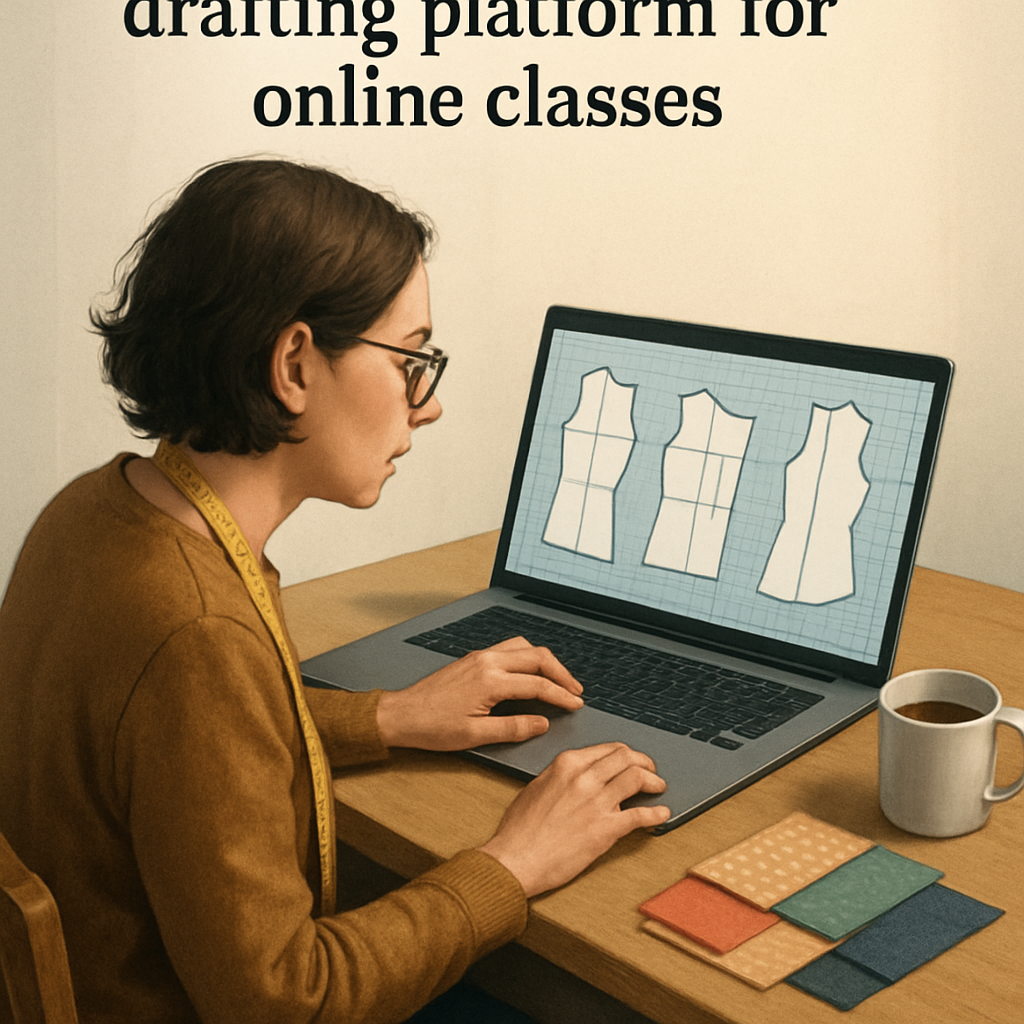
Okay, picture this: you’ve finally decided to dive into pattern drafting, but the sea of platforms feels overwhelming. One moment you’re scrolling through a glossy landing page, the next you’re wondering if the software will actually let you trace a dart without breaking a sweat.
That hesitation is normal. The platform you pick is the foundation of every future draft, so it deserves a little extra attention—like choosing the right kitchen knife before you start chopping vegetables.
Identify Your Learning Style
Do you learn best by watching bite‑size videos, or do you prefer detailed PDFs you can print and annotate? Some platforms, like CreativiU’s own library, blend both approaches, letting you switch between a quick demo and a downloadable worksheet. If you love pausing, rewinding, and taking notes in the margins, make sure the platform offers a robust video player and high‑resolution PDFs.
And what about community? A vibrant forum where members share muslin tests, troubleshoot seam allowances, and celebrate “aha!” moments can keep you motivated. Look for platforms that host live Q&A sessions or have a Discord/Slack group that’s active during your usual crafting hours.
Check Technical Requirements
Before you sign up, glance at the system specs. Do you need a Windows PC, a Mac, or will a tablet suffice? Some drafting tools run entirely in the browser, which means you won’t have to install heavy software—a huge plus if you’re working from a laptop on the couch.
Real‑world example: Jenna, a stay‑at‑home mom, started with a desktop‑only program and quickly hit a snag when her laptop crashed. She switched to a cloud‑based platform that saved every version automatically, and now she can draft on her phone while the kids nap.
Evaluate Pricing and Trial Options
Pricing models vary from monthly subscriptions to one‑time purchases. The best strategy is to start with a free trial or a money‑back guarantee. During the trial, ask yourself:
- Do the lessons progress logically from basic blocks to garment construction?
- Are the downloadable templates editable, or are they locked PDFs?
- Is there a clear roadmap that tells you when you’ll move from a bodice block to a full dress?
If the answers are mostly “yes,” you’re on the right track. Otherwise, you might be paying for fluff.
Read Real Reviews and Success Stories
Look beyond the polished testimonials on the homepage. Search independent forums, Reddit threads, or YouTube reviews where actual students discuss what works and what doesn’t. One reviewer noted that a particular platform’s “auto‑fit” feature saved her 30 minutes per draft, but the same tool struggled with plus‑size measurements—a critical detail if you plan to design for diverse bodies.
Here’s a quick tip: create a spreadsheet with columns for “Feature,” “Pros,” “Cons,” and “Price.” Fill it in as you compare three to five platforms. The visual contrast often reveals the clear winner.
Take the First Actionable Step
Now that you have a checklist, pick the platform that ticks the most boxes for your style, tech setup, budget, and community needs. Once you’ve enrolled, schedule a 30‑minute “orientation” session with yourself: open the first video, download the starter template, and sketch a quick outline on paper. This tiny ritual turns the abstract decision into a concrete start.
And if you’re still unsure, our Learn Pattern Drafting Classes Online: A Complete Guide to Choosing, Enrolling, and Succeeding breaks down each platform feature side by side, so you can compare without feeling lost.
Bottom line: the right platform should feel like a trusted workshop partner—not a confusing black box. Follow the checklist, test the waters with a trial, and you’ll be drafting patterns that actually fit—both your body and your schedule.
Step 2: Setting Up Your Workspace and Materials
Okay, you’ve finally picked a platform and watched that first “welcome” video. The next hurdle isn’t a tricky seam—it’s the space where you’ll actually do the work. If your table is a kitchen counter and your only light is the fridge door, you’ll end up frustrated before the first pattern even touches fabric.
Pick a Dedicated Spot (Even if It’s Tiny)
First, choose a spot that you can call “the sewing zone.” It doesn’t have to be a whole room; a sturdy table in a quiet corner works fine. The key is consistency—when you walk into that space, your brain knows it’s go‑time.
Real‑world example: Maya, a freelance graphic designer, set up a folding table next to her couch. She added a portable rolling cart for thread spools, and within two weeks she could finish a bodice block without constantly rearranging her laptop.
Action step: Measure the surface you have, then sketch a quick floor plan on paper or in a free app. Mark where your cutting mat, ruler, and computer will sit. If the plan feels cramped, consider a wall‑mounted pegboard for tools (see the tip below).
Lighting That Doesn’t Strain
Good light is the secret sauce of accurate pattern drafting. Natural daylight is ideal, but if you’re working after sunset, a daylight‑balanced LED lamp (5000 K) is worth the investment. Position the lamp so it shines from the side, reducing shadows on the paper.
According to the CDC’s ergonomic guidelines, proper lighting can cut eye‑strain complaints by up to 30 % that means fewer headaches and more precise measurements.
Quick tip: Clip a small clamp lamp to the edge of your table and swivel it toward the pattern. It’s cheap, adjustable, and keeps the workspace tidy.
Essential Tools Checklist
Here’s a “starter kit” you can assemble for under $100:
- Cutting mat (self‑healing, at least 24×36 in)
- Clear ruler and French curve
- Hip‑point scissors (for fabric) and paper scissors
- Marking pens (fabric‑safe) and a pencil
- Basic sewing machine (or a simple hand‑sewing kit if you’re just testing drafts)
- Digital tablet or iPad (optional, but great for tracing PDFs)
Pro tip: Keep a small “tool bucket” on wheels. When you finish a draft, you can roll the whole thing to a different room for cutting—no need to re‑organize.
Digital vs. Paper Materials
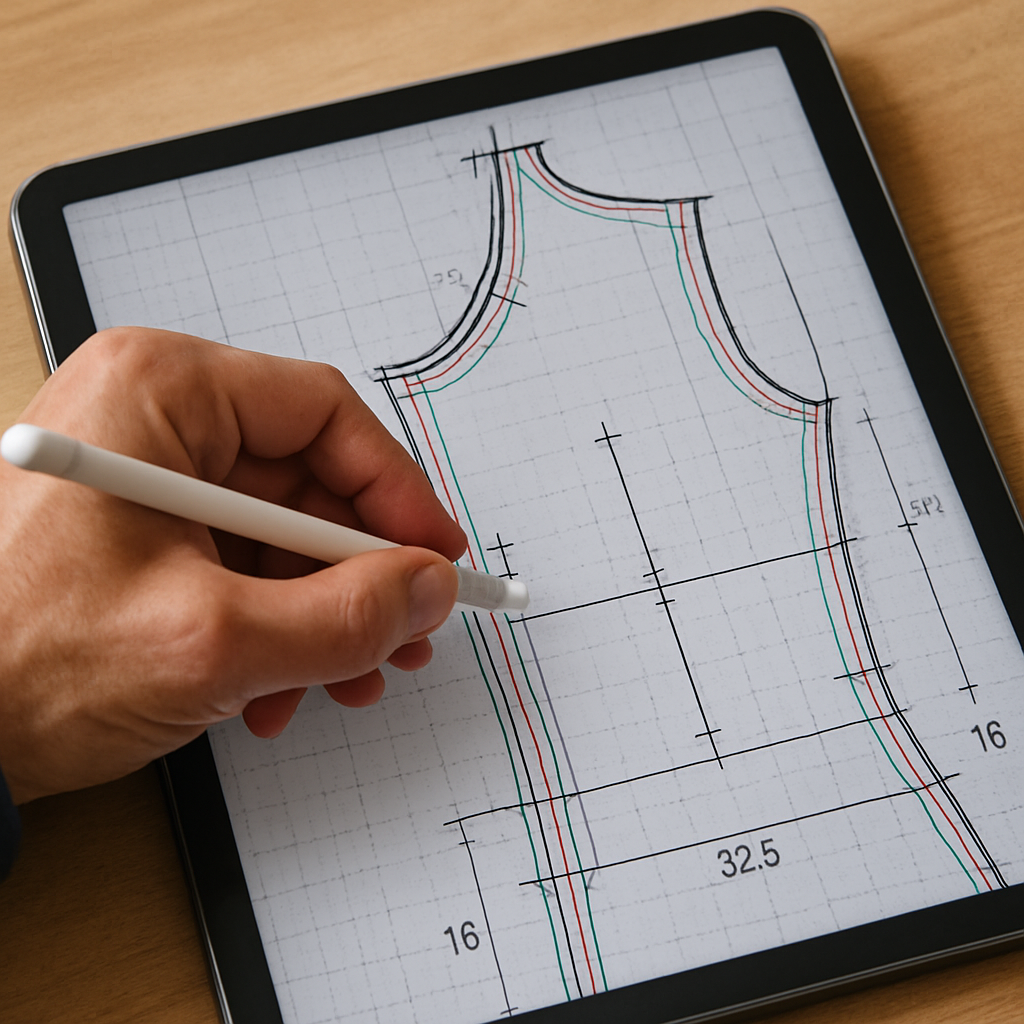
Most pattern drafting classes give you PDFs you can print or edit directly. If you have a home printer that handles large sheets (A3 or larger), print on lightweight tracing paper. Otherwise, use a tablet and a stylus; many apps let you zoom in 400 % without losing line quality.
One student on PatternReview.com mentioned she saved $20 a month by printing only the blocks she needed and re‑using the same PDF for multiple fabrics. That’s a simple cost‑saving hack you can adopt right away.
Pro Tips from Experienced Sewists
1. Floor protection. Lay a rug or a rubber mat under your table to dampen vibrations from the sewing machine. It also protects hardwood floors from accidental cuts.
2. Ventilation. If you’re using a machine with a heated needle plate, a small fan prevents the room from getting too hot—plus it keeps fumes from fabric sprays at bay.
3. Sound control. Earplugs or noise‑cancelling headphones let you focus when the machine hums. Many creators pair this with a playlist of instrumental music to keep the rhythm steady.
Your First Workspace Sprint
Now that you have a plan, it’s time for a 15‑minute “setup sprint.” Set a timer, gather the items on the checklist, and arrange them exactly as you sketched. When the timer dings, step back, take a photo, and ask yourself: does everything I need sit within arm’s reach? If the answer is “yes,” you’re ready to open that first pattern draft.
And remember, you don’t have to get everything perfect on day one. Adjust as you go, and treat each tweak as a mini‑experiment. Your workspace will evolve just like your skills—so enjoy the process.
Step 3: Mastering Basic Drafting Techniques
Ever opened a pattern draft and felt like you were deciphering a secret code? That’s the moment many beginners hit—until they learn a few core moves that turn chaos into confidence.
Start with the basic block
The block is the skeleton of every garment. Think of it as the body you’ll dress later. Grab a sheet of tracing paper, a pencil, and your ruler. Measure your bust, waist, and hips, then mark those numbers as vertical lines.
Does that sound tedious? Not really—until you see the lines line up, you get an instant visual of how the fabric will hug your shape.
Sketch, don’t perfect
Here’s what I mean: draw the first line, step back, and ask yourself if it feels right. It’s okay to use light strokes, erase, and try again. The goal isn’t a museum‑ready illustration; it’s a functional guide you can tweak.
One trick I swear by is the “half‑step” method: draw half the front, flip the paper, and trace the mirror image. You instantly catch asymmetry before it becomes a costly mistake.
Bring digital tools into play
If you have a tablet, open the PDF template from your pattern drafting class and use a stylus to trace over the block. Zoom in 400 %—you’ll notice tiny curve adjustments you’d miss at 100 %.
According to a CDC ergonomic guide, reducing repetitive strain by using adjustable digital setups can cut eye‑strain complaints by up to 30 %. That means longer, more comfortable drafting sessions.
Check proportions with a French curve
After you’ve sketched the basic lines, run a French curve along armholes, necklines, and waist darts. The curve smooths out jagged edges and keeps the silhouette fluid. If you don’t own one, a flexible ruler works just as well.
Use a measurement grid to keep everything aligned. Draw a faint 1‑inch grid across your tracing paper; it becomes a visual ruler for sloping lines. Many students report that the grid cuts drafting time by half because they no longer guess angles.
Quick practice: the “5‑minute draft”
Set a timer for five minutes. Pick a simple bodice block, draw the bust line, add a waistline, and close the shape with a curved side seam. When the timer dings, compare your draft to a reference image on PatternReview’s discussion board. You’ll spot one or two areas to improve—exactly the kind of micro‑learning we love.
Common pitfalls and how to dodge them
– Relying on memory alone. Keep a cheat‑sheet of key measurements beside your work surface.
– Forgetting to label each line. A simple “B” for bust, “W” for waist saves you from re‑measuring later.
– Skipping the “arm‑hole test.” Fold the paper along the shoulder seam; if the armhole lines up cleanly, you’ve got a good fit.
After each draft, annotate the paper with notes—where you stretched, where you trimmed, any fit concerns. Those marginal comments become a personal style guide that speeds up future projects.
Remember, mastering drafting isn’t a one‑off event. Schedule a 15‑minute “draft jam” each week. Consistency builds muscle memory, and soon you’ll draft without looking at a tutorial.
| Technique | Tool | Quick tip |
|---|---|---|
| Block creation | Tracing paper + ruler | Use the half‑step method for symmetry |
| Digital tracing | Tablet + stylus | Zoom 400 % to fine‑tune curves |
| Curve smoothing | French curve or flexible ruler | Run it over armholes and necklines before finalizing |
So, what’s the next move? Grab that paper, set a timer, and give yourself the five‑minute draft. You’ll see how quickly the basics click, and you’ll be ready to tackle more complex garments in your pattern drafting classes online.
Step 4: Advanced Pattern Adjustments and Grading
Now that you’ve got a solid block, it’s time to fine‑tune it so the garment behaves the way you want on any size. Think of grading as the art of “stretching” your pattern without breaking its shape.
Why grading matters
If you skip this step, you’ll end up with a bodice that fits perfectly in one size but flops on the next. A quick look at Seamwork’s pattern grading basics shows that even a 2‑mm change in waist ease can be the difference between a sleek silhouette and a saggy waistline.
Step‑by‑step grading workflow
1. Decide your size ladder
Pick a range that matches your target market – for example, XS, S, M, L, XL. Write the bust, waist, and hip differences between each size in a simple table. Many teachers suggest a 4‑inch (10 cm) increment for bust and waist and a 5‑inch (13 cm) increment for hips.
2. Create a master “grade rule” sheet
Grab a sheet of tracing paper and draw a vertical line down the center of your block. Mark the bust line, waist line, and hip line. Then, using a ruler, add the increment values you noted earlier on each side of the line. This becomes your visual cheat‑sheet for every subsequent size.
3. Apply the rule to the pattern pieces
Start with the easiest piece – usually the front bodice. Align the center line, then slide the edge of the paper outward by the bust increment. Use a French curve to smooth any new curvature. Repeat for the back, sleeves, and skirt panels.
Pro tip: If you work on a tablet, the CADPatterns guide to digital grading lets you copy and paste the increment values, saving you from manual ruler work.
4. Check the “balance” of each size
After you’ve shifted the lines, fold the front and back pieces together. The seam should line up without gaps. If you see a mismatch, adjust the side seam by half the difference and re‑check. This quick “mirror test” catches asymmetry early.
5. Add ease and movement allowances
Even a perfectly graded block needs a little breathing room. For a fitted top, add 1‑2 cm of ease at the bust; for a loose dress, add 4‑5 cm. Write these numbers directly on the pattern as a reminder for future drafts.
Real‑world examples
Emily, a stay‑at‑home mom who started a small Etsy shop, shared that grading her first dress from size 6 to 12 took her three evenings. She used the master grade rule sheet and saved about 30 minutes per size compared to her initial trial‑and‑error method.
Another example comes from Carlos, a fashion design student who needed to produce a capsule collection for a runway showcase. By grading his basic blouse pattern in bulk, he could generate six size variations in under two hours – a speed that impressed his professor and secured him a freelance gig.
Quick checklist before you print
That last step may sound old‑school, but a quick muslin test reveals hidden tension points before you cut into expensive fabric.
- All size increments match the table you created.
- Seam lines align when pieces are folded together.
- Ease is noted on each piece.
- Grading marks (e.g., “+2 cm bust”) are legible.
- Run a final “paper mock‑up” by cutting a cheap muslin version of one size.
So, what’s the next move? Grab your master grade rule sheet, pick a size ladder, and spend 20 minutes grading one simple block. When you see the pieces line up nicely, you’ll know you’ve built a reusable system that scales with any pattern drafting class you take.
Step 5: Evaluating Your Drafts and Getting Feedback
Okay, you’ve just graded your pattern and you’re staring at a stack of paper that looks like a tiny city map. It’s exciting, but also a little nerve‑wracking – will it actually work on a real body? That moment of doubt is totally normal, and it’s exactly why a solid evaluation routine is the secret sauce that separates a one‑off prototype from a repeatable design.
Why evaluation matters
Think about it like this: you wouldn’t bake a cake, slice a piece, and serve it without tasting first, right? The same principle applies to pattern drafting. A quick self‑check catches glaring fit issues, while fresh eyes spot the subtle stuff – like a seam line that’s off by a millimeter or an ease allowance that feels too tight.
Research from pattern review best practices shows that designers who incorporate a formal feedback step reduce costly re‑cuts by up to 40 %. In other words, you save fabric, time, and a lot of frustration.
Step‑by‑step feedback loop
1. Do a “paper mock‑up” test
Before you even touch muslin, grab a cheap cotton or muslin sheet and cut one size of your draft. Pin it together, try it on a mannequin or, better yet, on yourself. Note where the fabric pulls, where it gaps, and whether the darts sit where you expect.
2. Capture the moment with photos
Snap a few pictures from different angles – front, side, and a close‑up of tricky areas like armholes. A visual record helps you compare revisions later and makes it easier to explain concerns to a peer.
3. Reach out for a fresh set of eyes
Post your photos in a community forum, a Facebook group, or a Discord channel dedicated to pattern drafting. Ask specific questions: “Does the waistline look balanced?” or “Is the ease at the bust enough for a medium‑weight fabric?” The more precise you are, the more useful the feedback.
If you’re looking for a structured approach, how to get constructive criticism on your patterns breaks down feedback into three buckets – fit, construction, and aesthetic – which keeps the conversation focused.
4. Create a feedback checklist
Turn the comments you receive into a checklist you can run through each time you tweak a draft. Here’s a starter you can copy:
- All size increments match the master grade rule sheet.
- Seam lines align when front and back pieces are folded together.
- Ease is clearly marked and consistent with the intended silhouette.
- No stray grading marks (e.g., “+2 cm bust”) are left ambiguous.
- Paper mock‑up fits a basic body form without major pulling or bunching.
5. Iterate with purpose
Pick one issue at a time. If the armhole feels tight, adjust the curve by the exact amount you noted in your photo (say, 3 mm). Redraw, re‑cut the paper mock‑up, and retest. Small, focused changes keep the process manageable and prevent you from “re‑grading” the entire pattern after each minor tweak.
Real‑world example: Maya’s summer dress
Maya, a hobbyist who runs a small Etsy shop, shared her workflow in a recent CreativiU community chat. She drafted a breezy sundress, did a paper mock‑up, and posted the photos to a sewing forum. The feedback highlighted that the side seam was ½ inch longer on the right side, causing an asymmetrical look. Maya adjusted the seam line, re‑cut the muslin, and the final garment fit perfectly on three test models. She reported shaving two hours off her usual trial‑and‑error loop.
Another story comes from Jamal, an aspiring costume designer. He used the same feedback loop for a period costume jacket. After two rounds of peer critique, he discovered the shoulder ease needed an extra 1 cm for a thicker wool fabric. The adjustment prevented the shoulders from pulling shut when he added a lining later.
Actionable takeaways
1️⃣ Schedule a 30‑minute “evaluation window” after every grading session. Treat it like a mini‑lab where you test, photograph, and note.
2️⃣ Keep a digital folder (Google Drive, Dropbox, etc.) with subfolders for each pattern. Store the original draft, paper mock‑up photos, and a revised version side‑by‑side. Over time you’ll see a clear evolution of your skill.
3️⃣ When you get feedback, respond with a brief “thanks + what I’ll try next” note. It closes the loop and encourages the reviewer to stay engaged for future projects.
4️⃣ Finally, celebrate the small wins. When a revised draft lines up cleanly without any gaps, give yourself a high‑five – it’s proof that your evaluation habit is paying off.
Step 6: Building a Portfolio and Monetizing Your Skills
You’ve spent weeks perfecting grading, mock‑ups, and feedback loops. Now the real question is: how do you turn those drafts into cash and credibility? Think of your portfolio as a visual résumé – it tells the story of what you can do before anyone even asks you to stitch a seam.
Why a focused portfolio matters
Clients and recruiters skim portfolios in seconds. A clean, story‑driven showcase can boost your booking rate by up to 30 % according to a recent Shopify guide on launching a fashion line. That jump isn’t magic; it’s the result of clear, targeted presentation.
Step‑by‑step: Build a portfolio that sells
1. Choose your strongest 5‑7 projects
Quality beats quantity. Pick patterns that highlight different skills – grading, drape, technical flats, and finished garments. For each project, include:
- A brief problem statement (e.g., “Need a size‑inclusive summer dress for a boutique”).
- Before/after photos of the paper mock‑up and the final piece.
- One sentence about the tools you used (digital CAD, hand‑drafting, etc.).
Remember Maya’s sundress case from the previous step – showing the initial mock‑up, the feedback notes, and the polished final piece makes the process transparent and trustworthy.
2. Write concise case studies
Instead of a list of features, tell a mini‑story. Start with the client’s challenge, walk through your iteration loop, and end with the result (fit, timeline, cost savings). Use concrete numbers: “Reduced sample fabric waste by 15 % by grading digitally before cutting.”
3. Host your work online
Platforms like Behance, Adobe Portfolio, or a simple Squarespace site let you embed high‑resolution images and PDFs. Make sure the URL is easy to remember (ideally your name or brand). Optimize each page with the keyword “pattern drafting classes online” in the title tag and meta description – this helps the right people find you when they search for learning resources.
4. Add a “Hire Me” or “Shop My Patterns” section
Give visitors a clear next step. If you’re offering freelance drafting, list rates (hourly or per pattern) and a short form. If you sell ready‑to‑use patterns, link to a shop platform like Etsy. A real‑world example: Carlos, the student who graded a blouse for a runway, now sells the same pattern as a downloadable PDF and earns $200 per month.
Monetizing your skill set
Freelance drafting for designers
Many emerging designers lack the time or technical know‑how to draft their own pieces. Pitch your services on niche job boards such as Upwork or fashion‑focused sites like FashionJobs.com. When you submit a proposal, reference a specific case study from your portfolio – it shows you’ve solved a similar problem before.
Teaching and course creation
If you love explaining concepts, turn your workflow into a paid mini‑course. Record screen captures of your grading process, add voice‑over, and bundle it with downloadable worksheets. Platforms like Teachable let you set a price and handle payments, while you keep 100 % of the creative control.
Licensing patterns
Once you have a polished pattern, you can license it to fabric manufacturers or boutique brands. The agreement typically includes a flat fee plus royalties per unit sold. A quick Google search shows that independent pattern designers can earn between $0.50 and $2.00 per printed copy, depending on distribution scale.
Action checklist
- Select 5–7 diverse projects and gather before/after visuals.
- Write a 2‑sentence problem statement and a 1‑sentence result for each.
- Upload to an online portfolio with SEO‑friendly titles.
- Create a clear “Hire Me” or “Buy My Patterns” call‑to‑action.
- Reach out to three freelance marketplaces or teaching platforms this week.
- Track inquiries and conversion rates for the next 30 days.
Take the first bite now: open your camera, snap that last muslin, and add it to your portfolio. The more you show, the more people will want to work with you.
Conclusion
By now you’ve seen how a simple feedback loop can turn a muslin draft into a polished pattern and how showcasing those wins can open doors.
What’s the real takeaway? Consistency beats flash. If you schedule a 30‑minute evaluation after each grading session, you’ll catch tiny fit issues before they become big headaches.
And remember the power of a focused portfolio. Picking five to seven strong projects, adding before/after photos, and writing a one‑sentence result turns a hobby into a selling story.
So, what should you do next? Grab your latest mock‑up, snap a quick photo, and upload it to your CreativiU profile or any simple website you control. Make the title include “pattern drafting classes online” – that little keyword boost helps the right people find you.
Don’t let perfectionism stall you. Even a half‑finished draft posted with a genuine note (“I’m testing this sleeve fit, any thoughts?”) invites feedback and builds credibility.
Finally, give yourself a tiny celebration each time a revision lines up cleanly – a high‑five, a coffee break, whatever feels right. Those micro‑wins keep the momentum alive.
Ready to turn your sketches into a steady stream of projects? Dive into the next lesson, share your progress, and watch the opportunities stack up.
FAQ
What exactly are pattern drafting classes online and who should enroll?
In a nutshell, pattern drafting classes online teach you how to turn a sketch into a production‑ready template – all from your laptop or tablet. They’re built for anyone who loves fashion, from hobbyists who want a neat side hustle to budding designers aiming for a full‑time gig. If you enjoy measuring, tweaking, and seeing a flat paper become a three‑dimensional garment, you’re the perfect fit.
How do I pick the right pattern drafting class for my current skill level?
Start by asking yourself where you sit on the learning curve. Beginners usually need a course that breaks down basic measurements, basic CAD tools, and simple block patterns. Intermediate learners look for modules on grading, fabric behavior, and digital workflow shortcuts. Check the syllabus for clear learning outcomes and read student reviews – they’ll tell you if the pace feels rushed or just right. A good sign is a “hands‑on project” at the end of each week.
What equipment do I really need to begin pattern drafting classes online?
You don’t need a full‑blown studio to get started. A reliable computer or tablet, a good mouse or stylus, and a ruler or flexible measuring tape are enough. Most platforms recommend free or low‑cost CAD software like Valentina or Adobe Illustrator; you can download trial versions to test. A basic sketchbook for hand‑drafting practice and a set of fabric scraps for quick mock‑ups also go a long way.
How much time should I set aside each week to make real progress?
Consistency beats marathon sessions. Aim for a 30‑minute “focus window” after each lesson – that’s where you apply what you just learned, sketch a quick pattern, and note any questions. If you can add another 30‑minute review on the weekend, you’ll see steady improvement without burnout. Many students report that two to three short blocks per week keep the momentum going and prevent information overload.
Can I get feedback on my drafts while learning online, or am I on my own?
Absolutely – most reputable pattern drafting classes online include a community forum or mentor chat. Upload a photo of your paper mock‑up, add a brief note about the issue, and invite peers to comment. The quick turnaround helps you catch fit problems before they become costly. Think of it as a virtual studio critique; the more specific you are, the richer the feedback you’ll receive.
Do any of these courses offer certification or credentials I can show clients?
Many platforms provide a completion certificate that you can add to your portfolio or LinkedIn profile. While the certificate isn’t a formal industry credential, it signals that you’ve mastered the core curriculum. Some advanced tracks even partner with fashion schools to offer a “digital pattern drafting badge.” Pair that badge with real project screenshots and you’ve got a credible sales pitch for potential clients.
What are the most common beginner mistakes and how can I avoid them?
First, skipping the measurement sanity check – a single typo can throw a whole garment off. Second, over‑relying on digital tools without ever cutting a paper mock‑up; the tactile test reveals fabric‑specific quirks. Third, ignoring the feedback loop; post‑draft reviews are where learning sticks. To dodge these traps, set a checklist: verify each measurement, create a quick muslin, and schedule a 15‑minute critique after every draft.
Leave a Reply