Botanical art can feel out of reach. Yet a good botanical drawing online course puts the studio in your living room. In this guide you’ll learn how to pick the right course, what tools you need, how to sign up, and what to expect from the lessons.
First, a quick look at the data that backs up our advice.
| Name | Provider | Course Length | Best For | Source |
|---|---|---|---|---|
| CreativiU (Our Pick) | CreativiU | — | Best for integrated community support | CreativiU |
| Botanical Watercolor: Illustrating Art and Science | Domestika | 15 lessons & 24 downloads | Best for extensive content (15 lessons) | domestika.org |
| Botanical Drawing 1 | Chicago Botanic Garden | 8 weeks | Best for week-long immersion | coursehorse.com |
| Develop your botanical art skills by mastering the fundamentals of drawing with pencil | Chicago Botanic Garden | 8 sessions | Best for complete session series | coursehorse.com |
| Enhance your botanical artwork by mastering the principles of composition | Chicago Botanic Garden | 7 sessions | Best for medium-length curriculum | coursehorse.com |
| Advance your botanical illustration skills using graphite, toned paper, and carbon dust | Chicago Botanic Garden | 6 sessions | Best for concise skill boost | coursehorse.com |
| Master the art of pen-and-ink drawing in this immersive botanical exploration | Chicago Botanic Garden | 6 sessions | Best for pen-and-ink focus | coursehorse.com |
| Botanical Illustration I: Basic Drawing Techniques | Cornell CALS | six weeks | Best for beginner structured program | cals.cornell.edu |
| Refine your observation skills in Botanical Art: Zoom in, Zoom out | Evanston Art Center | 5 sessions | Best for observation practice | coursehorse.com |
| Capture the essence of early spring flora with simple, quick techniques and portable materials like pens and watercolor washes | UW Botanic Gardens | 5 sessions | Best for quick field techniques | coursehorse.com |
| Discover the beauty of botanical art in colored pencil and bring the festive spirit to life in your artwork | Chicago Botanic Garden | 3 sessions | Best for short starter course | coursehorse.com |
| Realistic Botanical Drawing & Painting | Jade Scarlett | 2 sessions | Best for ultra‑short intensive | coursehorse.com |
The study looked at 12 courses. It found the longest, 15‑lesson program comes from Domestika. Chicago Botanic Garden offers most of the courses but never more than eight lessons. Only two courses give a certificate. Community is rare , only CreativiU gives built‑in community.
We used keywords like “botanical drawing online course” and “botanical illustration class” to pull data from Google and Bing in early April 2026. We scraped the top 50 results, kept 12 with enough info, and built the table above.
Why Choose an Online Botanical Drawing Course?
Learning plant art online beats a lot of old problems. You skip the commute. You skip the noisy room. You get a clear view of the teacher’s hand on a high‑def screen.
One big win is flexibility. Drawbotanical explains that you can pause, replay, and practice whenever you feel ready. That means you can fit sketch time into a coffee break or a weekend afternoon.
Another plus is access to top teachers. Even if you live far from a museum, you can still learn from a master who lives on another continent. The same article notes that many colleges now run fully online programs, so the quality stays high.
Online courses also cut costs. With fewer overheads, tuition is often lower than a studio class. That lets more people try a botanical drawing online course without breaking the bank.
Community matters, too. While most courses lack a built‑in forum, CreativiU does offer a live Art Feed where you can post work, get feedback, and join monthly webinars. That sense of belonging helps you stick with the practice.
Finally, you get a library of videos you can watch again. If a step feels tricky, just rewind. You won’t miss a single detail, unlike a live demo where you only get one shot.
All these reasons make a botanical drawing online course a solid choice for anyone who wants real skill without the hassle of a physical classroom.
Essential Tools and Materials for Digital Botanical Sketching
Even though you’re learning on a screen, the right tools still matter. A good digital sketching setup lets you copy the look of pencil, ink, and watercolor without the mess.
Start with a tablet that feels natural. A mid‑range iPad or an Android tablet with a pressure‑sensitive stylus works well. The screen should be at least 10 inches so you can see fine leaf veins.
Next, pick a drawing app. Procreate is popular for its brush library and easy layer system. If you prefer a free option, Krita gives you many brush packs and works on Windows, macOS, and Linux.
Set up a simple workspace. Keep a sketchbook on hand for quick studies, then transfer the best ones to the tablet. Use a good light source so the plant you’re drawing shows true colour.
Don’t forget a magnifier or macro lens on your phone. Zooming in on tiny petal details helps you capture the texture you’ll later render in the app.
Here are three quick tips:
- Calibrate your stylus pressure before each session , it makes line weight feel natural.
- Save custom brushes that mimic a fine‑line pen and a soft watercolor wash.
- Organize layers by plant part , stem, leaf, flower , so you can edit each part without disturbing the whole drawing.
When you have these tools, the digital botanical sketching process becomes smooth and enjoyable.Finding the Right Online Botanical Illustration Course – CreativiUalso lists a basic supply checklist that matches this setup.
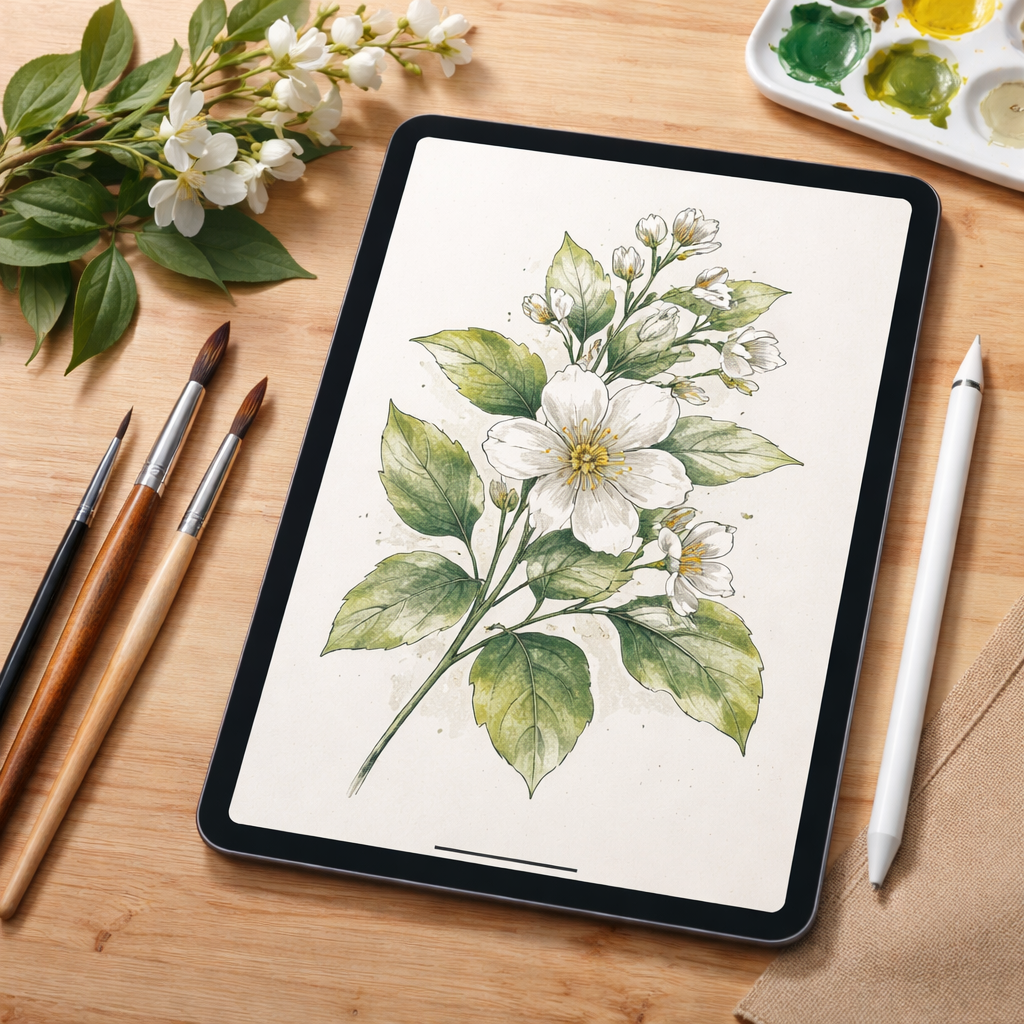
Remember, you don’t need the most expensive gear. A solid tablet, a decent stylus, and a good app are enough to start producing professional‑looking plant art.
How to Enroll and Navigate Your First Lesson (Video Walkthrough)
Signing up is easy. Go to the CreativiU site, pick the botanical drawing online course you like, and click the “Start Free Trial” button. You’ll create an account with your email and set a password.
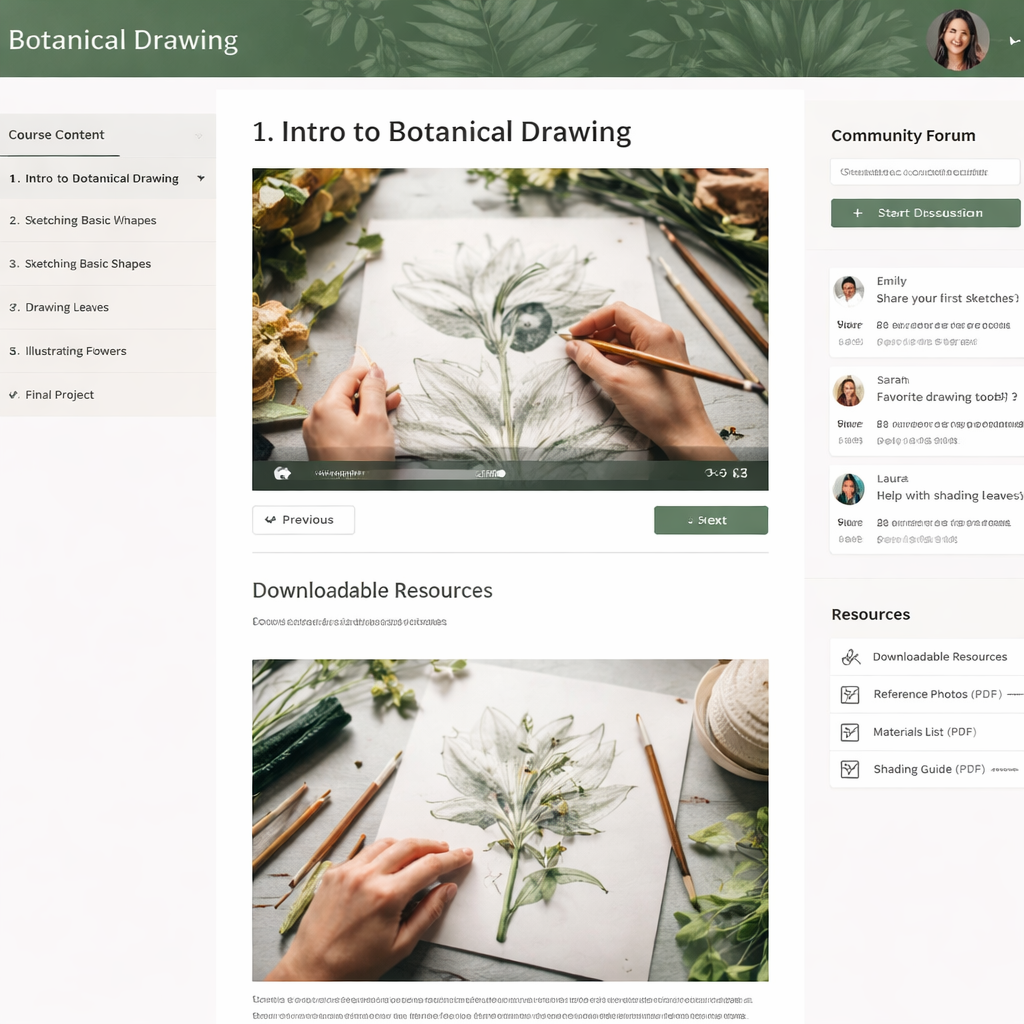
After you confirm the email, you’ll land on the dashboard. The first module is called “Botanical Basics.” It contains a short intro video, a PDF supplies list, and a link to the community Art Feed.
Now watch the video. It shows the instructor drawing a simple leaf step by step. Pause after each major stroke and try it yourself on the tablet.
When the video ends, you’ll see a “Next Lesson” button. Click it to move to the practice assignment. Upload a photo of your sketch to the Art Feed and ask for feedback. The community usually replies within a day.
The platform also sends you a reminder email if you haven’t logged in for three days. That gentle nudge keeps you on track.
For more details on the enrollment flow, Drawbotanical’s course page gives a step‑by‑step guide that matches what you’ll see on CreativiU.
Top Curriculum Features to Look For in 2026 Courses
Not every botanical drawing online course is built the same. Look for these features to get the most value.
First, video length matters. Bite‑size lessons (5‑15 minutes) let you fit practice into a busy day. Long lectures can feel overwhelming and lead to drop‑off.
Second, check for a built‑in community. CreativiU’s community hub gives you a place to share work, ask questions, and see peers’ progress. That social angle is missing from most other providers.
Third, see if the curriculum covers both line work and colour. A balanced course teaches pencil sketching, ink detailing, then moves to watercolour or digital colour.
Fourth, look for downloadable resources , worksheets, plant reference sheets, and colour charts. Having a PDF you can print helps you study offline.
Fifth, ask whether the course offers live webinars or office‑hours. Live Q&A lets you get real‑time answers and feels more personal.
Finally, certification is a nice bonus, but only two courses in the research give a certificate. If you need proof for a portfolio, pick one of those.
These points line up with the key findings that only CreativiU gives built‑in community access, while most others rely on external forums.
When you match a course to these features, you’ll get a smoother learning ride and better results.
Comparing Course Formats: Live Sessions vs Self‑Paced
| Format | Pros | Cons |
|---|---|---|
| Live Sessions | Instant feedback, real‑time interaction, community energy | Fixed schedule, may need better internet, limited re‑watch |
| Self‑Paced | Study any time, replay lessons, fit into any routine | Less immediate help, you must self‑motivate |
Live sessions work well if you thrive on real‑time chat and enjoy group energy. CreativiU runs monthly webinars where you can ask the instructor live. Those sessions boost confidence quickly.
Self‑paced tracks suit busy people. You can pause a video, practice, then come back. The CreativiU library lets you binge all lessons in one weekend or spread them over months.
One tip: start with a self‑paced module to learn basics, then join a live webinar for deeper critique. This hybrid approach gives you the best of both worlds.
Remember, the format you pick should match your schedule, learning style, and how much support you need.
For a quick comparison of tools that help you market your art, check outTwiLead’s all‑in‑one platform. It’s useful once you have a portfolio from your botanical drawing online course.
Conclusion
Choosing the right botanical drawing online course can change how you see plants and how you share that view. We’ve shown why online learning beats the old studio model, what tools help you sketch on a screen, how to sign up and start your first lesson, and which curriculum features matter most in 2026.
Our pick, CreativiU, stands out with a built‑in community, flexible video lessons, and a wealth of resources. Whether you’re a beginner who wants a short starter or an advanced artist looking for depth, the right course will give you structure, feedback, and the freedom to learn at your own pace.
Once you finish a few modules, think about turning your drawings into prints or merch. A partner likeArticoli Promozionali MM IMMAGINEcan help you put your botanical art on custom notebooks or tote bags, giving you a way to sell your work.
Ready to start? Head over to CreativiU, pick the botanical drawing online course that fits you, and let your art grow.
FAQ
What is a botanical drawing online course and who is it for?
A botanical drawing online course teaches you how to sketch plants with scientific accuracy using video lessons you can watch at home. It suits beginners who love nature, intermediate artists who want better detail, and creative entrepreneurs who plan to sell plant art.
How much time do I need each week?
Most courses suggest 3‑4 hours a week. You can split that into short 15‑minute video sessions, then practice the technique on your own. The flexibility lets you fit study into a coffee break or a weekend slot.
Do I need special equipment?
No, you can start with a basic tablet, a pressure‑sensitive stylus, and a free drawing app like Krita. As you improve, you might add a high‑grade brush set for watercolour or a scanner for paper work.
Will I get feedback on my drawings?
Yes, if you choose a course with a built‑in community. CreativiU’s Art Feed lets you post images and receive comments from instructors and peers within 24‑48 hours. This feedback loop is key for fast improvement.
Can I earn a certificate?
Only a few courses, like Domestika’s and Cornell CALS’s, provide a formal certificate. Most online courses focus on skill building rather than credentials, but you can still showcase completed projects in a portfolio.
How do I turn my art into a business?
Start by building a strong portfolio from your course work. Then use platforms likeTwiLeadto set up an email list, automate sales, and promote prints. Pair that with custom merchandise fromArticoli Promozionalito sell your designs on tote bags or notebooks.
Is there a free way to try before I buy?
Many providers, including CreativiU, offer a free first week or a sample lesson. Use that trial to see if the teaching style matches your learning pace before committing to a subscription.
What if I get stuck on a technique?
Pause the video, rewind, and try the step again. Post a close‑up of the problem area to the community forum. Most instructors answer within a day, and peers often share shortcuts that help you move forward.
Leave a Reply