Looking for a way to heal while you create? Art therapy online courses give you that mix of art and support.
An analysis of three leading hybrid art‑therapy master’s programs reveals that the $120,900 M.S. curriculum provides the most intensive in‑person clinical immersion yet offers no live online coursework, while the $46,500 M.A. program bundles synchronous virtual classes with a two‑week summer residency.
| Course Name | Interactive Elements | Starting Price | Best For | Source |
|---|---|---|---|---|
| M.S. in Art Therapy (Hybrid) | experiential learning in clinical and community settings, small cohort | $120,900 | Best for intensive clinical immersion | forbes.com |
| M.A.-C.P. in Expressive Arts Therapy (Hybrid) | — | $82,440–94,806 | Best for flexible pricing | forbes.com |
| M.A. in Art Therapy (Hybrid) | online synchronous courses, two‑week in‑person summer residencies | $46,500 | Best for budget‑conscious learners | forbes.com |
In this guide you’ll learn how to pick the right art therapy online course, what to look for in the curriculum, and how to get the most benefit for your time and money.
Understanding Art Therapy: What It Is and Who It Benefits
Art therapy is a mental health profession that blends making art with talking about feelings. A therapist guides the process. The goal is to help people express what words can’t.
Clients range from kids with autism to veterans with PTSD. The therapist uses paint, clay, collage, or even tree branches. The art becomes a bridge to talk about pain, grief, or joy.
Because the work is hands‑on, it works well when language fails. A child who can’t describe anxiety may draw a storm. The therapist then helps the child name the storm.
Art therapists hold a master’s degree and a credential like ATR or ATR‑BC. They must finish at least 100 hours of supervised practicum and 600 hours of internship. That training ensures they can keep a safe space for clients.
Research shows art therapy lowers anxiety and depression for cancer patients, TB patients in isolation, and military veterans with PTSD. It also helps manage pain by shifting focus.
Imagine a veteran who can’t talk about combat. In a session she paints a battlefield. The painting opens a conversation that words alone could not start.
Art therapy also helps older adults with dementia. Simple doodles can spark memory and calm.
For families, the therapist can work with parents and kids together. The process builds trust and communication.
Overall, art therapy works for anyone who wants a creative way to heal. It’s not about being an artist. It’s about using art as a tool for growth.
Key Features to Look for in an Art Therapy Online Course
When you shop for an art therapy online course, start with the basics. Look for accredited curriculum, qualified instructors, and clear practicum requirements.
Accreditation matters. The Commission on Accreditation of Allied Health Education Programs (CAAHEP) and the Accreditation Council for Art Therapy Education (ACATE) set standards. A program that mentions CAAHEP or ACATE is more likely to meet licensing needs.
Next, check the interactive elements. Live webinars let you ask questions in real time. Recorded lectures give flexibility. Some programs also offer virtual studio tours.
Practical work is a must. A good course will require at least 100 hours of supervised practicum. Look for a clear plan on how you’ll complete those hours, whether through local agencies or online placements.
Materials matter too. The course should list required art media , pencils, paints, clay , and suggest affordable alternatives. If the list is vague, you may end up buying costly kits you never use.
Support services are a plus. The American Art Therapy Association (AATA) offers continuing‑education credits that count toward board certification. AATA‑approved courses also let you earn ATCB credits.
Technology should be reliable. The platform must support video streaming, file uploads for art photos, and secure chat for client discussions.
And don’t forget community. Forums, peer‑review groups, and instructor office hours create a sense of belonging.
Here’s a quick checklist you can use while browsing:
- Is the program CAAHEP‑accredited?
- Does it include live, synchronous sessions?
- Are practicum hours clearly outlined?
- Is there a list of affordable art supplies?
- Does it offer ATCB or AATA continuing‑education credits?
And if you want a real‑world example of a platform that blends live sessions with a strong community, check out Online Art Classes for Adults: A Practical Guide to Learning Platforms and Success. The site shows how a solid schedule and community feedback keep learners on track.
Below is a short video that walks through what a typical live art therapy class looks like.
Notice how the instructor pauses for questions, shows close‑up of brush strokes, and then asks participants to share their work in a private chat. That mix of demo and interaction is a hallmark of high‑quality online art therapy training.

Finally, evaluate the cost versus value. The cheapest option in our research table is $46,500, but it includes live online classes and a short residency. The $120,900 program offers deep clinical immersion but no live online work. Think about your budget, your need for live feedback, and your career goals before you decide.
Top Accredited Art Therapy Online Courses in 2026
Here are three programs that stand out for quality, accreditation, and student support.
1. M.S. in Art Therapy (Hybrid) , This program costs $120,900. It offers experiential learning in clinical and community settings with a small cohort. The focus is on hands‑on work, not live online sessions. It’s best for clinicians who want intensive immersion.
2. M.A. in Art Therapy (Hybrid) , Priced at $46,500, this course blends online synchronous classes with a two‑week summer residency. Students get live feedback and a chance to practice in person for a short period. It ranks as the best value for budget‑conscious learners.
3. M.A.-C.P. in Expressive Arts Therapy (Hybrid) , Tuition ranges from $82,440 to $94,806. The program does not list interactive elements, which makes it harder to gauge the online experience. It may suit those who need flexible pricing but want a hybrid approach.
All three programs are listed in the research table above and are recognized by CAAHEP and ACATE. They also meet the Art Therapy Credentials Board (ATCB) standards.
For a broader view of art therapy courses, the Coursesity guide reviews many options, from short certificates to full master’s degrees. It highlights curriculum depth, faculty expertise, and student outcomes.
A recent systematic review of digital art therapy research notes that online delivery can widen access while keeping therapeutic impact high (NCBI article). The review also warns that lack of tactile feedback can be a challenge, so programs that include live video demos tend to score higher.
If you prefer a mixed‑media focus, see Unlocking Creativity: Your Guide to Mixed Media Art Courses. That article shows how mixed‑media skills can complement therapeutic practice.
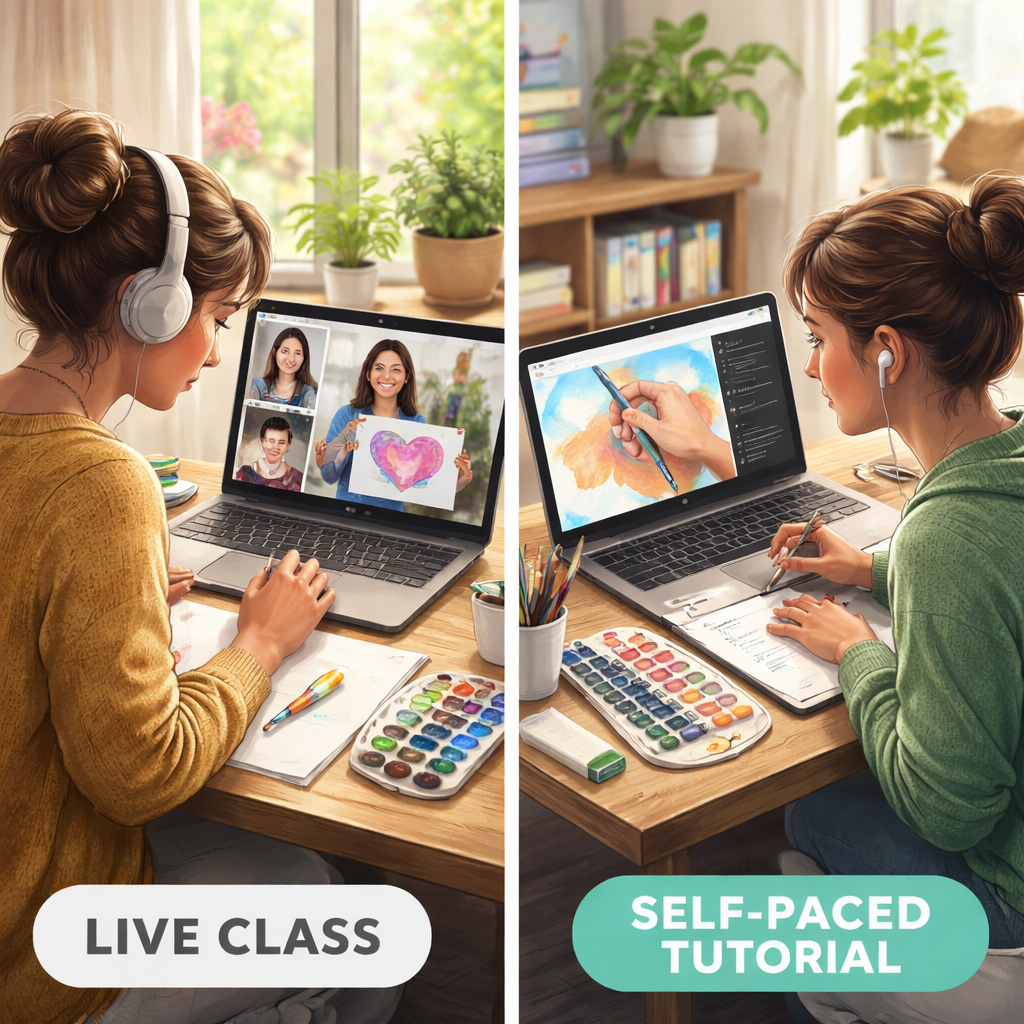
Comparing Course Formats: Live Sessions vs. Self‑Paced Modules
Choosing between live sessions and self‑paced modules depends on your schedule, learning style, and need for feedback.
Live sessions give you real‑time interaction. You can ask the instructor to show a brush technique, and you get instant critique. This format works well for visual learners who thrive on immediate guidance.
Self‑paced modules let you learn on your own clock. You watch a video, pause, practice, then move on. This is ideal for busy professionals who can only study at odd hours.
Research from the Crayon Initiative shows that 70% of art therapists now work from home using video platforms. The same study notes that many clients feel more confident in a remote setting because they can control the environment.
Pros of live sessions:
- Immediate feedback.
- Sense of community.
- Structured schedule.
Cons of live sessions:
- Fixed class times.
- Potential tech glitches.
- May require a stable internet connection.
Pros of self‑paced modules:
- Flexibility.
- Ability to replay content.
- Fits irregular work hours.
Cons of self‑paced modules:
- Delayed feedback.
- Less peer interaction.
- Self‑discipline needed.
Here’s a quick three‑step test you can run this week:
- Pick a 20‑minute live demo on a technique you want to master.
- Pick a self‑paced video on the same technique.
- After each, rate convenience, feedback quality, and enjoyment on a 1‑5 scale.
The higher total wins for your current lifestyle. Remember, you can mix formats , start live to build confidence, then shift to self‑paced for deeper dives.
One study of online arts therapies found that older adults reported increased well‑being when they could choose the format that fit their routine. That flexibility is a core benefit of modern online art therapy education.
Choosing the Right Course: Decision‑Making Checklist
Use this checklist to narrow down your options. Answer each row honestly and compare your scores.
| Feature | Your Need (High/Medium/Low) | Course A | Course B | Course C |
|---|---|---|---|---|
| Accreditation (CAAHEP/ACATE) | — | Yes | Yes | Yes |
| Live synchronous sessions | — | No | Yes | — |
| Summer residency | — | No | Yes | — |
| Practicum hours clearly defined | — | Yes | Yes | Yes |
| Cost within budget | — | High | Low | Medium |
| Community support (forums, peer review) | — | Yes | Yes | — |
After you fill the table, add up the matches. The course with the most “Yes” in the columns that line up with your high‑need rows is likely the best fit.
Don’t forget to verify the practicum placement options. Some programs partner with local hospitals, while others let you arrange remote sites. If you’re working, a remote placement may save travel time.
Check the tuition payment plan. The $46,500 M.A. program offers a staggered payment schedule, which can ease cash flow for working adults.
For more on how to set learning goals, see Exploring Drawing Classes Online for Adults: Resources, Benefits, and How to Get Started. That guide walks you through setting realistic milestones and tracking progress.
Lastly, review the admission checklist on the program site. Most require 18 semester hours of studio art and 12 semester hours of psychology. If you’re missing credits, plan to complete them before the start date (Admission checklist form).
The journal article on online creative arts therapies notes that technology can boost access but also highlights the need for clear ethical guidelines (Publisso journal). Choose a program that addresses those guidelines in its curriculum.
FAQ
What qualifications do I need before enrolling in an art therapy online course?
You need a bachelor’s degree in any field, but you must also complete at least 18 semester hours of studio art and 12 semester hours of psychology. Most programs ask for a portfolio that shows basic drawing or painting skills. If you lack the required art credits, you can take prep courses online before you apply. The admission checklist from the program’s website will list the exact requirements you need to meet.
How does an art therapy online course handle practicum requirements?
Accredited programs embed practicum hours into the curriculum. They may partner with local clinics, schools, or virtual therapy sites. You’ll log hours under a licensed supervisor who reviews your case notes. Some courses let you arrange a remote placement that you can complete from home, while others require in‑person work during a short residency. Always verify that the practicum meets ATCB standards before you enroll.
Can I get continuing‑education credits from an art therapy online course?
Yes. Many programs are approved by the American Art Therapy Association (AATA) and the Art Therapy Credentials Board (ATCB). Those approvals mean you can earn CEUs that count toward board certification. Look for language like “ATCB‑approved” or “AATA Continuing Education Provider” on the course page. Credits usually come after you finish the final project and submit a reflective paper.
Is a live‑online format better for learning art therapy techniques?
Live sessions give you immediate feedback, which can speed up skill acquisition. You can ask the instructor to demonstrate a brushstroke or to critique a piece you just made. However, live classes require you to be online at set times, which can clash with work or family duties. If you need flexibility, a self‑paced module with recorded demos and a forum for questions works well too. Many students blend both formats for the best of both worlds.
How do I choose between the M.S. and M.A. art therapy online courses?
The M.S. program costs $120,900 and focuses on deep clinical immersion without live online classes. It’s best if you want extensive hands‑on training and can afford the price. The M.A. program costs $46,500 and includes synchronous online coursework plus a two‑week summer residency. It offers great value for those who need live interaction and have a tighter budget. Consider your career goals, time you can commit, and financial situation before deciding.
What career paths open up after completing an art therapy online course?
Graduates can work in hospitals, schools, community centers, or private practice. Common titles include Art Therapist, Registered Art Therapist, and Art Psychotherapist. Some also move into research or program administration. The average base salary for art therapists in the U.S. is $149,402, according to industry reports. With a master’s degree, you’re also eligible for licensure in many states, which broadens job prospects.
Conclusion
Choosing the right art therapy online course takes time, but the payoff is big. You’ll gain skills that let you help people heal through creativity. Use the checklist, compare live versus self‑paced formats, and weigh cost against the interactive features you need.
The research shows that the $46,500 M.A. program gives the best value for most learners, while the $120,900 M.S. program offers deep clinical experience for those ready to invest heavily. Whatever you pick, make sure the program is accredited, offers clear practicum paths, and matches your schedule.
If you’re ready to start, explore the courses listed above, fill out the admission checklist, and set a simple weekly art‑making goal. A small habit of drawing or painting each day can turn a course into a lifelong practice.
At CreativiU we host a library of art‑therapy‑focused classes that follow the same standards. Check them out to see how a structured online path can fit into your life and help you grow as a therapist and creator.
Leave a Reply